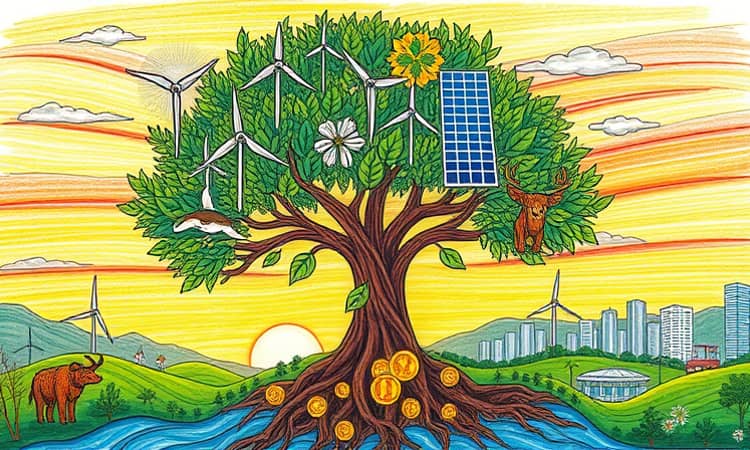
In a rapidly changing world, the concept of wealth is undergoing a profound transformation. Investors and institutions are increasingly asking how they can generate returns while fostering a healthy planet and society. This shift marks the dawn of a new investment paradigm—one that embraces the power of capital to drive positive change without sacrificing performance.
At the heart of this movement lies the realization that global challenges such as climate change, biodiversity loss, and social inequality are not just moral concerns but material risks that can imperil portfolios. By reorienting strategies around a stable climate and resilient ecosystems, forward-looking investors are discovering that impact and returns can go hand in hand.
Reframing Wealth: From Profit to Purpose
Traditional frameworks have long prioritized maximizing risk-adjusted financial returns above all else, often overlooking the external consequences of economic activity. Emissions, resource depletion, and social inequities are externalities that erode long-term value and expose investors to unforeseen headwinds.
In contrast, the emerging ethos of reimagined wealth aligns capital with outcomes such as reduced carbon footprints, restored natural habitats, and empowered communities. This approach recognizes that thriving societies and ecosystems form the bedrock of sustainable prosperity, and that competitive returns are still attainable within this expanded mandate.
Macro Landscape: Capital Flows and Market Shifts
Over the past decade, a macroeconomic realignment has propelled sustainable and impact investing into the mainstream. Major forces include regulatory reforms, enhanced disclosure standards, and growing institutional and high-net-worth demand for comprehensive impact reporting.
- Clean Energy & Transition Investment: Global clean energy investment reached USD 2 trillion in 2024, with solar accounting for USD 500 billion.
- Green & Sustainable Bonds: The labelled bond market is expected to exceed USD 1 trillion in issuance by 2025, backed by new standards that enhance transparency.
- Private Markets & Climate Tech: Low-carbon private-market solutions delivered 123% cumulative returns over five years, dwarfing public market comparators.
Despite episodic outflows from labeled ESG funds, mainstream asset managers are weaving sustainability into core risk-return models. A leading firm, for instance, targets 75% of its holdings to align with science-based emissions pathways by 2030, demonstrating the deep structural integration of these themes.
Key Thematic Pillars: Building Portfolios That Thrive
Investors can navigate this evolving landscape by focusing on five interlinked areas that both safeguard the planet and generate value:
- Climate Mitigation: Decarbonizing energy, transportation, and industry to reduce emissions.
- Climate Adaptation & Resilience: Strengthening infrastructure and ecosystems against extreme weather.
- Nature, Biodiversity & Circularity: Preserving ecosystems, advancing regenerative agriculture, and closing resource loops.
- Social & Human Capital: Promoting education, health, equity, and responsible tech governance.
- Technology, AI & Emerging Solutions: Harnessing innovation for sustainable outcomes while managing new risks.
From renewable electricity to resilient agriculture, these pillars translate global imperatives into actionable investment strategies. Companies leading in social-risk management have outperformed peers over a decade, underscoring the financial relevance of human capital and governance practices.
Practical Toolset: Turning Values into Portfolios
To operationalize this vision, investors require a toolkit that bridges values and asset allocation. Key components include thematic asset classes, robust metrics, and evolving regulatory frameworks that ensure accountability and comparability.
In practice, constructing a thriving portfolio involves clear steps:
- Define core sustainability themes aligned with organizational values.
- Select asset classes with proven track records and growth potential.
- Adopt standardized metrics and reporting frameworks.
- Monitor performance and adjust allocations dynamically.
These actions empower investors to move beyond passive screens, deploying capital with intention and precision. As regulatory regimes mature, transparency will only increase, enabling more granular assessment of impact outcomes.
Conclusion: Charting the Path Forward
We are at a pivotal moment when the definition of wealth is expanding to encompass environmental health and social well-being alongside financial gain. By embracing evidence-based sustainable investment strategies and targeting inclusive and equitable global economies, forward-thinking investors can capture emerging opportunities while mitigating systemic risks.
Ultimately, investing in a world that thrives is not just an ethical choice—it is a strategic imperative. As capital flows realign with planetary and societal needs, those who act decisively will shape both their own financial futures and the collective destiny of the planet. The opportunity to build portfolios that deliver competitive returns with societal impact has never been more compelling.
The time to reimagine wealth is now.