In a world of unprecedented abundance, global wealth has reached historic highs, yet this prosperity is shadowed by deep divides and urgent questions about fairness and sustainability.
The journey toward understanding wealth creation is not just about numbers; it is about the human stories behind economic shifts and the collective pursuit of a better future.
This article explores the multifaceted landscape of global wealth, offering insights to inspire and empower you in navigating this complex terrain.
The Great Divide: Record Wealth Amidst Extreme Concentration
Global household wealth now stands at approximately $600 trillion, the highest ever recorded.
This staggering figure reflects assets accumulated across real estate, financial instruments, and other holdings worldwide.
Yet, beneath this surface of plenty lies a stark reality of inequality that challenges the very notion of shared prosperity.
- The top 10% of the global population owns around 75% of all wealth.
- The bottom 50%, nearly 4 billion people, control only about 2% of global wealth.
- This concentration means that extreme wealth disparities are reshaping societies and economies.
Such disparities are not just statistical anomalies; they influence everything from political stability to environmental policies.
For instance, the richest 10% generate 77% of carbon emissions, highlighting how wealth distribution intersects with global challenges like climate change.
This tension between abundance and access calls for a deeper examination of how wealth is created and shared.
Beyond GDP: The Dynamics of Wealth Creation
Wealth growth has outpaced economic output for decades, with asset price inflation driving gains rather than productive investment.
Since 2000, global wealth has expanded faster than GDP, primarily due to financialization and leverage in markets.
This shift means that paper wealth often decouples from real economic activity, creating bubbles and vulnerabilities.
- About 36% of household wealth gains since 2000 are from asset price increases.
- Less than 30% come from net new investment, indicating a reliance on speculative growth.
- For every $1 of net new investment, $3.50 of new household wealth has been generated over 25 years.
This dynamic underscores the need for strategies that focus on sustainable wealth building through innovation and inclusive policies.
Projections suggest that global household financial wealth will grow at 5.5% annually through 2029, with ultra-high-net-worth individuals seeing even higher rates.
Contrast this with moderate GDP growth forecasts, such as around 2.8% in 2026, revealing a gap that policymakers and investors must address.
Inequality and Instability: The Social Cost of Prosperity
The acceleration of wealth concentration since the 1990s has created structural inequalities that threaten stability.
Today, approximately 56,000 individuals, or 0.001% of the world's population, hold more wealth than the poorest 4 billion people combined.
This group's share of global wealth has risen from about 3.8% in 1995 to 6% by 2025-26, signaling a trend that could exacerbate social tensions.
- Billionaires' wealth grows at about 8% per year, double the rate for the poorest 50%.
- The top 1% now controls more income and wealth than the bottom 90% in many regions.
- This inequality is linked to reduced intergenerational mobility and increased political polarization.
Such disparities are not inevitable; they result from policy choices, tax systems, and global economic structures that favor the wealthy.
Addressing this requires collective action, from progressive taxation to investments in education and healthcare, to ensure prosperity benefits all.
By understanding these costs, we can advocate for reforms that promote fairness and resilience in our economies.
Regional Vistas: Where Wealth Flows and Grows
Wealth creation is geographically uneven, with North America and Asia-Pacific dominating growth.
These regions attract significant investment due to their robust financial markets, technological advancements, and economic dynamism.
Other areas, like Latin America and parts of Africa, face challenges but also opportunities for catch-up through diversification and innovation.
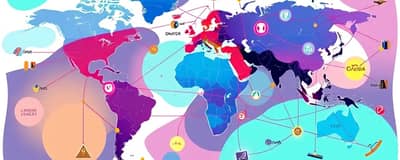
This table highlights how specific hubs act as gateways in the global wealth system, channeling resources and opportunities.
Switzerland, Hong Kong, and Singapore are expected to capture nearly two-thirds of new cross-border wealth inflows through 2029.
Meanwhile, flows from poorer to richer countries, estimated at 1% of global GDP annually, underscore the need for more equitable global financial architectures.
The Future of Wealth: Projections and Possibilities
Looking ahead, wealth growth is projected to remain concentrated among the affluent, but technological and social shifts offer hope for broader participation.
Digital platforms, renewable energy investments, and inclusive fintech solutions can democratize access to wealth-building tools.
However, this requires proactive measures to mitigate risks like asset bubbles and environmental degradation.
- Global household financial wealth is set to grow at 5.5% annually through 2029.
- Ultra-high-net-worth individuals may see 8.0% annual growth, highlighting ongoing concentration trends.
- Regions with strong institutions and innovation ecosystems will likely lead in creating sustainable wealth.
By fostering entrepreneurship and supporting small businesses, societies can tap into untapped potential for inclusive growth.
Education on financial literacy and investment strategies is crucial for empowering individuals to navigate this evolving landscape.
Embracing a forward-thinking mindset can help turn projections into pathways for shared prosperity.
Practical Insights: Navigating the Global Wealth Landscape
To thrive in this complex environment, focus on diversified and sustainable investment strategies.
Start by educating yourself on global economic trends and how they impact local opportunities.
Consider leveraging technology to access international markets while being mindful of risks like currency fluctuations and regulatory changes.
- Diversify investments across asset classes, such as real estate, stocks, and bonds, to mitigate volatility.
- Prioritize long-term goals over short-term gains, aligning with values like environmental sustainability.
- Engage with communities and networks to share knowledge and support collaborative wealth-building initiatives.
Advocate for policies that promote transparency, fair taxation, and social safety nets to reduce inequality.
By taking these steps, you can contribute to a more equitable world while securing your financial future.
Remember, wealth creation is not just about accumulation; it is about building legacies that uplift others and foster resilience.
Together, we can reshape the narrative of prosperity to one that embraces diversity, innovation, and shared success.