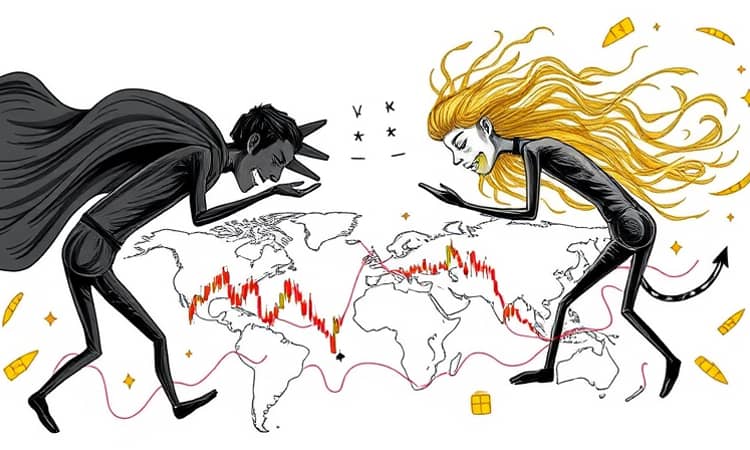
In a world rocked by political upheavals and technological revolutions, understanding how investors feel—and why—can illuminate the path ahead. This article delves into the heart of aggregate attitude of investors, revealing why markets wobble between hope and panic.
Understanding Market Sentiment: Gauges and Definitions
Market sentiment reflects the collective mood of participants toward risk assets. It emerges from prices, fund flows, surveys and even media narratives. When optimism surges, investors pile into equities and IPOs; when anxiety grips them, they seek flight to safety and stability in bonds, gold and cash.
Key tools help quantify this intangible feeling. Some of the most relied-upon gauges include:
- Volatility indices (e.g., VIX) as real-time “fear gauges”
- Credit spreads tracking the premium for risk exposure
- Equity valuation metrics like price-to-earnings ratios
- Surveys—consumer, industry and institutional outlooks
- Text-based indices such as the IMF’s World Uncertainty Index
Together, these indicators create a mosaic of sentiment, guiding investors through tumultuous markets.
Resilient Sentiment Amid Soaring Uncertainty
Despite a backdrop of heightened policy shifts and geopolitical tensions, sentiment gauges remain surprisingly robust. According to the IMF, the World Uncertainty Index has doubled since January, fueled by election concerns, trade disputes and shifting regulations.
Yet the World Sentiment Index—which tracks positive versus negative economic language in global reports—remains positive and historically elevated. This paradox highlights an economy that is weathering shocks, thanks to adaptive businesses and improved policy frameworks, especially in emerging markets.
Key drivers of this unique environment include:
- Major policy changes and election cycles boosting debate and volatility
- Rapid technological adoption softening recessionary risks
- Resilient corporate earnings and strong labor markets
Asset-Level Moods: Where Fear Meets Greed
Across equities, bonds and commodities, we see an ongoing tug-of-war between risk-seeking and risk-averse behavior. Episodes of panic rapidly give way to fresh rallies, creating a “wall of worry” that markets continue to climb.
Equities: From Record Highs to Valuation Worries
Global stocks, powered by large-cap US tech and AI darling companies, have reached new peaks. At the start of 2025, State Street noted investors “have much to celebrate.” Yet stretched valuation ratios and geopolitical uncertainty loom large.
Key themes in 2025 include questions on sustained tech leadership, the impact of Fed easing on risk appetite, and whether emerging markets can keep pace. Fierce volatility—such as Nvidia’s historic one-day drop and rebound—illustrates how greed for innovation can quickly morph into fear of excess.
Fixed Income: Bond Market Anxiety
Bond investors are more cautious. With governments issuing more long-dated debt, yields have risen despite the start of an easing cycle. Media sentiment indicators show reluctance to hold duration, reflecting flight to safer asset classes and concerns over elevated term premia.
SSGA’s mid-year outlook expects a soft landing that permits further rate cuts by year-end. Yet the tug between inflation fears and growth worries keeps fixed income on edge.
Commodities: Navigating Supply Risks
Industrial metals benefit from tight fundamentals and China’s supportive policies, while agriculture faces headwinds from surplus inventories and falling grain prices. Soft commodities like coffee have surged amid weather disruptions, capturing moments of insatiable appetite for AI investments in data-driven trading models.
Regional Spotlight: Diverging Sentiments
Investor mood varies sharply by geography. In the United States, record highs are tempered by tariff fears and dollar strength. Europe grapples with slower growth expectations, yet valuations already reflect much of the bad news. China’s reopening narrative underpins cautious optimism, though property market jitters persist. Emerging markets balance higher commodity exports against currency volatility.
Highlights by region:
- United States: Tech-led rallies offset tariff shocks and dollar gains
- Europe: Relieved that downside is priced in, but growth remains elusive
- China & EM: Reopening tailwinds versus structural slowdown risks
Historical Fear-Greed Cycles: Lessons from the Past
Periods of extreme fear—such as the 2008 financial crisis and the 2020 pandemic crash—were followed by powerful recoveries. These cycles teach us that markets often overshoot in both directions, and opportunistic investors can benefit from disciplined positioning and contrarian insight.
By studying past trends, one can identify when fear has peaked and greed is becoming excessive, helping to manage risk and capture upside.
In summary, the interplay of fear and greed shapes every market move. By combining rigorous measurement with an understanding of global dynamics and historical patterns, investors can navigate uncertainty with greater clarity and confidence.