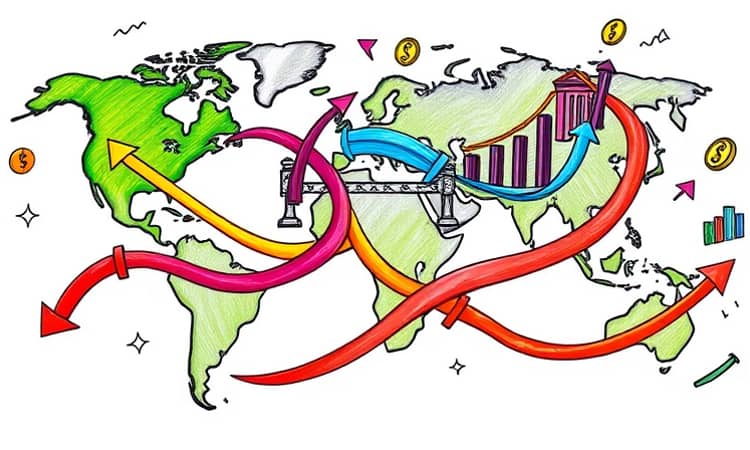
In today’s globalized financial landscape, countries grapple with the balance between open markets and protecting domestic stability. Capital controls—government actions that regulate the flow of money across borders—play a pivotal role in this equilibrium. Whether levying taxes on foreign inflows or restricting citizen access to overseas assets, these measures can stabilize economies or, if misapplied, stifle growth.
By examining their history, impact, and practical implications, investors and policymakers can navigate complex regulatory environments and harness controls as tools for long-term strategic planning.
What Are Capital Controls?
Capital controls encompass a spectrum of tools: price-based measures like taxes or reserve requirements, and quantity-based limits such as licensing, quotas, or outright bans. They may target short- or long-term flows, specific industries, or the financial sector as a whole.
At their core, controls aim to manage surges and outflows that threaten currency stability, protect foreign reserves, or channel funds into priority sectors. While more common in developing economies wary of volatile capital flows, advanced countries have also used selective barriers to safeguard strategic interests.
Why Governments Implement Capital Controls
Policy makers deploy controls to achieve multiple objectives:
- Stabilize exchange rates and mitigate currency volatility.
- Prevent sudden capital flight during crises.
- Maintain monetary autonomy within the trilemma of fixed rates, open capital accounts, and independent policy.
- Encourage productive domestic investments by retaining savings locally.
By limiting speculative inflows, countries can also shift the composition of incoming funds toward foreign direct investment, which tends to be more stable and development-oriented than "hot money."
Historical Perspectives and Modern Examples
Capital controls date back to World War I and were widespread until the 1970s. The rise of Bretton Woods and subsequent liberalization gave way to a free-flow paradigm, interrupted by crises such as the Asian Financial Crisis and the Global Financial Crisis of 2008.
Notable cases include Chile’s unremunerated reserve requirements in the 1990s, Brazil’s 2% tax on portfolio inflows in 2009, and Russia’s dividend repatriation limits in 2022. More recently, the United States and the European Union have expanded outbound controls on sensitive technologies, reflecting ongoing geopolitical tensions.
Effectiveness and Spillover Dynamics
Empirical studies reveal that targeted controls can reduce the frequency and magnitude of inflow surges, while having an asymmetric effect on outflows. Controls on incoming portfolio flows tend to be more effective than broad capital export bans.
However, unilateral measures often divert funds to neighboring countries with similar fundamentals, generating regional spillovers. This underscores the need for coordination through institutions like the International Monetary Fund.
Pros and Cons at a Glance
Navigating Capital Controls: Practical Strategies for Investors
For global investors, capital controls represent both challenge and opportunity. By integrating awareness of regulatory environments into due diligence, one can turn barriers into strategic advantages.
Begin by mapping the policy landscape: understand which instruments are in place, their triggers, and historical adjustments. This builds resilience against abrupt regulatory shifts. Next, align your investment horizon with the expected stability of controls—short-term traders should anticipate sudden regulatory reversals, while long-term stakeholders may negotiate exemptions or partnerships.
Risk management tools like currency hedges, swaps, and option contracts can offset exposure to capital restrictions. Additionally, consider vehicle diversification: pooling with multilateral institutions often grants exemptions or preferential treatment under local rules.
- Maintain diversified portfolios across multiple jurisdictions.
- Engage with local financial experts to interpret evolving regulations.
- Match investment horizons to policy stability cycles.
- Utilize derivatives to hedge currency and repatriation risk.
By viewing capital controls as pragmatic risk-management tools, investors can not only mitigate downsides but also uncover sectors that benefit from restricted competition, such as domestic infrastructure or strategic industries.
Looking Ahead: The Future of Capital Controls
As global uncertainties rise, capital controls are unlikely to disappear. The fusion of export controls on technology with traditional monetary barriers signals a new era of targeted measures.
Meanwhile, digital currencies and fintech innovations could offer alternative channels, challenging regulators to adapt. International cooperation will remain vital to prevent destructive spillovers and curb illicit flows. For both governments and investors, the evolving landscape demands vigilance, flexibility, and a collaborative mindset.
Understanding capital controls not as insurmountable obstacles but as dynamic policy tools allows stakeholders to navigate change, protect value, and contribute to resilient, inclusive growth across borders.