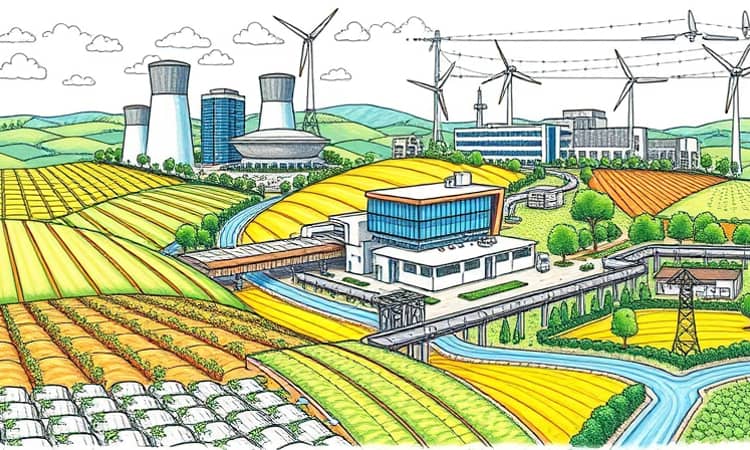
In a world fixated on popular stocks and mainstream sectors, remarkable opportunities often lie in the shadows. Overlooked investment areas with high potential returns are creating a new frontier for discerning investors willing to look beyond the index.
This article explores six contrarian themes—regenerative landscapes, data center ecosystems, water infrastructure, healthcare, utilities transitioning to renewables, and AI underlings with cash-flow plays—backed by research and real-world examples. By understanding barriers, momentum, and practical entry points, you can position your portfolio for unprecedented long-term growth and stability.
Embracing Regenerative Landscapes
The regeneration of the world’s thirty most valuable landscapes represents a $310 billion investment opportunity with projected IRRs of fifteen to thirty percent over the next decade. Agriculture currently emits one-third of global greenhouse gases, employs 1.3 billion people, and yet receives only seven percent of climate finance directed at sustainability.
Deforestation and land degradation have surged by seventy-one percent in recent years, threatening food security. Fragmented financing, weak policy alignment, and inconsistent standards keep most commercial investors on the sidelines. However, successful initiatives prove the model works.
- Landscape Accelerator Brazil: Fifteen corporates and twenty partners committed over $100 million, aiming for $1 billion by 2030.
- Mobilization targets: $5 billion for carbon, soil health, water, biodiversity, and farmer outcomes.
- Investor angle: Institutional asset managers can localize strategies by geography and commodity.
With blended finance—public, catalytic, and commercial capital—this sector can scale from pilot projects to global impact. Investors in agribusiness, banks, and insurers stand to gain from lower input costs and higher productivity.
Driving Returns with Data Center Ecosystems
Cloud computing and AI are generating exponential demand for data storage and processing. Major data centers consume vast energy and require sophisticated cooling solutions. While public attention goes to hyperscale facilities, the real gains lie in the supporting ecosystem.
Surging cloud and AI usage creates opportunities in energy suppliers, specialized power generation companies, and advanced cooling technology providers. These sub-areas often trade at valuation discounts compared to leading data center REITs.
During market downturns, such as the COVID-19-related sell-off, these assets proved resilient. Investors who targeted these niche segments captured strong upside as demand rebounded.
Water Infrastructure: A Hidden Gem
Water is life, and yet investment in water infrastructure and treatment remains surprisingly undervalued. Large institutions like BlackRock have begun acquiring water-related companies, recognizing fixed supply against growing global demand.
The universal need for clean water spans every region and demographic, making this theme a long-term scarcity play. Unlike flashy technology stocks, water infrastructure offers stable, predictable cash flows and a strong defensive profile in any economic cycle.
Healthcare’s Valuation Rebound
The Health Care Select Sector Index underperformed the S&P 500 by 22.4 percent in 2024, triggering $7.4 billion in ETF outflows—the largest of any sector. This pessimism has pushed valuations to attractive levels.
On average, healthcare stocks trade at a P/E discount of over twenty percent relative to the S&P benchmark, while earnings-per-share growth over the next three to five years is expected to outpace the index.
With stable unemployment, contained inflation, and manageable interest rates, the stage is set for an upside surprise in 2025 forecasts. Investors focusing on quality pharmaceuticals, medical devices, and select biotech names can benefit from this contrarian play.
Utilities: The Renewable Transition
Traditionally viewed as bond proxies, utilities are undergoing a fundamental shift from coal and natural gas to wind, solar, and hydrogen. Major players are investing heavily in generation, storage, transmission, and grid hardening to weather extreme weather events.
Contrary to the perception of low growth, these companies are reinvesting dividends into capital expenditure, improving return on equity and driving growth-oriented returns.
- Wind and solar generation expansion.
- Grid hardening projects to prevent outages.
- Energy storage and modern transmission networks.
Investors who understand rate-case cycles and long-term infrastructure needs can capture better risk-adjusted returns than many technology sectors.
AI Underlings and Cash-Flow Plays
After the 2024 AI frenzy concentrated gains in mega-cap stocks, 2025 is set to reward smaller AI-focused companies supplying critical hardware, semiconductors, and specialized software. These “underlings” often fly under the radar.
Alongside growth opportunities, cash-flow assets such as dividend-paying stocks and rental real estate provide stability. For example, investors can use platforms like M1 Finance for equities, Fundrise for real estate, and Vaulted for gold to build a diversified portfolio.
Entrepreneurs can also explore “3.5th” opportunities by creating businesses that address unmet needs in these emerging sectors.
2025 Outlook and Risks
As investors look ahead, several macro factors and policy shifts will influence performance in these uncommon areas. The following table summarizes key themes and insights:
Practical Steps to Access Uncommon Opportunities
Turning insight into action requires accessible tools and disciplined execution. Consider these entry points:
- Life insurance with cash value (e.g., Policygenius) for tax-advantaged funding.
- Real estate crowdfunding (e.g., Fundrise) for diversified property exposure.
- Equity and ETF platforms (e.g., M1 Finance) for targeted stock and sector plays.
- Physical gold investment (e.g., Vaulted) as a hedge against volatility.
By blending these vehicles, you can build a portfolio that captures growth, income, and resilience across overlooked asset classes.
Conclusion
Investing with uncommon sense means challenging consensus, embracing patience, and identifying neglected opportunities ahead of the herd. From regenerating landscapes to powering AI infrastructures, these themes offer compelling risk-adjusted returns and tangible societal impact.
As economic and policy landscapes evolve, the investors who diversify wisely into these sectors will be best positioned for sustained success. Seize the moment, deploy capital thoughtfully, and let uncommon sense guide your financial journey.