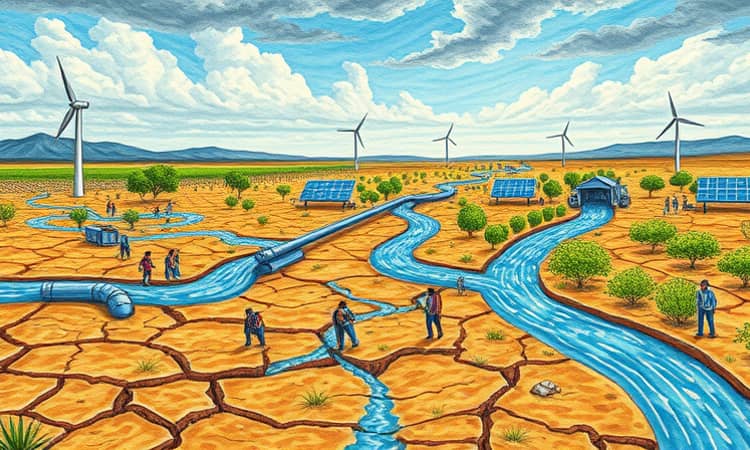
Water is the lifeblood of societies and ecosystems, yet it is rapidly slipping through our fingers. Across the globe, communities face mounting challenges as rivers shrink, aquifers deplete, and infrastructure falters under growing pressure. In this article, we explore why water scarcity demands urgent attention and how strategic investments can reshape the future of our most precious resource.
By examining the drivers of water stress, the human and economic toll of shortages, and the promising landscape of investments, we aim to inspire stakeholders—from policymakers to private investors—to act decisively. The time for understanding has passed; the time for bold solutions is now.
Defining Water Scarcity
Water scarcity occurs when the available supply cannot satisfy the needs of a region’s population. It stems from two main factors: physical shortages and economic barriers that impede access. When infrastructure fails or investment is lacking, communities suffer even if water exists nearby.
Today, over 2.2 billion people lack safe drinking water, and 4.5 billion people lack proper sanitation. Water consumption has risen sixfold over the past century, and by 2025, 1.8 billion people will face “absolute” scarcity. Every two minutes, a child dies from water-related disease—a stark reminder of the stakes.
Causes and Drivers of Scarcity
Multiple forces conspire to deplete and contaminate freshwater supplies. Understanding these drivers is key to devising effective investments.
- Climate change alters precipitation, triggering droughts in some regions and floods in others, while glaciers and rivers recede.
- Population growth is relentless—expected to hit 8.5 billion by 2030—driving up aggregate demand.
- Industrial pollution, pesticides, and untreated sewage contaminate both surface water and aquifers.
- Poor infrastructure in low-income and rural areas restricts access to safe water and sanitation.
- Overuse of groundwater for agriculture and industry causes falling water tables and land subsidence.
- Economic water scarcity arises from underinvestment in treatment, storage, and distribution systems.
Global Hotspots and Geography
Scarcity does not strike evenly. Certain regions face acute stress:
In South Asia, India’s per capita supply is plummeting, jeopardizing food security and livelihoods. In the MENA region, 12 of the world’s 17 most water-stressed nations converge around arid landscapes and urban growth. Sub-Saharan Africa grapples with economic scarcity, lacking the funding needed to build resilient networks. Pakistan, Yemen, Ethiopia, Mexico, and parts of China also contend with escalating shortages.
Within these zones, rural and marginalized communities often bear the brunt of scarcity. Women and children lose hours each day fetching water, sacrificing education and economic opportunity. As water stress mounts, up to 700 million people could be displaced by 2030, fueling migration and social unrest.
Economic and Societal Impacts
Water scarcity ripples across every sector of the economy, inflicting steep costs.
- Agriculture, the largest consumer, may need up to 1 trillion m³ more water annually by 2025. By 2050, irrigated demand up 19% due to population growth.
- Industry and energy are thirsty too: a projected 35% rise in energy use by 2035 will require 15% more water; industrial demand could surge 400% by 2050.
- Health impacts are severe—over 53,000 deaths per year link to waterborne diseases, while time lost collecting water hinders social and economic development.
- Broader economies suffer as input costs rise, productivity falls, property values decline, and conflicts flare over scarce resources.
Investment Opportunities in the Water Economy
Despite the crisis, the water sector offers compelling avenues for returns and impact. Investors can channel capital into proven and emerging solutions.
Infrastructure development remains foundational: replacing aging pipelines, expanding reservoirs, building treatment plants, and adopting leak detection systems to conserve precious supply.
In arid but affluent regions, desalination facilities convert seawater into potable water, albeit at high energy cost. Advances in membrane technology and renewable energy integration are driving down expenses.
Urban centers are increasingly adopting wastewater treatment and reuse, turning sewage into a reliable resource. On farms, precision irrigation, drought-resistant seeds, and metered pricing models promote agricultural efficiency and reduce waste.
New water rights markets enable trading and reallocation, ensuring water flows to its highest-value use. Simultaneously, digital monitoring—using smart meters and satellite imagery—optimizes distribution and demand management.
Policy, Governance, and The Cost of Inaction
Effective governance underpins sustainable water management. National water authorities must set usage standards, regulate pricing, and encourage private-sector participation. Economic instruments—such as volumetric tariffs and tradable rights—signal scarcity and incentivize conservation.
Cross-border rivers demand diplomatic coordination; treaties and joint investments protect shared basins from overexploitation. Striking a balance between supply augmentation—through new reservoirs and desalination—and demand management is crucial.
Failure to invest comes with steep consequences. By 2030, demand could exceed supply by 40%. Ecosystems will degrade, reducing their capacity to filter and store water, while geopolitical tensions intensify over contested resources.
Future Trends and Innovations
The water economy is at an inflection point. Environmental, social, and governance (ESG) criteria are steering capital toward sustainable water projects. Water-focused exchange-traded funds allow investors to gain diversified exposure to infrastructure, technology, and agribusiness firms tackling scarcity.
Climate-resilient infrastructure designed to withstand extreme droughts and floods is emerging as a priority. Simultaneously, artificial intelligence and machine learning applications optimize reservoir operations, predict consumption patterns, and guide adaptive policies.
Conclusion
Water scarcity is no theoretical concern—it is a present reality with profound human and economic costs. Yet, it also presents a unique opportunity to align financial returns with social impact. Strategic investments in infrastructure, technology, and governance can turn the tide, transforming scarcity into abundance.
As individuals, institutions, and governments mobilize capital and expertise, we can forge a resilient water economy. The choice is ours: embrace innovation and collaboration today, or face escalating crises tomorrow. Let us act decisively to ensure that every drop counts—for humanity and for the planet.