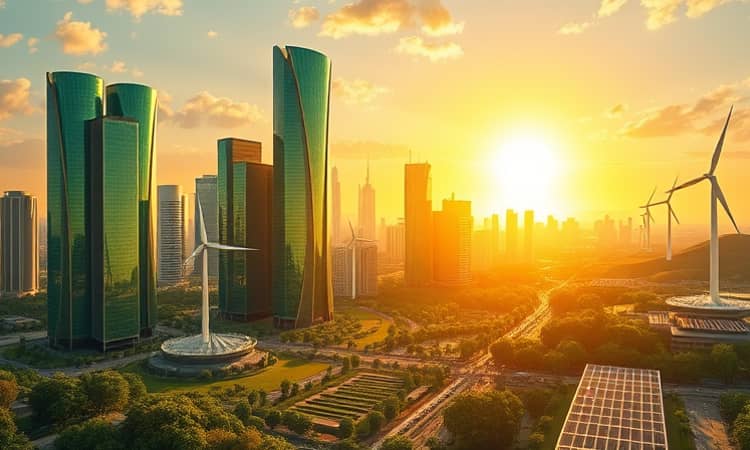
In an era defined by shifting expectations and mounting environmental challenges, the narrative that pits sustainability against economic growth has been thoroughly dismantled. Organizations that weave environmental stewardship into every facet of their operations are discovering an unparalleled competitive edge.
Rather than imposing constraints, a purpose-driven approach to resource management has emerged as a catalyst for innovation, resilience, and profitability. In 2026, the companies that thrive will be those that view profit and planet as inextricably linked.
Redefining Growth Through Sustainability
Executives worldwide have embraced the reality that environmental responsibility underpins long-term value creation. According to recent surveys, 75% of executives believe sustainability drives better business results, and 76% say it is central to their strategic planning.
Integration of sustainability into strategy has shifted from a peripheral concern to a boardroom imperative. For every 10% increase in emphasis on material ESG concerns, corporate valuation rises by 1.4%. Meanwhile, 55% of CEOs anticipate significant returns on their sustainability investments by 2030.
These figures illustrate the powerful alignment between environmental initiatives and shareholder value. Companies that fail to act risk falling behind in efficiency, brand reputation, and investor appeal.
Major Sustainability Trends Shaping 2026
As we approach the midpoint of the decade, ten key trends will define the business landscape. From decarbonization commitments to circularity, each represents both a challenge and an opportunity.
- Climate Leadership & Net Zero Commitments: More firms adopt science-based targets and invest in carbon removal.
- Energy Transition & Renewables Growth: Renewables supplied 61% of new capacity in 2025, led by solar and wind.
- AI & Data Center Dynamics: Explosive growth strains energy and water resources but fuels productivity.
- Water Stress & Resource Scarcity: Data centers in high-stress regions spur new water management solutions.
- Climate Adaptation & Resilience: Adaptation finance must triple by 2035 to meet rising risks.
- Circular Economy & Product Design: Closed-loop models reduce costs and material risk.
- Supply Chain & Critical Minerals: Electrification drives demand for lithium, copper, and rare earths.
- Biodiversity & Nature Disclosure: Only 8% of companies commit to protecting ecosystems.
- Carbon Pricing & Regulation: The EU’s CBAM will reshape global trade flows.
- ESG Reporting Evolution: Materiality-driven disclosure replaces box-checking compliance.
Together, these trends represent a dynamic, interconnected web of challenges. Companies that proactively integrate decarbonization pathways, circular design, and nature-based solutions will secure first-mover advantages.
Geopolitical and Economic Context
Global growth is forecast to slow to 2.7% in 2026, weighed down by structural headwinds and subdued investment. At the same time, energy and climate policy are fragmenting along regional lines, creating diverse regulatory environments.
Emerging markets face acute vulnerability to extreme weather events and resource scarcity. Private sector capital must fill gaps in public funding, with blended finance schemes aiming to unlock billions for nature restoration and adaptation projects.
Trade diplomacy increasingly revolves around critical minerals and carbon-adjusted imports. Businesses must navigate a complex mosaic of regulations, carbon border adjustments, and evolving sustainability standards to remain competitive.
Strategies for Business Leadership in 2026
To translate ambition into impact, companies must adopt a holistic approach, embedding environmental and social goals into every decision:
- Holistic Integration: Align sustainability with corporate strategy, operations, and leadership incentives.
- Disciplined Execution and Structured Planning: Move from pledges to measurable, time-bound actions.
- Data Center Growth as a Strategic Vertical: Leverage infrastructure expansion to drive new revenue and innovation.
- Circular Economy and Sustainable Product Design: Implement closed-loop manufacturing to reduce waste and cost.
Manufacturers that treat data center demand as a growth vector will tap into robust revenue streams across electrical systems, cooling solutions, and facility operations products. Meanwhile, circular design fosters resilience against raw material volatility.
Looking Ahead: Building a Resilient Future
As adaptation shifts from concept to core strategy, businesses must invest in both physical and transitional resilience. Nature-based solutions will play an outsized role in ecosystem restoration, water management, and biodiversity enhancement.
Climate adaptation and nature-based solutions will define corporate leadership, supported by tripled adaptation finance and standardized nature-related disclosures by the end of the decade.
Ultimately, the companies that rise to the top will be those that view sustainability not as a constraint but as a generator of innovation, differentiation, and trust. By harnessing the symbiotic synergy between growth and green, businesses will lead the way toward a prosperous, resilient future for all stakeholders.