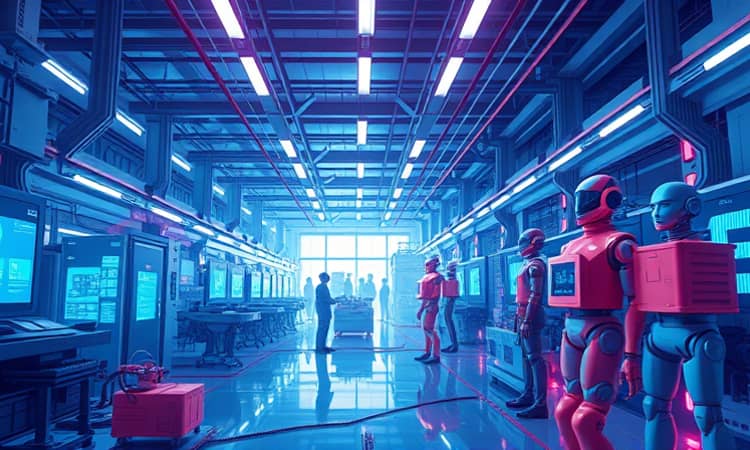
The dawn of intelligent automation has ushered in a transformative era across manufacturing, logistics, and beyond. As machines evolve from simple tools to adaptive partners, organizations worldwide stand at the threshold of unprecedented efficiency and resilience.
With factories reimagined by advanced algorithms and agile hardware, every production line gains the potential to self-optimize, foresee failures, and adapt to shifting demands. This article delves into the forces propelling growth and explores practical insights for businesses and professionals striving to harness the full power of this revolution.
Market Size and Projections
By 2026, the global robotics market projected to surpass USD 70–80 billion, with industrial and warehouse systems accounting for more than half of this surge. Growth remains steady, driven by investments that promise both speed and reliability.
The cumulative installed base of industrial robots is set to exceed 5.5 million units by 2026, reflecting a shift from pilot programs to large-scale deployments that embed robotics into core operations.
Financial advisors are taking note: 85% of advisors increasing attention to robotics investments, underscoring the belief that intelligent machines will shape portfolios and competitive advantage alike.
Key Drivers of Growth
Several interconnected forces are driving businesses to adopt robotic automation at an accelerating pace.
- Re-shoring manufacturing to domestic plants reduces supply chain risk and accelerates delivery timelines.
- E-commerce expansion fuels demand for same-day and next-day delivery systems in warehouses worldwide.
- Labor shortages and rising wages position robots as allies in high-speed or dangerous tasks, enabling human teams to focus on creative problem-solving.
- Geopolitical uncertainty and sustainability goals prompt 84% of manufacturers to seek new technology partnerships for resilient operations.
By addressing core challenges such as workforce gaps and environmental pressure, robotics solutions emerge not just as cost-cutters but as critical enablers of future-proof business models.
Major Trends for 2026
- AI & Autonomy: Analytical AI predicts failures; Generative AI simulates complex tasks; Agentic AI orchestrates hybrid human-machine decisions.
- IT-OT Convergence: Real-time analytics merge digital data and physical control, unlocking smarter, more secure factories.
- Humanoid Robots: Flexible platforms enter industrial settings, handling diverse tasks in human-designed environments.
- Physical AI Ecosystems: Factories become predictive systems with a “digital nervous system” for instant reaction and foresight.
- Simulate-then-Procure: Digital twins validate cell designs virtually, eliminating costly capital-expenditure guesswork.
Alongside these headline trends, cobots foster safe human-robot synergy, and dark warehouses operate 24/7 without lighting, driven by 99.99% uptime demands.
Key Segments and Technologies
The robotics landscape encompasses a variety of specialized markets, each experiencing rapid innovation and adoption.
Manufacturers tailor these segments to regional strengths, leveraging local expertise and partnerships for optimal results.
Regional Adoption Leaders
Asia-Pacific remains the fastest adopter, with China, South Korea, and Japan driving volume as India accelerates under ‘Make in India’ incentives. Europe’s robotics heritage centers on Germany’s precision engineering, while North America leads in automotive and warehousing applications.
This global dispersion underscores how robotics has become a strategic asset—factories and warehouses now serve as epicenters of competitiveness and innovation across diverse economies.
Company and Innovation Examples
Novus Hi-Tech in India exemplifies the rise of domestic champions, developing indigenous AMRs and AGVs for automotive and e-commerce clients. Their end-to-end warehouse systems showcase how local R&D can deliver global-class solutions.
Across the industry, agile partnerships and retrofit programs extend the lifecycle of existing assets, allowing companies to modernize incrementally while managing capital expenditures.
Future Outlook Beyond 2026
Looking ahead to 2030, we anticipate AI-powered autonomous factories with minimal intervention, where machines manage entire workflows and humans serve as strategic overseers. Cobots will evolve further, gaining context awareness and adaptive learning capabilities for safer collaboration.
Investment momentum is expected to accelerate post-2025, driven by U.S. re-industrialization efforts and Europe’s digital transformation strategies. Meanwhile, caution around cybersecurity and integration complexity will shape implementation roadmaps.
Impacts: Economic, Workforce, and Societal
Economically, robotics unlocks new productivity frontiers, increasing throughput and reducing lead times. Organizations embedding automation gain resilience against disruptions and stand ready to scale with demand.
On the workforce front, routine or hazardous roles yield to robots, empowering employees to concentrate on judgment, creativity, and innovation. This shift fosters a more skilled and motivated workforce.
Societally, the robotics revolution redefines the human-machine relationship, raising important questions about ethics and responsibility. As machines gain autonomy, leaders must ensure alignment with human values and safety standards.
In summary, 2026 marks a turning point where robotics transcend niche projects and become embedded across industries. By understanding market dynamics, harnessing key trends, and preparing for long-term impacts, organizations can confidently navigate this revolution and unlock its vast potential.