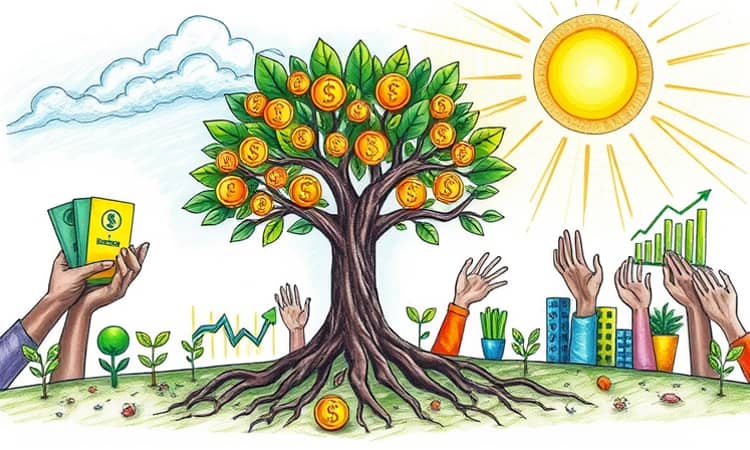
Imagine a world where your investments do more than grow your wealth—they reflect your deepest values and contribute to a better future.
Ethical investing is no longer a niche pursuit but a mainstream movement that merges financial acumen with social responsibility.
This article guides you through crafting a portfolio that champions both profit and purpose, offering practical steps and insights for the modern investor.
Understanding Ethical Investment: Beyond the Basics
Ethical investing is an investment strategy where choices are driven by personal ethical codes, such as religious or social values.
It differs from broader approaches by focusing on subjective alignment with what matters most to you.
The goal is to encourage companies to adhere to higher standards, fostering a cycle of positive change through investment and engagement.
In 2026, a significant shift is underway, anchoring ethical strategies to financial materiality and risk assessment.
This means that environmental, social, and governance (ESG) factors are now evaluated for their direct impact on cash flows and valuations.
Labor practices or climate risks, for instance, can affect a company's bottom line and long-term viability.
Key Ethical Investing Strategies to Implement
To build an ethical portfolio, start by exploring these primary approaches.
Each method offers a unique way to align investments with your values.
- Positive Screening: Select companies excelling in ESG performance and committed to social or environmental initiatives.
- Negative Screening: Exclude industries involved in controversial practices like tobacco or fossil fuels.
- Best-In-Class Approach: Choose top ESG performers within their sectors to reward leadership.
- Shareholder Activism and Engagement: Actively influence corporate practices through dialogue and voting.
- Thematic Investing: Focus on specific themes, such as renewable energy or gender equality, that match your priorities.
These strategies empower you to tailor your investments for maximum ethical impact.
Diverse Investment Vehicles for Your Portfolio
Ethical investing offers a variety of products to suit different risk profiles and goals.
Consider these options to diversify and strengthen your lineup.
- Individual stocks: Research companies' sustainability reports and employee cultures for direct investment.
- Exchange-traded funds (ETFs): Provide diversified exposure across ethical themes or sectors.
- Mutual funds: Pool resources into funds that prioritize socially responsible companies.
- Green and social bonds: Finance projects with clear environmental or social benefits.
- Community investing: Support local initiatives through development institutions or crowdfunding.
This array ensures flexibility in achieving both financial and ethical objectives.
Trends Shaping Ethical Investing in 2026
The landscape is evolving rapidly, driven by global challenges and technological advances.
Stay ahead by understanding these key trends.
- Climate adaptation over mitigation: With rising physical risks, focus shifts to resilience and natural capital preservation.
- ESG integration is mainstream: Over 96% of investors in Canada use ESG factors, embedding sustainability into core processes.
- Redefinition of responsible capital: Industries like defence are being re-evaluated through an ESG lens for strategic importance.
- AI's impact on ESG: Artificial intelligence enhances data analysis but introduces governance and labour risks.
- Energy system integration: Clean energy scalability drives economic transitions beyond regulatory mandates.
These trends highlight the dynamic nature of ethical investing today.
Building Your Ethical Investment Portfolio: A Step-by-Step Guide
Crafting a responsible roster involves careful planning and ongoing management.
Follow these steps to create a portfolio that aligns with your values and financial goals.
- Clarify your criteria: Define exclusions, set priorities like carbon neutrality, and establish measurable objectives.
- Select intermediaries: Choose platforms or advisors with transparent ESG methodologies and third-party ratings.
- Consider key factors: Focus on diversification, asset allocation based on risk tolerance, and risk management for liquidity issues.
- Monitor and rebalance: Regularly review performance, adjust allocations, and stay updated on emerging ethical issues.
This proactive approach ensures your portfolio remains effective and aligned.
This table helps visualize how each strategy can fit into your overall plan.
Performance, Benefits, and Challenges
Ethical investments often deliver strong financial returns, with green funds outperforming traditional counterparts.
Companies with clear sustainability data enjoy lower financing costs and higher valuations.
Benefits include reduced risk and enhanced portfolio diversification, making ethical choices financially prudent.
However, challenges exist that require vigilance.
- Greenwashing: Be wary of misleading sustainability claims that can undermine trust.
- Defining universal values: Subjectivity in ethics means personal alignment is key.
- Limited liquidity: Some ethical investments may have smaller markets, affecting flexibility.
- Underperformance risk: Individual picks might lag behind benchmarks, necessitating careful selection.
By acknowledging these factors, you can navigate the ethical investing landscape more effectively.
The Evolution and Future of Responsible Investing
Ethical investing has matured from an activist gesture to a strategic dimension of asset management.
It proves that moral responsibility and financial returns are complementary, not mutually exclusive.
Mainstream adoption is driven by regulatory frameworks like the EU's Sustainable Finance Disclosure Regulation and increased reliance on ESG data in decision-making.
As interest rates fluctuate, ethical considerations will play a central role in IPOs and mergers, solidifying their importance.
Embrace this evolution to build a portfolio that not only grows your wealth but also contributes to a sustainable and equitable world.
Start today by reflecting on your values and taking the first step toward a more responsible financial future.