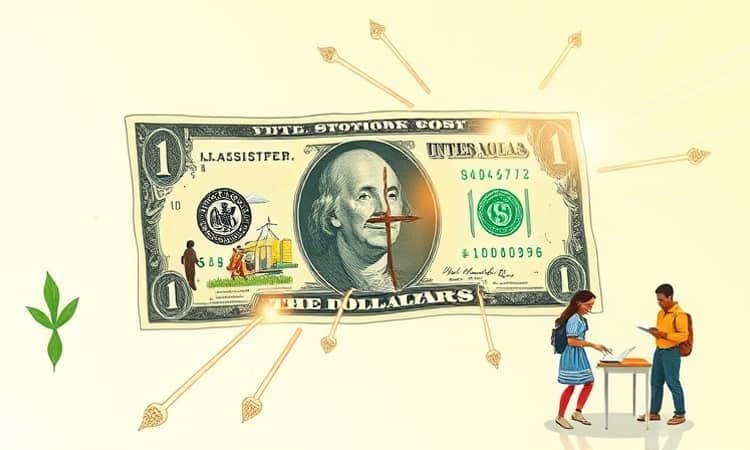
Every dollar you spend, save, or invest is more than just a number on a screen; it's a force that ripples through economies and touches lives across the globe.
In a world of slowing growth and shifting policies, understanding where your money goes can empower you to make choices that resonate with responsibility and impact.
The US dollar index (DXY) fell about 9–10% in 2025, yet it remains a dominant force shaping markets and communities.
The Real Economy: Where Your Dollar Lands
Your dollar journeys through consumption, taxes, finance, and trade, each path influencing who benefits and who struggles.
When you buy a product, part of that dollar flows to workers, suppliers, and governments in distant lands.
- Consumption supports jobs and drives demand in sectors from retail to services.
- Taxes fund public goods like infrastructure and education, redistributing wealth.
- Finance channels savings into investments that can spur innovation or fuel speculation.
- Trade connects global supply chains, affecting livelihoods from factories to farms.
For example, the dollar's depreciation in 2025 made US exports cheaper but imports costlier, altering economic balances.
This dynamic means your spending habits can either support fair labor practices or perpetuate inequalities.
Policy and Markets: Shaping the Impact
Governments and central banks wield immense power over how your dollar interacts with the world.
The Federal Reserve's easing phase, with 3–4 further rate cuts expected in 2026, aims to protect jobs but can lead to higher borrowing and spending.
A resilient dollar environment persists despite volatility, influencing global investment flows and economic stability.
- Federal Reserve policy affects credit costs, directing dollars toward sectors like housing or AI data centers.
- Rate cuts may boost growth, but later inflation from tariffs could force rates higher again.
- This creates a cycle where monetary decisions ripple out to affect everyday people.
Fiscal policies, such as the 'One Big Beautiful Bill', inject trillions into the economy, prioritizing areas like green tech and defense.
This spending can revitalize communities but also risks leaving others behind if not managed equitably.
Trade policies, including tariffs, disrupt global supply chains and add costs that often burden ordinary families.
The proposed 'Liberation Day' tariffs could push US inflation up by 1–1.5 percentage points, creating a stagflation risk.
This means your dollar in a tariff-heavy world might support domestic producers at the expense of global cooperation.
Structural Trends: AI, Energy, and Global Dynamics
Long-term shifts like the AI boom and energy independence redefine where capital flows and who benefits.
Up to $3 trillion in AI investment is projected, drawing foreign capital into US markets and creating a 'floor' under the dollar.
Continuous inflow of foreign capital sustains dollar strength, but over-reliance on tech poses risks of market downturns.
- AI investments drive demand for data centers, impacting local jobs and energy grids.
- This can lead to housing pressures or a shift toward renewable energy sources.
- The climate footprint of AI must be weighed against its potential for innovation.
Energy policies shape geopolitical landscapes, with US independence offering stability but tariffs influencing global flows.
Your dollar spent on domestic energy supports local economies, while imported energy dollars might fund regimes with poor human rights records.
This highlights how energy choices intertwine with ethical considerations and global power dynamics.
Individual Choices: Empowering Your Dollar
You hold the power to steer your money toward positive change through conscious decisions in spending, banking, and investing.
Every purchase is a vote for the kind of world you want to live in, affecting people and places worldwide.
What you buy can support sustainable supply chains or contribute to environmental degradation.
- Choose products from companies with fair labor practices to uplift workers.
- Prioritize local businesses to strengthen community resilience and reduce carbon footprints.
- Opt for renewable energy sources to combat climate change and promote innovation.
Where you bank and invest matters, as financial institutions channel funds into projects that shape societies.
Investing in green bonds or ethical funds can drive capital toward solutions for global challenges like poverty or health crises.
Consider diversifying currencies to hedge against dollar volatility and support emerging economies.
- Hold assets in euros or renminbi to participate in global growth opportunities.
- This diversification can reduce reliance on the dollar's dominance and foster economic balance.
- It also aligns with a responsible approach to personal finance in an interconnected world.
The dollar's role as a reserve currency is increasingly questioned due to sanctions and political uncertainty.
When the US uses financial sanctions, it can defend human rights but also motivate alternatives, affecting global trust.
Your choices can advocate for transparency and rule of law, influencing how monetary systems evolve.
Practical Steps for a Responsible Dollar
To make your money touch lives positively, start with small, actionable changes that build toward larger impact.
Educate yourself on the origins of products and the ethics of companies you support.
Global growth of 0.4% in 2026 underscores the need for mindful consumption and investment.
- Track your spending to identify areas where you can shift toward more sustainable options.
- Engage with community banks or credit unions that invest locally and ethically.
- Advocate for policies that promote fair trade and environmental stewardship.
Remember, the dollar's journey is shaped by collective actions, and your role is crucial in this narrative.
By aligning your financial habits with values of responsibility, you contribute to a more equitable and resilient global economy.
Let your dollar be a beacon of hope, touching lives through every transaction and investment you make.