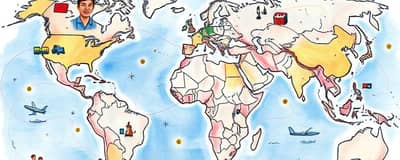
In an age defined by information, the ability to peer into imminent economic shifts is no longer a luxury but a necessity. From global finance to local retail, organizations are harnessing the power of predictive analytics to transform raw numbers into strategic foresight. This article delves into the methodologies, applications, and future trends that make data-driven forecasting a cornerstone of modern decision-making.
Understanding Predictive Analytics
At its core, predictive analytics merges historical information with sophisticated algorithms to produce actionable forecasts. By identifying patterns and trends hidden in vast datasets, businesses can forecast future market moves with increasing confidence. These insights reduce uncertainty, guiding leaders through volatile markets with evidence-based strategies.
The essence of this approach lies in continuous improvement. Models are retrained as new data arrives, refining their accuracy over time. The result is a dynamic system that evolves alongside market conditions, offering a reliable compass for executives, traders, and planners.
Key Techniques and Methods
Modern predictive analytics employs a range of statistical and machine learning approaches. Each method contributes unique strengths, and hybrid systems often combine multiple techniques for optimal performance.
- Machine Learning Algorithms such as decision trees, regression models, and neural networks process vast inputs to predict outcomes like stock prices or consumer demand.
- Time Series Analysis techniques, including ARIMA and exponential smoothing, detect seasonal cycles and long-term trends in chronological data.
- Natural Language Processing and Sentiment Analysis extract qualitative signals from news feeds and social media, enhancing quantitative forecasts with sentiment-driven adjustments.
- Ensemble Methods and Hybrid Approaches blend multiple models—bagging, boosting, and rule-based systems—to elevate forecasting precision and robustness.
Additionally, explainable AI (XAI) frameworks are gaining traction, ensuring that predictions remain transparent and interpretable. By 2025, Gartner estimates that 85% of AI initiatives will require such clarity to meet regulatory and ethical standards.
Data Sources and Processing
High-quality inputs form the backbone of any predictive endeavor. Organizations draw on a diverse array of streams to build comprehensive datasets.
- Transactional records and sales figures from internal databases.
- Social media streams and news articles, harvested via APIs and web scraping.
- IoT sensor readings that provide continuous real-time inputs from manufacturing equipment or retail environments.
- External factors such as weather data, geopolitical events, and economic indicators.
Robust data preprocessing—cleaning, normalization, and feature engineering—ensures that models operate on accurate, relevant variables. Tools like Python, R, and visualization platforms such as Tableau and Power BI facilitate this transformation, making raw figures intelligible and analysis-ready.
Industry Applications in Finance and Beyond
Predictive analytics is reshaping a wide array of sectors, with finance and retail leading the charge. In trading, algorithms process historical price movements alongside sentiment signals to anticipate market swings and execute timely trades.
Retail chains leverage forecasting to align inventory with expected demand, minimizing stockouts and overstock scenarios. Marketing teams deploy churn prediction models to identify at-risk customers, tailoring retention campaigns that boost loyalty.
- Finance/Trading: Stock price prediction, fraud detection, and risk assessment.
- Retail/Marketing: Demand forecasting, inventory optimization, and personalized recommendations.
- Manufacturing/Supply Chain: Preventive maintenance and resource allocation.
- Healthcare: Patient outcome prediction and operational efficiency improvements.
Trends Shaping 2025 and Beyond
As we move deeper into the decade, several forces will amplify the impact of predictive analytics. First, the democratization of data tools empowers teams at every organizational level to craft models without extensive coding expertise.
Second, the integration of AI with automation platforms will create self-optimizing systems that adjust parameters in real time, delivering higher forecasting accuracy and precision. Third, a heightened focus on data ethics and privacy will drive the adoption of frameworks that guarantee responsible and ethical data usage, fostering public trust and regulatory compliance.
Building a Predictive Model: A Step-by-Step Guide
Constructing a robust forecasting engine involves a structured, iterative process:
- Data Collection and Preparation: Aggregate historical records, cleanse anomalies, and engineer relevant features.
- Exploratory Analysis: Visualize and test hypotheses to uncover correlations and seasonal behaviors.
- Model Training: Employ diverse algorithms, tuning hyperparameters for optimal performance.
- Validation and Simulation: Stress-test scenarios, evaluate risk tolerance, and refine assumptions.
- Deployment and Monitoring: Integrate models into production systems, apply continuous learning loops, and track performance against real-world outcomes.
This cyclical approach ensures that forecasting tools remain responsive to emergent trends, delivering sustained value over time.
Measuring Success: Critical Metrics
Effective deployment hinges on tracking performance through clear, quantifiable metrics. The following table highlights key indicators and their impact on strategic goals.
Embracing the Future with Confidence
The journey toward predictive mastery is both challenging and exhilarating. By weaving together advanced algorithms, diverse data sources, and ethical practices, organizations can unlock unprecedented foresight. The rewards are substantial: cost savings, risk mitigation, and a sharpened competitive edge.
Ultimately, the prudent predictor is not the one who collects the most data, but the one who translates insights into decisive action. As you embark on this path, remember that every forecast is an opportunity to learn, adapt, and innovate. With rigorous methodologies and a commitment to transparency, the future becomes not a mystery to be feared, but a landscape to be charted with confidence.