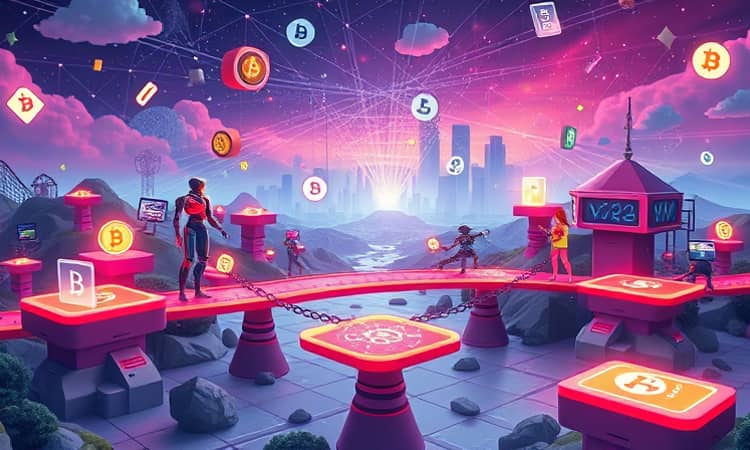
In the rapidly evolving world of decentralized finance, innovation takes center stage. Developers and users alike find themselves in what can best be described as a smart contract sandbox, where experimentation and creativity drive the next wave of financial services.
Welcome to the Protocol Playground
The concept of a “protocol playground” captures the essence of DeFi’s open and composable nature. Anyone with a wallet and some gas can fork, remix, and deploy a protocol. This permissionless access fuels rapid iteration and inspires bold experiments.
Much like children testing ideas in a play yard, DeFi innovators conduct hackathons, launch testnets, and deploy forks of established codebases. These experiments range from minor tweaks in tokenomics to entirely new mechanisms for lending, trading, and staking.
The Foundations of DeFi
Before diving into the cutting-edge, it helps to understand the basics. DeFi protocols are decentralized financial systems built on blockchains that use smart contracts to automate services normally provided by banks and intermediaries.
Key mechanisms include liquidity pools, automated market makers (AMMs), yield farming, staking, and governance tokens. Users access these services via decentralized applications (dApps) that serve as frontends to on-chain code.
Ethereum remains the epicenter, but alternative platforms like Binance Smart Chain, Solana, Polkadot, Cosmos, and various layer-2 solutions host thriving DeFi ecosystems. Interoperability primitives—bridges, messaging layers, and cross-chain standards—enable assets and data to flow freely.
State of DeFi in 2025
By 2025, DeFi’s market size is projected to land between $26.94 billion and $86.53 billion, depending on which analysis you consult. What was once a nascent field of high-risk yield farming has matured into a more secure, diverse landscape.
- Lending & Borrowing: Platforms like Aave and Compound continue to set benchmarks.
- DEXs & AMMs: Uniswap, SushiSwap, and GMX refine on-chain trading.
- Yield Aggregators: Yearn Finance and AlphaVault deliver automated optimization.
- Stablecoins & CDPs: MakerDAO remains the gold standard.
The total value locked (TVL) in DeFi reached heights in 2021, then retrenched during market downturns. Yet “post-crash” DeFi emphasizes risk awareness and robust security practices, making it more resilient today.
Blue-Chip Protocols and Core Categories
These anchor points illustrate how protocols have become blue-chip reference standards for newcomers seeking stability amid experimentation.
New Frontiers: Experimenting with DeFAI and Automated Vaults
One of the most compelling trends is the rise of AI-driven vaults—often dubbed “DeFAI.” Instead of manual yield farming, users deposit assets into vaults managed by specialized agents.
AlphaVault by Theoriq exemplifies this shift. Its multi-agent system adapts to market changes, processing over 65 million agent requests across 2.1 million wallets during testnet trials. This AI-driven strategy aims to optimize returns while retaining transparency on decision logic.
However, automation introduces a trade-off: black-box concerns versus hands-off convenience. Protocol teams respond by sharing model details, backtesting results, and governance frameworks that allow community oversight.
Gamified Bootstrapping and Community Participation
Emerging protocols often employ liquidity bootstrapping pools and gamified participation to kickstart ecosystems. Early adopters lock assets in exchange for points, which convert into native tokens once the protocol launches.
- Points meta and airdrop mechanics cultivate early loyalty.
- ve-tokenomics encourages long-term staking for governance power.
- Large-scale testnets simulate real-world conditions before mainnet rolls.
This approach transforms token distribution into an interactive experiment, fostering a sense of ownership and shared purpose among participants.
Cross-Chain and Omnichain Innovation
The playground extends beyond single chains. Cross-chain pioneers like Polkadot and Cosmos enable protocols to operate seamlessly across multiple networks. Bridges and messaging layers—LayerZero, deBridge, Allbridge Core—facilitate asset transfers and composable interactions.
Projects now design omnichain protocols that treat multiple blockchains as a unified canvas. This multi-chain ecosystems mindset unlocks higher liquidity, broader user bases, and creative money legos that span distinct layers.
Community Governance and DAO Evolution
Early DeFi protocols often revolved around anonymous founders and token-centric incentives. The new wave emphasizes community governance through decentralized autonomous organizations (DAOs). Decisions on upgrades, treasury allocations, and partnerships arise from on-chain voting.
Governance designs evolve too, introducing quadratic voting, delegated staking, and reputation models. These mechanisms aim to balance broad participation with expert insight, ensuring that the protocol grows in a direction aligned with stakeholder interests.
Regulatory Realities and Risk Mitigation
As DeFi grows, regulators worldwide sharpen their focus. Protocol teams refine tokenomics, compliance tools, and audit processes. Enhanced security standards—formal verification, multi-sig vaults, bug bounties—reduce vulnerabilities.
Risk management protocols and insurance products provide coverage against smart contract failures, oracle attacks, and liquidity crises. Acknowledging that no protocol is infallible, the ecosystem builds safety nets to protect users and maintain trust.
Looking Ahead: Endless Possibilities
The protocol playground thrives on experimentation. We can expect further advances in:
- Real-world asset tokenization, bridging traditional finance and DeFi.
- Intent-based systems that translate user goals into on-chain actions.
- Enhanced AI autonomy, offering bespoke financial advice on-chain.
Ultimately, the story of DeFi is one of continual reinvention. From simple AMMs to complex omnichain vaults, each innovation reshapes how we think about money, trust, and collaboration. The protocol playground remains open—inviting builders and users to co-create the future of finance.