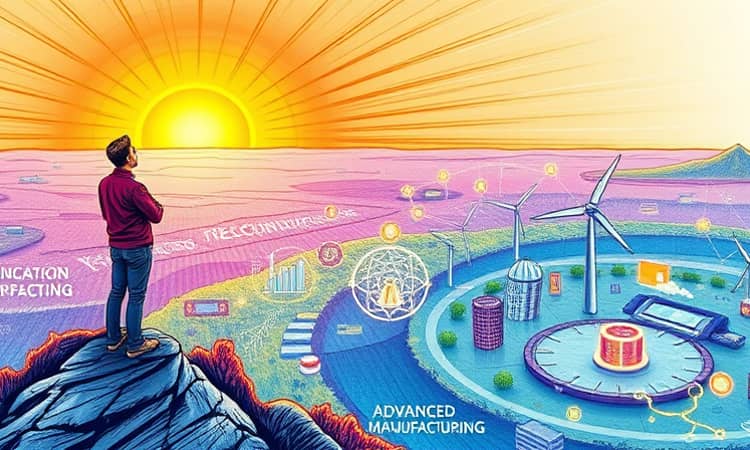
In a rapidly shifting global economy, visionary individuals and organizations can uncover hidden avenues for growth by aligning with structural tailwinds. This exploration reveals how to harness macroeconomic trends, emerging technologies, and cross-sector synergies to craft a path toward sustainable success.
Macroeconomic Landscape
As we enter 2026, the U.S. economic expansion is moderating, with GDP growth projected around 1.5% by the OECD and 1.8% by the Federal Reserve Bank of Philadelphia. Unemployment may edge up to 4.5%, providing a delicate balance between labor availability and wage pressures. Globally, growth is forecast at 3.1%, led by an estimated 4.5% advance in Asia. These figures underscore the importance of selecting the right sectors to outperform and innovate.
Meanwhile, reshoring drives U.S. manufacturing boom, with $1.2 trillion in production investments and 68% of manufacturers expanding regional capacity. Corporate leaders are increasingly focusing on new products and services strategies, rising to 58% in 2026 from 53% in 2025. By understanding these macro trends, opportunity seekers can position themselves at the forefront of economic renewal.
Technology Frontiers
Technology remains a dominant force for growth, driven by artificial intelligence, connectivity, and the digitization of every industry. The enterprise AI market is set to reach $53.06 billion by 2026, with 92% of organizations boosting investments. Data centers alone account for more than $250 billion in annual spending.
Fastest-growing niches include:
- Autonomous underwater vehicle manufacturing (22.5% revenue growth)
- Speech and voice recognition software (12.0%)
- SEO and internet marketing consultancy (16.0%)
- Digital advertising agencies (10.4%)
The 3D printing sector will generate $3.9 billion by 2025, expanding at a 6.4% CAGR and shifting toward serial production in aerospace and medical devices. Additionally, machine learning and connectivity breakthroughs are fueled by 5G and IoT, enabling real-time analytics in manufacturing, healthcare, and smart cities.
Energy Renaissance
The energy sector is undergoing a profound transformation as renewables and electric vehicles reshape supply and demand. Annual renewable capacity additions are projected between 30 and 66 GW through 2030, underpinned by the Inflation Reduction Act, despite legislative headwinds.
Key growth rates for 2026 include:
- Hybrid and electric vehicle manufacturing (21.2% revenue growth)
- Solar power installations (19.0%)
With 500,000 EV chargers planned nationwide and global EV sales surging 20% in 2024 (35% year-over-year in early 2025), investment in charging infrastructure and storage solutions offers lucrative opportunities. Declining costs in solar, wind, and battery technologies further underpin long-term returns in climate tech and sustainability services.
Manufacturing Revival
Manufacturing is experiencing a renaissance driven by automation, reshoring, and significant government incentives. Construction spending reached $230 billion in January 2025—triple the 2021 level—and though a modest 2–3% pullback is expected, focus remains on semiconductors, electric vehicles, and battery plants.
Approximately 80% of manufacturers are investing in hardware, sensors, analytics, and cloud platforms to build intelligent factories and digital supply chains. Advanced manufacturing is projected to grow 25% in 2026, while semiconductor capacity in the U.S. will expand by 203% thanks to the CHIPS Act. The AI and data center boom continues to fuel demand for high-performance chips, robotics, and specialized materials.
Healthcare Innovations
The healthcare sector is ripe for disruption, with digital health markets exceeding $420 billion in 2025 and expected to top $1 trillion by 2034. Telehealth, remote patient monitoring, and AI-driven diagnostics have become mainstream, offering scalable solutions to aging populations and chronic disease management.
Biotechnology is accelerating with cell and gene therapies, personalized medicine, and a record pace of FDA approvals. The convergence of digital tools and life sciences is creating smarter, patient-centric care pathways, reducing costs and improving outcomes. Post-pandemic policy reforms continue to favor tech-enabled healthcare services, making this sector a cornerstone of long-term growth.
Emerging Horizons
Beyond the four core sectors, several additional industries are poised for rapid expansion. These segments benefit from digitalization, urbanization, and evolving consumer preferences, creating a mosaic of opportunities.
Navigating these emerging horizons requires a clear framework: assess CAGR and market size, evaluate technology maturity, analyze policy tailwinds, and consider demographic shifts. By doing so, investors and entrepreneurs can identify niche markets on the cusp of mainstream adoption.
Strategies for Opportunity Seekers
To capitalize on these growth sectors, consider the following actionable strategies. They blend quantitative analysis with qualitative insights, ensuring a balanced, forward-looking approach.
- Screen sectors by projected CAGR and addressable market size.
- Prioritize technologies with proven adoption and scalable infrastructure.
- Leverage policy incentives and sustainability mandates to de-risk investments.
- Forge partnerships across industries to exploit cross-sector synergies.
- Invest in talent development to support cutting-edge research and operations.
By integrating these tactics, opportunity seekers can build resilient portfolios and agile businesses capable of thriving amid uncertainty.
Conclusion
In 2026 and beyond, growth will favor those who anticipate structural shifts and act decisively. Whether through harnessing AI in manufacturing, powering the renewable energy transition, reshoring critical supply chains, or revolutionizing healthcare, the possibilities are vast.
Ultimately, success belongs to the strategic few who adopt a holistic view—merging macroeconomic insight, sector expertise, and a willingness to innovate. As an opportunity seeker, your journey starts by asking the right questions, assembling the right partnerships, and embracing the endless potential of tomorrow’s economy. Seize the moment with conviction and creativity, and you will shape the future of industry and prosperity.