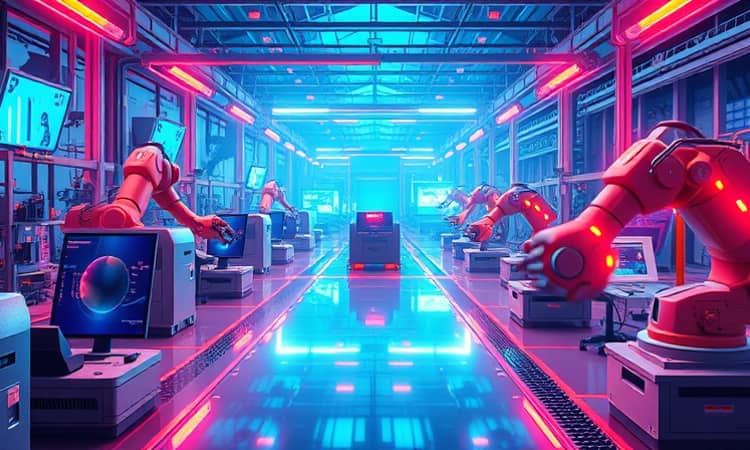
The dawn of cognitive agency meets human ingenuity marks a pivotal shift in manufacturing. By 2035, we stand on the cusp of Industry 5.0, where smart factories embrace sustainability, resilience, and unprecedented collaboration between people and machines.
Historical Context: From Mechanization to Intelligent Systems
The journey through industrial revolutions has been long and transformative. The first revolution harnessed steam and water power; the second introduced mass production with electricity; the third automated processes through electronics and IT. Now, Industry 4.0 accelerated change with real-time monitoring and predictive maintenance, connecting machines through IoT, AI, cloud computing, and robotics.
Unlike prior eras that spanned decades, Industry 4.0’s rise has been explosive. Manufacturers rapidly adopted digital twins, big data analytics, and cyber-physical systems to optimize quality and efficiency. Yet, as complexity grows, the next frontier demands more than connectivity—it requires autonomy, sustainability, and human-centered innovation.
Key Technologies Driving the Transformation
Major Trends and Transformative Impacts
Industry 5.0 elevates traditional manufacturing by integrating sustainability with digital excellence. Executives foresee a renaissance of onshore factories and local energy, reshaping supply chains and geopolitics.
- Enhanced Productivity and Efficiency: Automation and AI streamline workflows, reducing downtime and waste. Companies invest heavily in line reconfiguration and modular systems.
- Mass Customization at Scale: Flexible production lines deliver tailored products rapidly, satisfying evolving consumer demands.
- Supply Chain Resilience: Reshoring and autonomous logistics mitigate geopolitical risk, with 90% of firms preparing for near-market production by 2035.
- Sustainability and Circular Economy: "Twin transformation" aligns green practices with digital initiatives, driving carbon-neutral operations.
The impact reaches every level of manufacturing. Predictive analytics identifies defects before they occur, AI-driven robotics adapt in real time to variations, and digital twins simulate scenarios to avoid costly disruptions.
Challenges to Overcome and Strategic Recommendations
Transitioning to Industry 5.0 poses significant hurdles. Legacy infrastructure, ethical concerns around AI, and siloed digital and sustainability initiatives can stall progress. Flexible regulations and cross-functional alignment become critical.
- Integrated Leadership: Establish a "twin transformation" office that unites CIO, CSO, and COO under a shared vision.
- Systemic Reinvention: Move beyond pilot projects to enterprise-wide adoption of scalable, modular technologies.
- Workforce Upskilling: Invest in continuous learning programs, preparing employees for human-AI collaboration.
Companies that cultivate an environment of experimentation and learning will build a sustainable competitive advantage. This requires clear governance, robust data infrastructure, and an unwavering commitment to ethical AI.
Leadership Steps for Immediate Action
As 2025 unfolds, leaders should seize available funding and policy incentives, such as government AI grants and reshoring subsidies. Key actions include:
- Audit current capabilities across digital, sustainability, and resilience domains.
- Develop a unified roadmap that prioritizes investments based on impact and feasibility.
- Partner with technology providers and research institutions to pilot advanced solutions.
- Foster cross-functional teams that bridge operations, IT, and sustainability.
Early movers will tap into billions of dollars in investment and unlock exponential value by aligning strategic priorities with emerging trends.
Vision 2030–2035: A Sustainable, Resilient Manufacturing Ecosystem
Looking ahead, the factories of 2035 will be vibrant ecosystems of human creativity and machine intelligence. Autonomous systems will execute self-healing processes, and local renewable energy microgrids will power onshore manufacturing hubs.
Human-AI collaboration and resilience will drive continuous innovation, enabling companies to scale modular production lines globally with minimal disruption. Supply chains will anticipate shocks, dynamically rerouting components via AI agents, ensuring seamless operations.
Manufacturers that embrace this transformation will not only achieve operational excellence but will also contribute to a sustainable planet. The integration of circular economy principles and digital innovation will forge a new era of prosperous, responsible industrialization.
Conclusion: Embracing the Renaissance
The transition to Industry 5.0 represents more than a technological shift; it is a renaissance of manufacturing philosophy. By 2035, the convergence of AI, sustainability, and human-centered design will establish a resilient, equitable, and innovative global industrial landscape.
Organizations that act decisively today—investing in modular systems, fostering cross-disciplinary leadership, and committing to "twin transformation"—will emerge as leaders in the next industrial age. The time to embrace this revolution is now, as the path to a smarter, greener, and more resilient manufacturing future lies within our grasp.