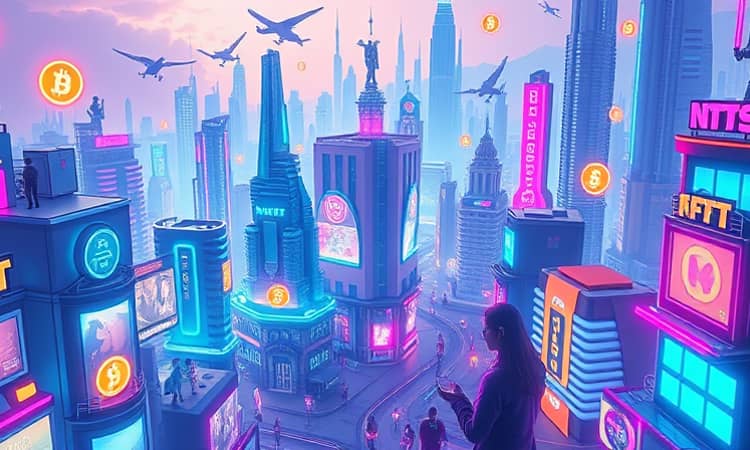
Imagine stepping into a boundless digital realm where your virtual avatar strolls through skyscrapers of code, trades unique artworks in neon bazaars, and secures loans against shimmering parcels of virtual land. This vision is no longer confined to science fiction; it’s the emerging reality of the metaverse. As we stand at the threshold of a new economic frontier, understanding how digital assets become real collateral is essential for innovators, lenders, and dreamers alike.
Understanding the Metaverse and Digital Economy
The metaverse is not a single platform but a collection of interconnected virtual and augmented reality spaces where people meet, work, play, and transact. Powered by blockchain, AI, and machine learning, it forms a decentralized online ecosystem powered by blockchain that spans from partially augmented overlays on our physical world to fully immersive VR universes.
Users enter as avatars—digital representations that buy, sell, and interact in persistent environments. Here, digital scarcity arises through non-fungible tokens (NFTs), which certify ownership of art, music, avatars, or virtual real estate. These assets form the bedrock of a vibrant persistent shared experiences spanning virtual worlds, enabling economies that mirror, and sometimes outpace, their physical counterparts.
Market Growth and Digital Real Estate Revolution
Today’s forecasts paint an astonishing picture. Conservative estimates value the metaverse at $800 billion by 2024, while bullish visions soar past $12.5 trillion. Virtual real estate has exploded in value: plots in platforms like Sandbox and Decentraland traded volumes of $350 million and $110 million respectively in 2021. Average land prices skyrocketed from $100 to $15,000 per plot, marking a 700% growth in just one year.
Major brands are already investing: Gucci sold a digital handbag for $4,115 on Roblox, J.P. Morgan opened a lounge in Decentraland, and HSBC acquired land in Sandbox. This frenzy underscores a profound shift: virtual spaces are becoming as financially significant as physical ones.
Lending Mechanics in Virtual Worlds
Just as homeowners pledge houses to secure mortgages, metaverse participants can now use digital assets as collateral. Lenders hold administrative keys and use smart contracts referencing intangible property to enforce loan terms automatically. In this landscape, loans look familiar—there are collateral requirements, covenants, and agreed repayment schedules—but the assets and enforcement mechanisms are entirely digital.
Financial institutions and DeFi platforms enable:
- Secure digital wallets and payment rails for seamless transactions across virtual environments.
- Custody, insurance, and lending services for cryptocurrencies, NFTs, and virtual real estate.
- Creation of digital twins—virtual replicas of physical assets—to support underwriting.
- Automated on-chain agreements that execute loans and insurance policies without intermediaries.
Opportunities for Lenders and Businesses
The convergence of finance and the metaverse unlocks rich possibilities. Small and medium enterprises (SMEs) can secure capital to launch virtual storefronts, develop in-world experiences, or acquire land. Traditional banks and alternative lenders can design new products tailored to this digital frontier, capturing early-mover advantages.
- SME Financing: Provide loans to businesses expanding into metaverse spaces.
- Partnership Development: Collaborate with platform founders to offer integrated payment solutions.
- Digital Asset Services: Offer NFT custody, decentralized finance lending, and specialised insurance.
- Blockchain Integration: Use real-time verification and fraud prevention for heightened security.
Navigating Risks and Challenges
While opportunities abound, the metaverse remains a nascent ecosystem marked by volatility and regulatory uncertainty. Crypto projects may fail, and legal frameworks for enforcing virtual collateral are still untested.
- Volatility: Asset prices can swing dramatically—stress-test loan portfolios.
- Regulatory Evolution: Anticipate new rules that may impact lending practices.
- Custody Risks: Secure multi-signature solutions to protect client assets.
- Enforcement Complexity: Combine on-chain execution with hybrid legal agreements.
Future Outlook and Trends
As blockchain and DeFi mature, we’ll witness seamless bridges between real-world finance and virtual economies. Payment rails will integrate fiat and crypto, and traditional banks may offer specialized metaverse mortgages. The digital real estate market will diversify, with commercial districts, educational campuses, and entertainment hubs requiring tailored financing solutions.
This parallel economy will drive demand for sophisticated underwriting models, blending real-time data analytics with blockchain verification. Institutions that embrace innovation today will lead the lending revolution of tomorrow.
Taking the First Steps: Practical Advice
- Establish a Metaverse Presence: Acquire a parcel in Decentraland or Sandbox to understand the user experience.
- Conduct Thorough Due Diligence: Evaluate blockchain projects’ teams, code audits, and governance structures.
- Form Strategic Partnerships: Collaborate with tech firms to integrate custody, compliance, and payment systems.
- Leverage automated underwriting tools for scalable growth to streamline loan origination and risk assessment.
- Educate Stakeholders: Host workshops and training sessions to demystify digital assets for internal teams.
Venturing into the metaverse doesn’t require a leap of faith; it demands informed, strategic action. By combining visionary thinking with rigorous risk management, lenders can transform digital assets into tangible opportunities.
The metaverse of lending is here—an ecosystem where virtual land, NFTs, and cryptocurrencies become cornerstones of real-world finance. Embrace this transformative landscape now, and you’ll be at the forefront of an economic revolution that blurs the lines between the digital and physical worlds.