In a world buzzing with connectivity, the Internet of Things (IoT) is quietly revolutionizing how we live, work, and make financial decisions.
Imagine a network where everyday objects—from your thermostat to your car—communicate intelligently, offering insights that can transform your economic landscape.
With over 18.8 billion connected devices globally, IoT is not just a tech trend; it's a gateway to unprecedented financial empowerment.
This article delves into the dynamic IoT ecosystem, revealing how smart devices can guide you toward wiser financial paths.
We'll explore market trends, practical applications, and actionable strategies to harness IoT for personal and business benefit.
Market Growth and Financial Overview
The IoT market is expanding at a breathtaking pace, with a valuation of $1.52 trillion in 2025.
This growth is driven by a 12.3% compound annual growth rate since 2020, signaling robust investment opportunities.
Projections show global investment in IoT technology reaching $3.4 trillion by 2026, highlighting its financial significance.
Notably, the U.S. leads this charge, accounting for a substantial portion of the market.
IoT software and services now dominate, reflecting a shift toward more sustainable revenue models.
- IoT software and services capture 51% of all IoT revenue.
- Startup funding for IoT ventures hit $38.5 billion in 2025, a 14% increase.
- IoT cloud platforms are projected to reach $120 billion by the end of 2025.
These figures underscore IoT's role as a financial powerhouse, ripe for savvy investors and consumers.
Connected Device Ecosystem
The sheer scale of connected devices is staggering, with 40 billion IoT devices expected by 2030.
This growth reflects a 13.2% CAGR from 2025, driven by innovation and adoption.
Globally, households are embracing IoT, with the average U.S. home now using 21 connected devices.
This proliferation spans various categories, enhancing daily life and financial efficiency.
- Consumer IoT devices account for approximately 10.9 billion units.
- Business and industrial IoT devices total 7.9 billion units.
- Top categories include smartphones, smart TVs, and wearables by volume.
Understanding this ecosystem helps identify where to invest for maximum return.
Consumer vs. Industrial IoT Usage Patterns
Consumer IoT leads in deployment volume, but industrial IoT (IIoT) excels in data generation and monetization.
Consumer IoT represents 58% of total device deployments, driven by smart homes and wearables.
In contrast, IIoT accounts for 42% of deployments but delivers over 70% of IoT-generated data.
This disparity offers clues for financial strategies, whether in personal savings or business investments.
- Predictive maintenance and remote monitoring make up over 50% of IIoT use cases.
- Smartwatches and fitness trackers comprise 38% of consumer IoT purchases in the U.S.
- The average enterprise spends $2.3 million on IIoT, showcasing its financial impact.
Leveraging these patterns can optimize spending and enhance operational ROI.
Market Segmentation by Vertical
To make smarter financial choices, it's crucial to understand where IoT is most impactful.
The market is segmented into various sectors, each with unique growth trajectories and opportunities.
Smart Cities lead the global IoT market, reflecting urban innovation.
Automotive IoT is the fastest-growing segment with a projected 17% CAGR, driven by autonomous vehicles.
Industrial IoT contributes to 60% of new installations, emphasizing its financial potential.
This segmentation guides investors toward high-growth areas for better returns.
Smart Home Market Dynamics
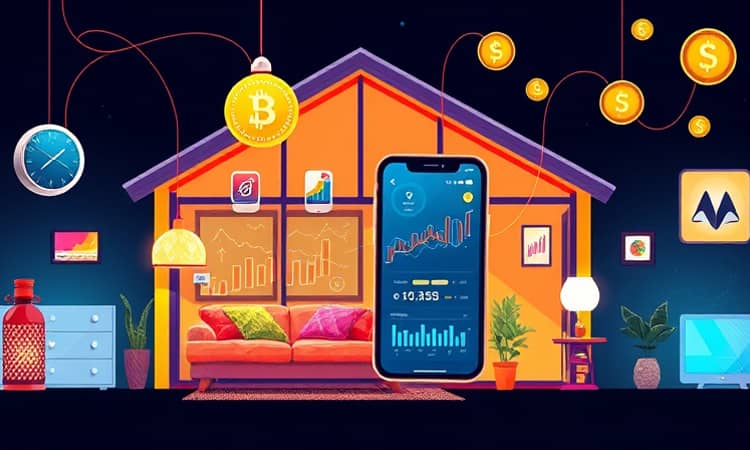
Smart homes are a prime example of IoT's financial benefits, offering convenience and cost savings.
Smart home devices account for 32% of all consumer IoT usage globally, making them a key focus.
U.S. consumers spend an average of $1,275 per year on smart home upgrades and subscriptions.
This investment pays off through improved energy efficiency and lifestyle enhancements.
- 80% of smart home users report greater convenience.
- 63% cite improved energy efficiency, leading to lower bills.
- Inter-device interoperability has improved, with 68% of households reporting seamless functionality.
By adopting smart home technologies, individuals can make financially savvy choices that reduce long-term costs.
Healthcare and Wearables Impact
IoT is transforming healthcare, offering financial benefits through better health outcomes and reduced expenses.
The Connected Health sector holds 20% of the global IoT market share, highlighting its importance.
IoT wearables have increased patient compliance rates by 47%, potentially lowering healthcare costs.
This trend underscores how investing in health-focused IoT can lead to smarter financial and wellness choices.
Remote monitoring solutions reduce hospital visits, saving money for both patients and providers.
Network Connectivity Infrastructure
Robust connectivity is the backbone of IoT, influencing its financial viability and performance.
Wi-Fi makes up 31% of all IoT connections, but 5G now supports over 62% of deployments.
5G IoT deployments account for 62% of all new industrial installations, enhancing speed and reliability.
LPWAN technologies are used in 58% of rural deployments, enabling cost-effective connectivity.
- Wi-Fi 6E and Wi-Fi 7 adoption in IoT hardware now exceeds 52%.
- Data usage per device averages 4.2 GB per month, impacting network costs.
Choosing the right connectivity options can optimize expenses and ensure seamless IoT integration.
Data Generation and Traffic
IoT devices generate massive amounts of data, which can be monetized for financial gain.
In 2025, IoT devices will generate over 300 zettabytes of data globally, a 26% year-over-year increase.
Real-time video from security IoT devices represents 22% of all consumer IoT data traffic.
Data monetization is on the rise, with 37% of enterprises reselling anonymized IoT data for market intelligence.
This data-driven approach offers new revenue streams and insights for better decision-making.
Security and Edge Computing
Security is paramount in IoT, as breaches can lead to significant financial losses.
Cyberattacks on IoT endpoints have dropped by 18% due to advancements in edge security.
AI-trained threat models have been embedded in 68% of new consumer IoT security systems.
Edge AI is overtaking the cloud as the decision-making hub for IoT applications, reducing latency and costs.
Investing in secure IoT solutions protects assets and enhances trust, leading to smarter financial safeguards.
Technology Adoption Trends
Staying abreast of IoT trends can uncover financial opportunities before they become mainstream.
IoT analytics platforms have seen an 8x increase in deployment compared to 2021, enabling real-time insights.
Open-source IoT development kits usage grew by 31%, democratizing innovation for startups.
Computer vision is becoming the sensory backbone of IoT, opening new avenues for automation and efficiency.
- Nanoscale IoT sensors are deployed in biomedical and food safety applications.
- IoT devices now include autonomous vehicles and humanoid robots, expanding financial horizons.
Embracing these trends can position individuals and businesses for future growth and profitability.
Practical Financial Choices with IoT
Now, let's translate IoT insights into actionable financial strategies for everyday life and business.
Start by identifying areas where IoT can reduce costs or generate income, such as energy management or data analysis.
For example, using smart thermostats can cut energy bills by up to 20%, a direct financial benefit.
In business, implementing IIoT for predictive maintenance can save millions in downtime and repairs.
Consider these steps to leverage IoT for smarter financial choices:
- Assess your current IoT usage and identify gaps for improvement.
- Invest in interoperable devices to avoid vendor lock-in and reduce long-term costs.
- Use IoT data to optimize operations, from inventory management to customer service.
- Explore IoT-based side hustles, like selling anonymized data or developing smart solutions.
- Stay informed on market trends to make timely investments in high-growth IoT sectors.
By integrating IoT thoughtfully, you can transform technology into a tool for financial empowerment and resilience.
Conclusion
The Internet of Things is more than a network of devices; it's a catalyst for smarter financial living.
From the global market valued at $1.52 trillion to the personal savings from smart homes, IoT offers tangible benefits.
Embrace this connected world with curiosity and strategy, and watch as your financial choices become more informed and impactful.
Let IoT guide you toward a future where technology and finance harmonize for a better tomorrow.