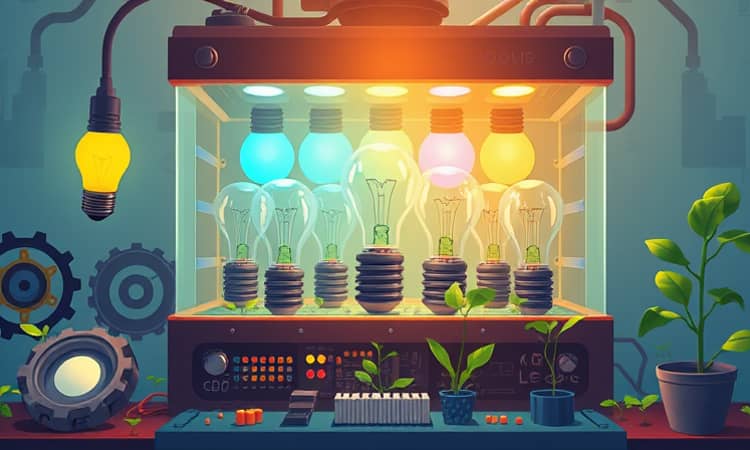
In a world hungry for progress, innovation incubators stand as beacons of hope, turning raw ideas into world-changing solutions.
They offer a low-risk, high-support setting where creativity thrives without the fear of failure, making the impossible seem within reach.
This article delves into how these programs fuel groundbreaking advancements, providing a practical guide for aspiring innovators and enterprises alike.
Defining the Innovation Incubator
At its core, an innovation incubator is a structured environment designed to nurture early-stage ideas from mere concepts to tangible prototypes.
Unlike traditional research and development, which often focuses on incremental improvements, incubators emphasize long-term refinement of untested ideas.
They provide essential resources like mentorship, office space, and funding access, aiming to achieve a minimum viable product (MVP) within months to years.
This approach ensures that startups can eventually become self-sustaining, ready to conquer the market.
Key Phases of Operation
Innovation incubators follow a systematic journey to transform ideas into success stories.
- Idea Generation and Selection: Sources include internal brainstorming, university partnerships, and tech scouting, with rigorous evaluation for feasibility and alignment.
- Evaluation, Iteration, and Prototyping: Ideas are tested and refined in a controlled environment, allowing for pivots before full resource commitment.
Throughout these phases, participants receive ongoing mentorship from industry experts and access to demo days for investor pitches.
This structured support shortens innovation cycles and enhances the likelihood of breakthroughs.
Types of Innovation Incubators
Incubators come in various forms, each tailored to specific needs and goals, as shown in the table below.
Understanding these types helps innovators choose the right path for their ventures, maximizing support and alignment.
Benefits and Strategic Advantages
Engaging with an incubator offers numerous benefits that can catapult ideas to success.
- Risk Reduction: Isolate and refine early ideas before major investments, minimizing potential losses.
- Faster Development: Accelerate innovation cycles through focused resources and expert guidance.
- Strategic Alignment: Ensure that new ventures support broader business goals and market needs.
- Pipeline Creation: Build a continuous stream of startups for revenue growth and market expansion.
Statistics show that incubated startups have a 40% higher funding chance and 87% achieve growth goals in 2 years, highlighting their effectiveness.
This makes incubators a strategic asset for any innovation-driven organization.
Success Stories and Metrics
Real-world examples demonstrate the transformative power of innovation incubators.
- Gradient Innovation Hub: Expanded to 120,000 sq. ft. in Tulsa, with achievements like Tangram Vision securing a NASA grant and Safety Radar raising $1.1M.
- Y Combinator Alumni: Include startups like Airbnb, which grew to a $30B+ valuation, and Dropbox, with over 600M users.
These stories inspire by showing that with the right support, even the boldest ideas can thrive.
Additional metrics reveal that access to global ecosystems via scouting software enhances idea sourcing and collaboration.
Corporate Examples Fueling Innovation
Leading companies use incubators to maintain competitive edges and foster internal creativity.
- AB InBev, P&G, and Barclays employ structured pipelines with executive buy-in for sustained innovation.
- Models range from internal programs for employee ideas to hybrid approaches that fund external startups.
This diversity ensures that innovation can spring from anywhere within or outside an organization.
It empowers teams to think big and act decisively on emerging opportunities.
Additional Resources and Trends
The landscape of innovation incubators is constantly evolving with new tools and trends.
- Services: Include tech scouting software for global idea discovery and workshops for entrepreneurial skill development.
- 2025 Trends: Focus on enterprise solutions and community events like Global Entrepreneurship Week, which hosted 30+ events at Gradient.
These resources help incubators bridge the gap from idea to impact, combining technology partnerships with acceleration for founders.
By staying updated, innovators can leverage the latest advancements to enhance their journeys.
Embracing the Incubator Mindset
Innovation incubators are more than just programs; they are ecosystems of possibility that democratize access to success.
They encourage a mindset of resilience, where failures are seen as stepping stones to greater achievements.
For anyone with a groundbreaking idea, engaging with an incubator can be the first step toward making a lasting impact.
As we look to the future, these incubators will continue to fund tomorrow's ideas, shaping a world driven by creativity and purpose.