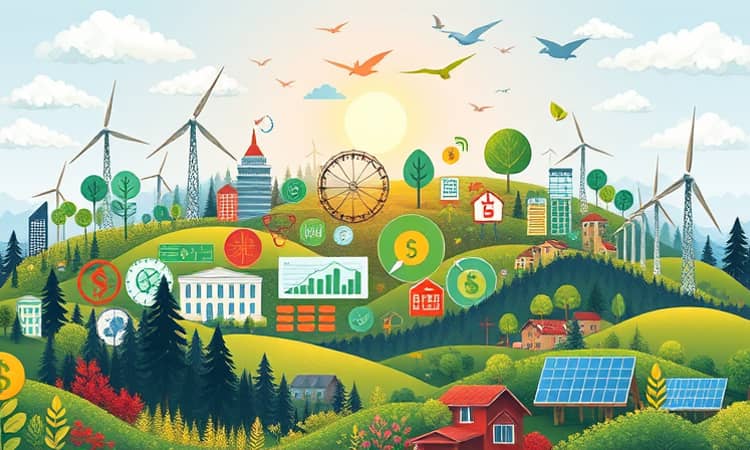
As the world grapples with climate change and environmental degradation, finance is at the forefront of the solution. In 2025, sustainable finance demonstrated remarkable resilience even in a bear-ESG market, and projections for 2026 promise continued momentum toward a greener, more equitable future.
Market Resilience and Growth
Despite a 7% drop in global sustainable finance issuance to US$1.6 trillion in 2025, total green, social, sustainable, and sustainability-linked debt reached an impressive US$6.5 trillion by Q3. Assets under management in sustainable funds climbed 15% year-on-year to US$3.9 trillion. These figures illustrate that investors and issuers remain committed to financing projects with lasting environmental and social impact.
Projections for 2026 point to further stability and modest growth:
- Global sustainable finance issuance (ex-ABS) is expected to reach US$1,621 billion.
- Sustainability-related debt could rise to €870 billion (US$1.19 trillion).
- Total maturities of green, social, and sustainability debt may hit US$520 billion.
These numbers underline the sector’s capacity to withstand political headwinds and market volatility, driven by a refinancing cycle and policy support.
Core Sustainable Instruments
Understanding the main products in sustainable finance is key to leveraging opportunities and achieving impact.
- Green Bonds: Issued to fund renewable energy, clean transport, and sustainable infrastructure with transparent reporting of proceeds and outcomes.
- Green Loans: Earmarked for eco-projects like energy efficiency retrofits, low-carbon agriculture, and water conservation, often with reduced interest rates.
- Sustainability-Linked Bonds and Loans: Tied to specific KPIs, these instruments incentivize issuers to meet environmental or social targets, though credibility demands robust metric alignment.
- Transition Finance: Guiding high-emitting sectors through short-term emissions cuts toward long-term decarbonization, aligned with evolving taxonomies.
Each instrument offers distinct advantages. Green bonds and loans deliver clear use-of-proceeds benefits, while sustainability-linked products foster holistic corporate engagement with long-term performance targets.
Regional Trends Shaping 2026
Geography matters as capital chases risk-adjusted returns and regulatory certainty.
Asia-Pacific saw strong green bond and loan growth in 2025, matched to 2024 levels overall, with expectations of further expansion and a rebound in transition bonds. In the U.S., demand for clean power to support burgeoning datacenter capacity drove sustainable issuance. Europe’s focus on energy security and competitiveness fueled renewable investments and green infrastructure offerings.
Emerging Opportunities and Strategies
2026 marks a shift to pragmatism and economic fundamentals in sustainable finance, emphasizing energy security, resilience, and innovation. Key opportunities include:
- Scaling private capital flows: targeting US$1.3 trillion external and US$1.9 trillion domestic finance by 2035.
- Blended finance for nature: mobilizing public and private funds to boost biodiversity outcomes and reduce deforestation.
- Carbon pricing mechanisms: expanding coverage beyond 28% of global emissions to drive decarbonization and revenue generation.
- Adaptation and resilience bonds: structuring debt that accelerates climate-proof infrastructure in vulnerable regions.
No less important are initiatives like the Tropical Forest Forever Facility, offering US$4 billion annually to safeguard forests and support Indigenous stewardship across emerging markets.
Navigating Challenges and Ensuring Credibility
Despite strong tailwinds, sustainable finance faces headwinds. Political uncertainty and regulatory rollbacks in some regions have tested investor confidence. Credibility concerns around sustainability-linked products persist when KPIs are misaligned or penalties fail to enforce real change.
Mitigating these risks demands:
- Robust frameworks: Adopting globally recognized standards for disclosures and impact measurement.
- Stakeholder engagement: Involving civil society and local communities in project design to guard against greenwashing.
- Transparent reporting: Publishing detailed, audited impact assessments to build trust with investors and the public.
The Path Ahead: Integrating Sustainability and Profitability
As we move toward 2026 and beyond, the true measure of success will be how well sustainable finance aligns environmental and social objectives with financial returns. Corporates can:
- Embed sustainability into core strategy, not just as an add-on.
- Invest in climate-resilient infrastructure to safeguard assets and communities.
- Leverage digital tools and AI to enhance carbon and energy data analytics.
Investors can expand their toolkit to include nature-based assets, blended finance platforms, and resilience bonds, ensuring portfolios are both profitable and purpose-driven. Policy makers must continue harmonizing taxonomies, strengthening disclosure requirements, and creating incentives that channel capital where it matters most.
Ultimately, the green shift is not a passing trend. It is a fundamental realignment of how capital flows, how risk is priced, and how value is defined. By embracing intentional, impact-focused financing, stakeholders across the spectrum can drive a transformation that secures both economic prosperity and planetary health.
The journey is complex, but the stakes have never been higher. As 2026 dawns, the finance industry stands at a crossroads: to double down on sustainability or risk being left behind. The choice is clear, and the time to act is now.