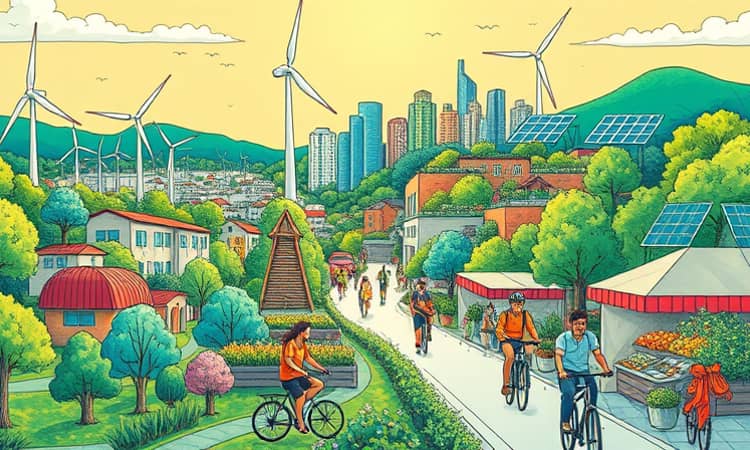
As the world confronts environmental challenges and economic uncertainty, the concept of the Green Dividend offers a beacon of hope. By aligning profit motives with ecological stewardship, innovators and communities can reap benefits that far exceed initial investments.
The Green Dividend encompasses the economic, social, and environmental benefits generated through sustainable practices, policies, and investments. Far from being a cost center, protecting the planet becomes a catalyst for healthier communities, cost savings, job creation, and transformative innovation.
Understanding the Green Dividend
At its core, the Green Dividend demonstrates that environmental protection and economic growth are complementary rather than conflicting goals. This concept has roots in:
- Daily and personal decisions—choices like walking, cycling, and reusing items reduce waste, clear the air, and support local economies.
- Societal infrastructure—investments in public transit, renewables, and urban green spaces yield improved public health and resilient energy systems.
- Economic theory—the double dividend hypothesis and Porter Hypothesis show how environmental taxes and strict regulation can spur efficiency and innovation.
Benefits at the Personal and Societal Levels
On a personal level, everyday green choices translate into cleaner air, fewer traffic jams, and stronger community ties. When individuals choose to bike instead of drive, they enjoy better health and reduced fuel expenses.
Societies that invest in green infrastructure witness tangible returns like healthier communities. Renewable energy installations lower greenhouse gas emissions, while urban parks enhance mental well-being. Such projects often come with reduced healthcare costs and increased property values.
Economic Theories Driving Growth
Two key hypotheses underpin the Green Dividend:
Double dividend hypothesis—environmental taxes both curb pollution and generate revenue that can be recycled into lower income or corporate taxes, boosting overall efficiency.
Porter Hypothesis—well-designed environmental regulations stimulate companies to innovate, reducing waste and energy use, enhancing competitiveness.
Viewed from a systems perspective, preserving natural capital—such as pollination and water purification services—ensures that industries continue to thrive within planetary boundaries, preserving natural capital ensures long-term stability.
Investment Vehicles to Capture the Green Dividend
Investors can structure portfolios to benefit directly from sustainable innovations and risk mitigation. Key products include:
- Green Equities: Shares in companies leading in renewables and circular economy models.
- Green Bonds: Fixed-income instruments financing climate-friendly projects.
- SRI Funds and ETFs: Diversified investments screened by ESG criteria.
- Green Real Estate: Sustainable properties offering stable returns and tax advantages.
- Venture Funds: Capital for greentech startups driving breakthrough innovations.
Real-World Case Studies
- Partnership for the Green Dividend: A U.S. initiative combining public, private, and community efforts to promote green jobs and local investment in clean markets.
- Chapel Hill-Carrboro Green Plus: A business program guiding local companies toward sustainable practices, fostering competitive advantage and community engagement.
- Corporate Green Dividends: Shareholders opting for reinvested earnings in environmental programs, enhancing long-term value.
Cross-Sectoral Strategies and Future Outlook
The Green Dividend extends beyond finance, touching agriculture, urban planning, and social equity. A circular economy maximizes resource use and efficiency, turning waste into inputs for new products and creating green jobs in repair and recycling.
Policy tools such as environmental taxes and incentives for clean energy, when paired with revenue recycling into social programs, can generate twofold benefits. Social equity must be central, ensuring that green jobs reach displaced workers and underserved communities.
Looking forward, advances in behavioral economics, integrated modeling of economic-ecological systems, and the growth of green finance will deepen our understanding and unlock new opportunities. Challenges remain in designing effective tax systems and guiding businesses through the initial steps of sustainability.
Conclusion
The Green Dividend is more than a theory—it is a powerful reality showing that environmental stewardship and economic prosperity go hand in hand. By embracing sustainable innovations, individuals, businesses, and governments can foster shared prosperity and environmental stewardship.
Whether through greener lifestyle choices, targeted investments, or forward-thinking policies, every actor has a role in unlocking the dividends of a healthy planet. Now is the time to act, innovate, and profit from a sustainable future.