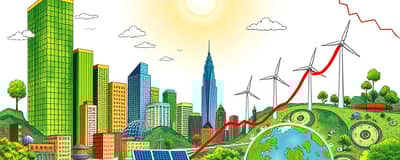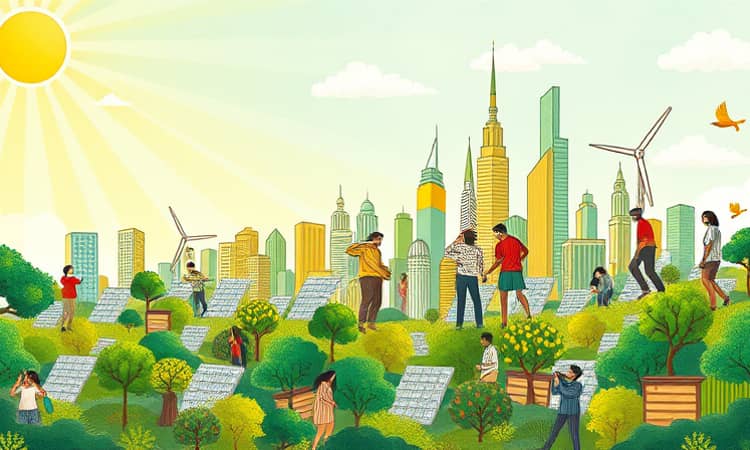
As the world grapples with climate risks and resource scarcity, a transformative concept has emerged at the intersection of ecology and economics: economic and social returns arising directly from environmental action. Far from being a burden on growth, the green dividend reframes conservation as an investment that pays dividends in many forms—from healthier communities to more resilient markets.
Throughout this article, we explore how societies, corporations, and individuals can all realize nature’s potential for profit by aligning policies, business strategies, and daily habits with ecological principles. The green dividend is not a distant ideal; it is a practical framework for profiting from positive change today.
Reconceptualizing Environmental Action
At the macro level, economists and policymakers use the term green dividend to describe the long-term systemic risk reduction and growth benefits that follow from ambitious environmental policies. Rather than viewing regulation as a drag, this lens treats natural capital—clean air, fertile soil, intact ecosystems—as an asset that generates ongoing returns.
- Double dividend hypothesis: Environmental taxes like carbon levies deliver both pollution reduction and improved economic efficiency when revenues fund cuts to distortionary taxes.
- Porter Hypothesis: Stringent regulation spurs innovation, forcing firms to redesign processes and products, unlocking an innovation dividend that enhances competitiveness.
- Natural capital & ecosystem services: Preserving biodiversity and clean water yields dividends in flood protection, pollination, and climate regulation.
- Planetary boundaries framework: Operating within ecological limits secures long-term stability and reduced systemic risk for the global economy.
By measuring environmental health as capital on par with physical infrastructure and human talent, policymakers can craft strategies that yield social and economic surpluses long after initial investments.
Corporate Innovations in Green Dividends
On the corporate front, the green dividend concept has been translated into legal and financial instruments that empower shareholders to direct capital toward sustainability initiatives. This democratizing the green dividend approach aligns investor consent with corporate responsibility, fostering a partnership model for environmental progress.
- Green dividend instruments: Boards propose an optional extra payout, which shareholders can retain or return to the company for designated environmental projects.
- Case study—alstria office REIT-AG: This German property firm added a €0.01 per share green dividend, giving investors the choice to reinvest in renewables or have the company deploy the funds internally.
- Asset-manager perspective: Global fund managers encourage reinvesting dividends into building retrofits and renewable infrastructure, recognizing that future-proofed assets command higher values.
These models demonstrate how corporate governance structures can embed sustainability goals within the dividend process, converting routine financial flows into purposeful climate action.
Everyday Benefits for Individuals and Communities
At the grassroots level, the green dividend emerges in our daily choices—showing up as lower bills, better health, and stronger neighborhoods. Framing these benefits as a bonus we receive in daily life makes the concept tangible and motivating for everyone.
- Active transport: Walking, cycling, and public transit reduce healthcare costs while cutting fuel expenses and easing urban congestion.
- Waste reduction: Embracing reuse and recycling shrinks garbage bills, conserves resources, and fosters community repair networks.
- Local sustainable businesses: Shopping locally for eco-friendly goods keeps money circulating and strengthens social bonds.
- Home resource conservation: Simple measures like efficient lighting and water-saving fixtures lower utility expenses and bolster energy security.
These everyday dividends compound over time. Households that save on energy can invest in solar panels; neighborhoods that embrace green spaces enjoy reduced crime rates and improved well-being.
Synergies in Green Infrastructure and the Circular Economy
Between the policy and individual layers lies the meso level—cities, regions, and sectors that harness the green dividend through targeted infrastructure and systemic redesign. Investments in public transit, renewable energy grids, and urban parks yield resilient and healthy environments whose benefits far exceed upfront costs.
Similarly, circular economy practices—repair, remanufacturing, and closed-loop recycling—create new business models and income streams while reducing waste and resource dependency. Regions that adopt circular principles enjoy job growth in emerging industries and reduced exposure to commodity price shocks.
Comparing Green Dividend Across Levels
Building a Future on Green Dividends
Realizing the green dividend requires collaboration across scales. Governments must design policies that value natural capital; businesses need to integrate sustainable metrics into financial decisions; communities and individuals should embrace eco-positive habits. When these efforts align, we unlock a potent synergy: ecological stewardship becomes a driver of prosperity, security, and well-being.
By shifting our perspective to view environmental action as a form of investment, we can chart a path toward a resilient future where every stakeholder—public sector, private enterprise, and citizen—shares in the thriving returns of a healthier planet.
Embrace the green dividend today, and join a movement where caring for nature is synonymous with profiting from positive change. Together, we can build economies and communities that flourish on the very foundation of ecological integrity.