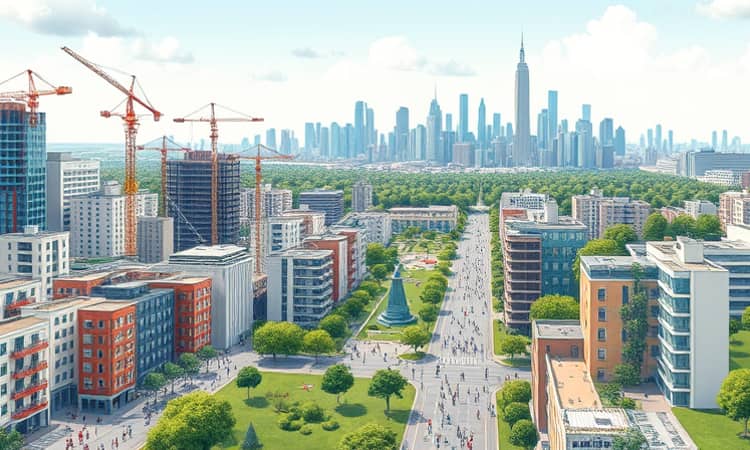
In recent years, a transformative movement has reshaped global settlement patterns. As the COVID-19 pandemic unfolded, individuals and families reevaluated the allure of dense urban centers, opting instead for quieter, more affordable locales. This tension between city life and emerging alternatives marks a pivotal moment in urban investment history.
Secondary cities—those mid-sized urban areas ranging from 150,000 to 5 million people—are now in the spotlight. With robust infrastructure initiatives, supportive policies and a swelling population base, these markets offer a wealth of opportunities for forward-thinking investors.
Understanding the Urban Exodus
Data from a WorldPop study covering 35 countries reveal that between 2020 and 2022, roughly 70% of nations experienced net outflows from their largest metropolitan areas. In high-income countries, this trend proved more persistent, with major gateways like New York and San Francisco losing momentum in favor of nearby smaller cities.
In the United States, core urban counties shed over 3.2 million net domestic migrants in the first four years of the decade, three times the loss rate recorded in the prior decade. Meanwhile, suburbs and exurbs attracted nearly 2 million new residents, reflecting a widespread embrace of work-from-home flexibility and space.
But the exodus is not uniform. Low- and middle-income countries, where cities remain primary engines of job creation, continue to urbanize at a steady clip. In these regions, development programs from the World Bank and other institutions are channeling billions into secondary urban centers to bolster growth and service delivery.
Why Secondary Cities Matter
Secondary cities occupy a crucial position in the global urban ecosystem. They combine the dynamism of metropolitan economies with lower barriers to entry, offering affordable housing markets and strong returns for investors willing to explore beyond core hubs.
These markets also stand out for their willingness to innovate. From digital permitting portals in emerging U.S. metros to public-private partnerships financing road and broadband upgrades in sub-Saharan Africa, secondary cities are upgrading fundamentals faster than many of their larger counterparts.
Global initiatives underscore this potential. For example, Uganda’s program has expanded support from five to 19 secondary cities, while Tunisia focuses on revitalizing eight lagging urban areas. These efforts demonstrate a growing recognition that sustainable urbanization depends on balanced growth across a wider geographic footprint.
Key Investment Drivers
Investors must calibrate their strategies to a distinct set of drivers unique to secondary markets:
- Housing Affordability Pressure: Skyrocketing rents in major gateways, where median monthly rents can exceed $3,000, contrast sharply with secondary markets offering rates 20-40% lower.
- Remote and Hybrid Work Models: Companies embracing flexible policies enable employees to relocate, fueling demand for modern office conversions and co-working spaces in smaller cities.
- Industrial and Data Center Demand: Constraints on land and power in primary markets are steering developers to regions with ample industrial land and power capacity.
- Local Incentives and Policies: Tax credits, enterprise zones and streamlined approvals are commonplace in emerging metros seeking to attract corporate relocations.
- Demographic Shifts: Younger families and retirees alike are migrating to secondary cities, drawn by quality schools and a more balanced cost of living.
These factors create a multi-layered rationale for capital reallocation, blending social trends with hard economic incentives.
Strategies for Investors
Successfully navigating secondary markets requires a deliberate and nuanced approach. Stakeholders should consider the following best practices:
- Comprehensive Market Analysis: Combine quantitative data—such as migration forecasts and yield curves—with qualitative insights from local brokers and community leaders.
- Partnerships with Local Experts: Engaging seasoned developers and municipal authorities can provide early access to underserved land parcels and projects.
- Portfolio Diversification: Balance allocations across multi-family residential, industrial warehouses, logistics hubs and smaller office campuses to hedge against sector-specific risks.
- Sustainable Development: Incorporate green infrastructure, renewable energy solutions and transit-oriented design to future-proof assets and attract environmentally conscious tenants.
- Flexible Exit Strategies: Plan for multiple liquidity pathways, whether through partial divestment, joint ventures or secondary market securitizations.
By embedding rigorous due diligence and fostering strong local relationships, investors reduce speculative exposure and pave the way for sustainable long-term growth.
Future Outlook
Projected migration forecasts through 2026 indicate that regions like Knoxville, Tennessee (1.61 newcomers per departure) and Port St. Lucie, Florida (1.67 ratio) will continue to thrive. Ocala, Florida leads with a staggering 3.09 ratio, reflecting a nearly 75% increase in population interest year-over-year.
Internationally, investment flows are targeting secondary metros in Spain’s Madrid and Barcelona peripheries, while emerging economies in Asia and Africa witness catalytic funding to address capacity constraints and expand public services.
With institutional allocators demonstrating robust institutional interest across sectors, secondary cities stand poised to evolve from niche plays to core portfolio components.
Seizing the Opportunity
As traditional urban strongholds face mounting demographic and infrastructural challenges, secondary cities beckon with a promise of untapped potential. Investors who respond with agility, creativity and a commitment to local partnerships will shape the next chapter of urban growth.
Whether through innovative housing developments, industrial parks or mixed-use town centers, the urban exodus invites us to reimagine where and how we build value—financially and socially. The exodus is not an end but a beginning: a chance to forge new pathways, empower communities and secure long-term returns in markets that have waited for their moment to shine.