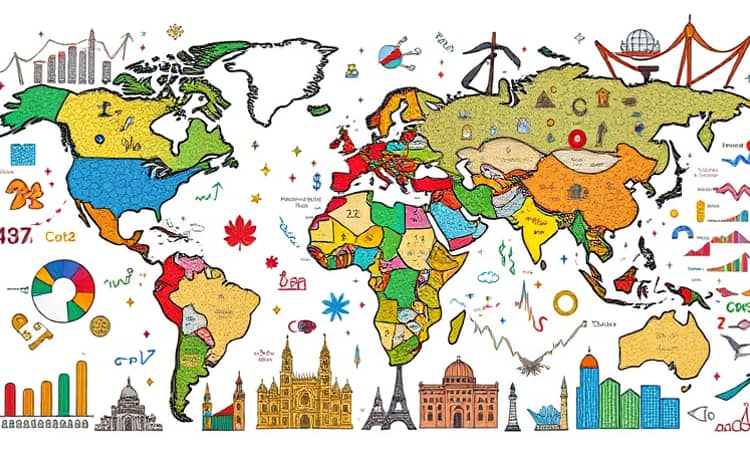
In an increasingly interconnected world, investors who look beyond their home markets discover the power of global opportunity. By weaving together assets from every corner of the globe, you can build a portfolio that not only chases growth but also weathers economic storms with resilience.
From bustling metropolises to emerging markets, each region brings unique prospects. Embracing a global outlook transforms uncertainty into possibility, offering a roadmap to long-term financial security and peace of mind.
Why Diversify Beyond Borders?
Relying solely on domestic holdings can leave you vulnerable to local downturns and political turbulence. When you harness spreading investments across asset classes and regions, you gain a smoother ride through market cycles. International diversification helps you mute the impact of a recession in one economy by tapping growth in another.
This strategy also unlocks enhanced growth potential in emerging markets, where rapid innovation and expanding middle classes fuel corporate earnings. And by holding multiple currencies, you build an additional hedge against inflation and exchange-rate swings.
- Risk reduction through offsetting downturns
- Broader opportunities in niche industries abroad
- Consistent returns as markets move asynchronously
- Currency diversification to protect purchasing power
Core Pillars of a Global Portfolio
Effective international diversification rests on four fundamental pillars. Each layer spreads risk and maximizes reward in its own way.
First, assets should span equities for growth, bonds for stability, and alternatives—like real estate, commodities and infrastructure—to dampen volatility. Next, balance exposure to developed markets (such as the US, UK and EU) with high-potential emerging economies (for instance, India, Brazil and Southeast Asia).
Sector mix ensures you aren’t overly dependent on any single industry. Technology, healthcare, energy, consumer goods and financial services each cycle differently. Finally, blend passive vehicles—like ETFs and index funds—with active management for ongoing tactical adjustments through active management.
Building Your Portfolio Step by Step
Creating a diversified international portfolio is a deliberate journey. Begin by clarifying your goals and risk tolerance. A long-term horizon, such as retirement planning, supports a higher equity mix, while short-term objectives may favor fixed income.
Next, choose your investment vehicles. Low-cost ETFs and mutual funds offer broad global coverage. Then, set your target allocation—perhaps 70% stocks, 20% bonds and 10% alternatives for a growth-oriented investor—and stick to it.
- Define objectives and risk appetite
- Select cost-efficient global ETFs and mutual funds
- Establish target percentages by asset, region and sector
- Rebalance periodically to maintain alignment
Mitigating Risks in International Markets
Expanding your horizons introduces new complexities. Currency risk can erode returns if your home currency strengthens. Combat this by adding hedged funds or a multi-currency basket.
Political and regulatory changes in certain countries can disrupt markets overnight. Spreading assets across diverse jurisdictions ensures no single event can derail your entire strategy. Similarly, economic setbacks—like inflation or recession—tend to occur unevenly worldwide, providing natural offsets.
While global correlations have edged higher over time, especially within regions like the EU, research shows international diversification still lowers overall portfolio volatility by as much as sixty-five percent risk reduction for some investors. Choosing highly liquid, large-cap funds further safeguards against market illiquidity.
Advanced Concepts and Emerging Trends
For dedicated investors, long-horizon models and equal-weight frameworks across markets can enhance robustness. Professional discretionary portfolios leverage expert insights for dynamic tilts toward undervalued regions or sectors.
Structured products using derivatives offer downside protection and potential for superior risk-adjusted returns in turbulent times. Meanwhile, trade tensions or tariff uncertainties may prompt portfolio shifts, yet a diversified global stance remains a prudent hedge.
Despite rising correlations, historical data confirms that a well-constructed international portfolio delivers superior resilience compared to a domestic-only approach. Vanguard, Fidelity and other leading institutions continue to champion broad, multi-asset strategies for sustainable growth.
Conclusion: Embracing the Global Mosaic
Assembling a diversified international portfolio is both an art and a science—a mosaic of assets, sectors and currencies designed to flourish across market climates. By thoughtfully integrating global building blocks, you transform volatility into opportunity and uncertainty into confidence.
Whether you’re just beginning your investment odyssey or refining an established strategy, the world’s financial tapestry awaits. Embrace the mosaic, stay disciplined through cycles, and let global diversification guide you toward enduring success.