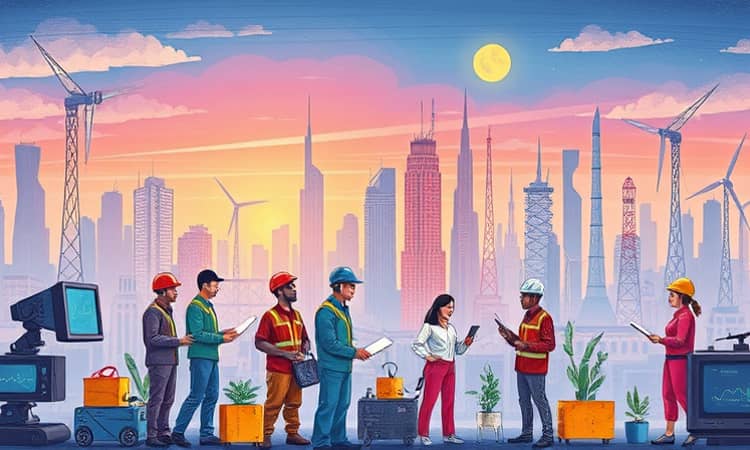
As we stand at the cusp of a new decade, the world of work is experiencing global labor market transformation trends at an unprecedented pace. Understanding these changes can empower individuals, organizations, and policymakers to navigate uncertainty, seize emerging opportunities, and build a resilient workforce for 2030 and beyond.
A Shifting Global Labor Landscape
Between 2025 and 2030, structural shifts in employment—both job creation and destruction—are projected to impact 22% of today’s total jobs worldwide. Employers anticipate creating 170 million new roles while displacing 92 million, resulting in a net gain of 78 million jobs or roughly 7% growth in global employment by 2030.
Growth will be most pronounced in key sectors:
- Frontline roles: farmworkers, delivery drivers, construction workers
- Care economy: nursing professionals, social workers, personal care aides
- Education: secondary and tertiary teachers
- Green and advanced-tech: renewable energy and environmental engineers, autonomous vehicle specialists
Despite a historic low global unemployment rate of 4.9%, youth unemployment remains high at 13%, highlighting persistent mismatches between the skills young people possess and the evolving demands of employers.
The Forces Driving Transformation
At the heart of this upheaval are several powerful drivers reshaping the workplace:
- AI and information-processing technologies
- Robotics and automation
- Energy generation, storage, and distribution tech
- Rising cost of living and inflationary pressures
Nearly 86% of employers expect AI to fundamentally transform their operations by 2030, with over half planning to realign their business models in response. Approximately two-thirds aim to hire talent with specific AI skills, while 40% foresee reducing headcount where automation can replicate routine tasks.
As human–machine collaboration becomes standard, the share of human-only tasks is projected to fall from 47% today to 33% by 2030.
Workers proficient in AI skills command a remarkable 56% wage premium over their peers, underlining the immense returns tied to technological capability. These premiums span industries from financial services to energy, reflecting a broad-based uplift in productivity and compensation for AI-literate professionals.
Skills and Education: Prepare for 2030
The scale of skill disruption is staggering: on average, 39% of a worker's current skill set will be transformed or rendered obsolete between 2025 and 2030. While this represents an improvement from the 57% peak during the pandemic, ongoing learning remains essential.
To put this in perspective, in a hypothetical 100-person workforce:
- 59 individuals will require training by 2030
- 29 can be upskilled within their existing roles
- 19 may be redeployed to new positions through targeted training
- 11 risk displacement without adequate reskilling
Employers cite skill gaps as the single biggest barrier to business transformation, with 63% ranking it as their top concern. To bridge this divide, organizations are shifting toward skills-based hiring over degrees and offering personalized learning pathways that directly align employee capabilities with strategic goals.
The fastest-growing skills include analytical thinking, resilience, technology literacy, and environmental stewardship. Cultivating these abilities can unlock new career trajectories and safeguard against obsolescence.
Embracing New Work Models
Work structures are evolving alongside technology. By 2030, an estimated fully remote digital jobs are expected to account for 25% of global digital roles. Hybrid and flexible arrangements—adjustable hours, project-based assignments, and location-agnostic teams—are becoming the norm, boosting both productivity and employee satisfaction.
Simultaneously, “superagency” or machine-augmented work for efficiency is emerging as a defining feature of future workplaces. In these settings, AI supports human decision-making, automates repetitive tasks, and amplifies creativity, enabling professionals to focus on complex challenges and strategic innovation.
Organizational and Policy Responses
To capitalize on these shifts, employers and governments must act in concert:
- Invest in upskilling: 85% of organizations plan to prioritize workforce development by 2030
- Reorient hiring: 70% intend to recruit for new skill sets, especially in AI and green technologies
- Adjust compensation: Over half of employers will allocate a greater share of revenue to wages
- Support mobility: 50% aim to transition staff from declining functions to emerging roles
Demographic trends further complicate the picture. While aging populations in high-income economies drive demand for healthcare workers, younger cohorts in lower-income countries fuel growth in education and technology sectors. Proactive policies—such as lifelong learning incentives, portable credentials, and robust social safety nets—are critical to ensure no one is left behind.
Charting Your Path Forward
In a world of rapid change, individuals can take concrete steps to thrive:
• Commit to lifelong learning: prioritize courses and certifications in AI, data analytics, and sustainability
• Build adaptable mindsets: embrace resilience, curiosity, and continuous improvement
• Seek cross-disciplinary experiences: combine technical prowess with creative problem-solving
• Network across sectors: cultivate relationships with peers in emerging industries
• Advocate for supportive policies: engage with industry groups and policymakers to shape fair, future-ready labor markets
The transformation ahead presents both challenges and remarkable opportunities. By understanding the driving forces, investing in essential skills, and embracing new work models, we can collectively shape a future of work that is inclusive, innovative, and sustainable. The time to act is now—equip yourself today for the careers of tomorrow.