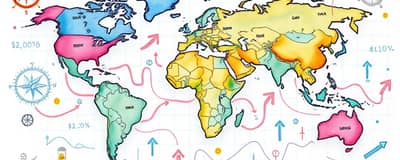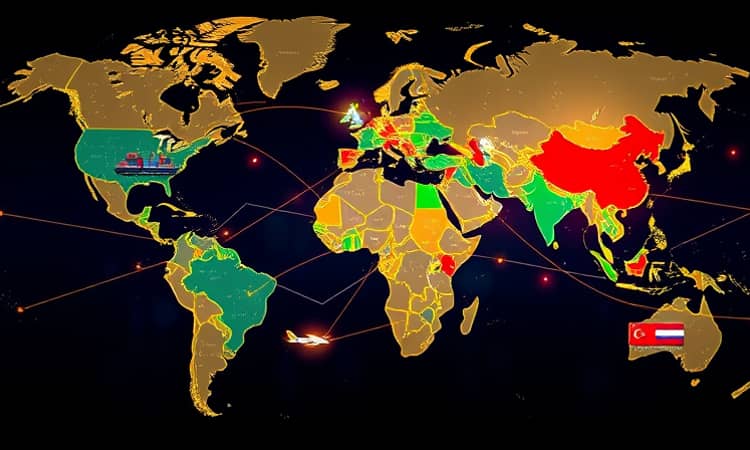
Today’s global economy stands at a crossroads, where innovation, geopolitical shifts, and strategic partnerships will redefine how goods, services, and ideas flow across borders.
Global Growth and Trade Projections
Industry forecasts project that global economic output is forecast to grow by 2.7% in 2026, a modest uptick compared to recent years but below the pre-pandemic average of 3.2%. The IMF sees growth climbing to 3.3% in 2026 and 3.2% in 2027, suggesting that technology investment and private sector adaptability will offset ongoing policy headwinds.
Trade volumes are expected to moderate, with global export volume growth slowing to around 2% year-on-year in 2026, down from 3.8% in 2025. UN and BCG projections indicate average annual trade expansion of 2.2% to 2.5%, slightly above the forecasted GDP pace.
Key Drivers of Change
In an environment marked by evolving protectionist pressures and market fragmentation, businesses must navigate complex headwinds while seizing new opportunities.
Tariffs and Trade Barriers
US tariff policy remains a focal point of uncertainty: sector-specific Section 232 duties and potential levies on new imports have already altered corporate supply chains. Front-loaded shipments drove strong trade growth in early 2025, but the subsequent pullback will weigh on global exports in 2026.
Protectionist measures, friendshoring, and diversification of markets are reshaping procurement strategies, as companies balance cost efficiency with the need for supply chain resilience.
Artificial Intelligence
Artificial intelligence is highlighted as a major driver of trade resilience, with AI-linked goods and services poised to boost trade value by nearly 40% by 2040, according to the WTO. From automated customs clearance to predictive logistics, AI is revolutionizing logistics and trade operations across borders.
However, the concentration of trade growth in AI sectors brings financial risks. High valuations and reliance on cutting-edge technologies mean that any downturn in investment momentum could ripple through global markets.
Emerging Trade Alliances
Against this backdrop, a "patchwork world order" is emerging, centered on four trade nodes: the US, China, the Plurilateralists, and BRICS+ (excluding China). Each bloc charts its own course, forging deals that reflect strategic interests rather than universal integration.
- Plurilateralists: EU members, CPTPP nations, the UK, South Korea, and others, projected at 3% CAGR with each other.
- BRICS+ Nations: Focus on sovereignty and flexible cooperation, with 3% CAGR trade growth with the rest of the world.
- US & China: Competing superpowers adjusting alliances through bilateral and multilateral negotiations.
Bilateral and Regional Trade Agreements
As access to traditional markets becomes more contested, nations are pursuing new bilateral and regional agreements. Deals involving the EU, India, the UK, and multiple emerging economies aim to streamline rules, though overlapping standards can increase complexity for exporters.
Negotiations to update the US-Mexico-Canada Agreement will conclude in 2026, a litmus test for North American integration versus rising isolationism.
Regional Performance and Competition
The United States is expected to grow by 2.0% in 2026, aided by fiscal easing and receding tariff drag. The EU faces slower expansion at 1.3%, while East Asia’s output may rise 4.4%. China’s targeted policy measures underpin a 4.6% growth forecast.
In the Global South, South–South trade is strengthening. More than half of Africa’s exports now head to developing markets, and Asia’s regional value chains drive technological manufacturing growth beyond advanced economies.
Supply Chain Dynamics and Risks
Competition for critical minerals intensifies, prompting the US, EU, and allies to diversify away from China’s dominance in rare earths. Yet building alternative networks demands time and capital.
- Nearshoring and friendshoring as strategies to reduce overreliance on single partners.
- Supply chain diversification to mitigate geopolitical and regulatory risks.
- Investing in smarter denied party screening systems to ensure compliance.
Strategies for Businesses
To thrive in this evolving landscape, companies must be proactive and adaptable. Consider these practical steps:
- Invest in AI and digital tools to automate and optimize logistics.
- Monitor policy shifts and tariff changes to adjust procurement schedules.
- Forge diverse alliances and partnerships across multiple economic blocs.
Conclusion
The future of global trade will be shaped by innovation, strategic alignment, and the ability to navigate a patchwork of regulations and alliances. By embracing technology, diversifying supply chains, and building resilient partnerships, businesses and nations alike can unlock new avenues for growth.
Ultimately, those who proactively adapt to shifting trade dynamics will not only survive but flourish in the coming decade of competition and collaboration.