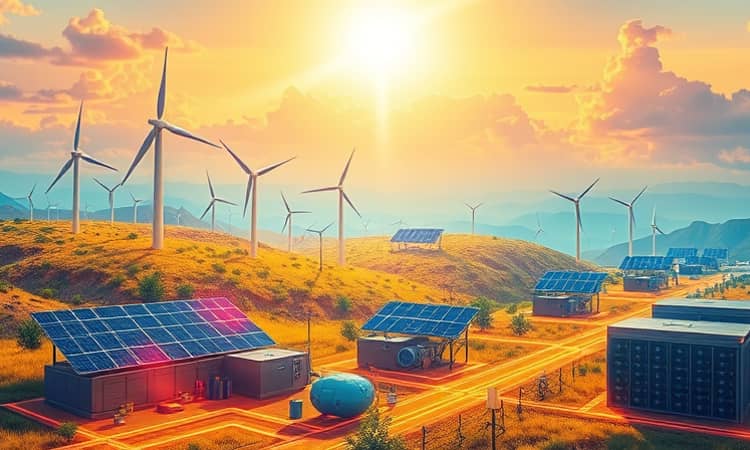
As the world confronts climate change and evolving energy demands, sustainable power sources have become not only a moral imperative but also a strategic economic opportunity. Investors, governments, and communities are aligning to transform the global energy landscape.
This comprehensive guide explores record-breaking investments, sectoral trends, regional dynamics, technology breakthroughs, policy shifts, and practical insights to help you navigate and contribute to the energy transition.
Global Investment Landscape
In 2025, global energy transition investment soared to record $2.3 trillion in 2025, marking an 8% increase from the previous year. Total energy spending hit $3.3 trillion, with $2.2 trillion into clean energy—meaning two-thirds of every dollar now supports greener options.
Clean energy supply spending outpaced fossil fuel investments for the second year in a row, widening the gap to $102 billion from $85 billion in 2024. Meanwhile, fossil fuel supply investment declined by $9 billion, a first since 2020.
Looking ahead, BloombergNEF projects an average annual investment of $2.9 trillion over the next five years, with renewable energy alone hitting $780 billion—outpacing oil by an estimated $245 billion.
Sector-Specific Investment Breakdown
Key sectors driving the energy transition in 2025 include transport electrification, renewables, grid modernization, data centers, and storage innovation. Understanding these allocations can help investors identify high-impact opportunities.
- Electrified transport: $893 billion
- Renewable energy: $690 billion
- Grid investment: $483 billion
- Data centers: $500 billion approx.
- Clean energy supply chain: $127 billion
- Climate-tech equity: $77.3 billion
Renewable Energy Specifics
Renewable sources continue to dominate new capacity additions. Solar remains the most cost‐effective new power source, while battery and storage technologies improve grid resilience.
- Solar investment: USD 450 billion projected
- Battery storage: USD 66 billion forecast
- Onshore wind additions to 732 GW
Regional Investment Analysis
Geography plays a pivotal role in funding flows and market maturity. Asia Pacific leads, followed by the European Union and the United States, while emerging markets unlock new opportunities in off-grid and distributed solutions.
China remains the largest market at $800 billion, despite its first renewable funding decline since 2013. India climbed 15% to $68 billion, while Australia and Southeast Asia innovate with co-located solar and storage.
Technology and Market Trends
Renewables enter a mature phase characterized by infrastructure build‐out, grid integration, and disciplined capital deployment. Solar and wind generation are set to grow more than 17% in 2026, while fossil demand rises less than 1%.
Key trends driving this evolution include:
- Grid-forming regulations shaping storage
- Alternative battery chemistries emerging
- Hybrid solar-wind-storage installations
- Data centers leading clean power demand
Policy and Regulatory Environment
Governments worldwide adjust subsidies and introduce rules to accelerate transition and ensure security. New foreign entity sourcing rules in the U.S. target covered nations, while China refines subsidy frameworks to sustain growth.
Safe-harbor credits influence project timelines, and evolving grid codes demand sophisticated storage solutions that can form and stabilize networks.
Future Outlook and Challenges
The energy transition faces headwinds: a projected decline in global solar additions due to China’s slowdown, supply chain constraints, and policy uncertainties around tariffs and foreign investments.
However, opportunities abound:
Distributed solar, mini-grids, and storage projects are expanding in developing markets. Industry consolidation and strategic pivots will drive efficiency. Investors prioritizing measurable financial value alongside environmental and social performance will lead the next wave.
Investment Philosophy Shifts
As growth normalizes, the era of speculative expansion gives way to disciplined investment. Stakeholders are focusing on clear revenue visibility, proven fundamentals, and diversified platforms.
- Near-term agility over long bets
- Proven technologies over untested ideas
- Hybrid platforms for risk diversification
- Long-duration storage for resilience
Renewable energy has delivered average annual returns of 15.7% over the past decade, outperforming traditional assets. By aligning capital with sustainable projects, investors can achieve both strong financial performance and lasting environmental impact.
The future of energy investment holds profound implications for our economies, our planet, and future generations. By understanding the data, embracing innovation, and adopting a disciplined approach, you can be part of a transformative journey toward a cleaner, more resilient world.