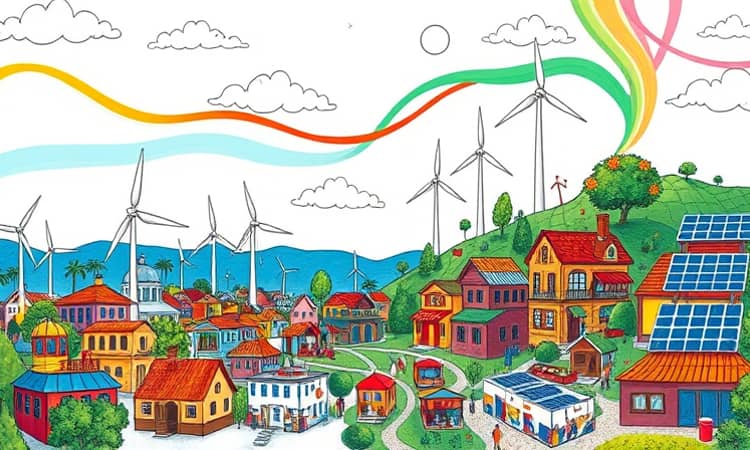
In a rapidly evolving world, businesses that prioritize ethical practices and environmental responsibility are redefining success. By weaving sustainability into their core operations, companies not only protect the planet but also secure a competitive edge in the marketplace.
2026 Sustainability Landscape
As we enter 2026, the intersection of environmental stewardship and commercial performance is more apparent than ever. Recent analysis reveals that sustainable brands now account for 23.8% market share, an increase of 2.6 points year-over-year, demonstrating that consumers reward companies that align profits with principles.
The broader sustainability market is projected to expand from USD 24.40 billion in 2025 to USD 41.64 billion, growing at a CAGR of 28.50%. Renewables—primarily wind and solar—now exceed 40% of global electricity capacity, making them the cheapest new power sources in 60% of markets. These shifts fuel record-high corporate power purchase agreements (PPAs) and spark innovation across sectors.
Case Studies: Brands Leading the Charge
Industry pioneers illustrate how sustainability can catalyze growth, foster loyalty, and drive operational efficiency.
- Patagonia: Surpassing $1 billion in annual revenue, dedicating 1% of sales to environmental initiatives, and embracing recycled fabrics and LEED-certified facilities.
- Interface: Achieving carbon neutrality in 2020, using 60% recycled materials, and cutting fossil fuel consumption by 40%, yielding $450 million in savings.
- Unilever: Sustainable brands now deliver over 50% of growth, with Dove and Ben & Jerry’s each surpassing €1 billion in revenue and earning 68% consumer trust.
- IKEA: Committed to becoming climate positive by 2030, offering energy-efficient products, and enjoying 10% annual revenue growth alongside 75% positive customer sentiment.
- Tesla: With a market cap exceeding $600 billion, pioneering electric vehicles and solar solutions that captivate environmentally conscious consumers.
Beyond these headline examples, companies like Burt’s Bees, Subaru, Danone, Novo Nordisk, and Schneider Electric showcase varied approaches—from zero-waste facilities to sustainable agriculture, illustrating that every industry can chart its path toward a greener future.
Mechanisms Driving Leadership
Successful organizations harness several key mechanisms to transform sustainable ambitions into tangible advantages.
- Consumer Loyalty and Trust: Brands with clear environmental commitments enjoy 75–85% positive sentiment, building advocacy that converts into repeat purchases.
- Operational Efficiencies: Renewable energy adoption and waste reduction deliver cost savings—Interface’s $450 million payoff stands as proof.
- Innovation Through Collaboration: Alliances with NGOs, suppliers, and research institutions accelerate development of green hydrogen, battery storage, and closed-loop systems.
- Regulatory Advantage: Early compliance with ISSB-aligned ESG reporting positions companies as ‘bankable’ partners in global supply chains, avoiding costly retrofits.
Challenges and Risks in the Path Ahead
Progress often encounters hurdles. Despite rising awareness, only 42% of companies disclose climate adaptation plans, while a mere 8% set biodiversity targets. In the technology sector, 38% of data center operators lack net-zero pledges, even as demand surges toward 2,200 TWh by 2030.
Supply-chain geopolitics also loom large. China’s dominance in electrolyzers, critical minerals, and green hydrogen exports presents both a model and a dependency risk. Organizations that fail to diversify sources or invest in domestic capacity may face bottlenecks and price volatility.
Looking Forward: Building Sustainable Market Leaders
To transform ambition into leadership, companies must embed sustainability as a strategic priority—not an add-on. Transparency fosters trust; setting science-based targets and reporting progress invites stakeholders to join the journey.
The future belongs to those who act decisively. By investing in renewable power, disclosing climate risks, and forging alliances for innovation, businesses can build resilience and seize emerging opportunities in community resilience, green finance, and circular economies.
In 2026 and beyond, the marketplace will continue to reward authenticity and accountability. Companies that champion environmental and social good will not only protect the planet but will also outperform peers, unlock new revenue streams, and secure loyalty across generations.
Embrace the ethical advantage. Let sustainability guide your strategy, fuel your innovation, and cement your place as a market leader for the next decade and beyond.