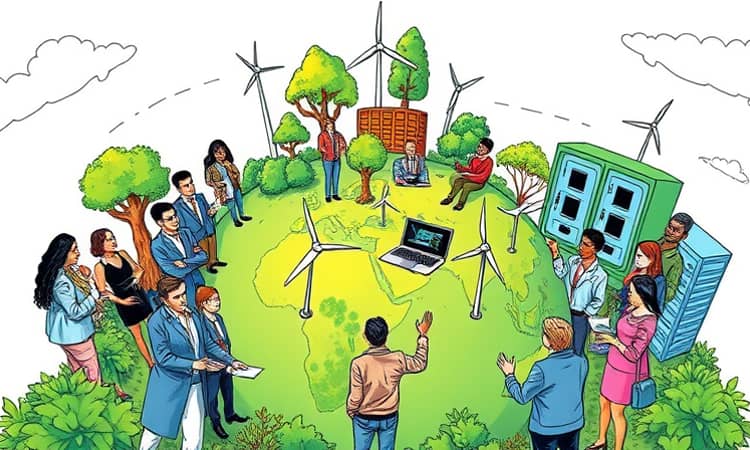
In an era defined by environmental urgency and economic unpredictability, investors are seeking pathways that align financial goals with ecological stewardship. Sustainable investing in 2026 demands more than just returns—it calls for resilience amid market volatility and long-term vision. As policies evolve and markets shift, understanding the forces shaping this landscape is vital for those committed to both profit and planet.
Emerging Trends and Market Drivers
The sustainable investing ecosystem is rapidly evolving around several core themes. First, the push for energy transition and renewable infrastructure remains paramount. Renewables and nuclear capacity are expanding to meet surging AI data center energy demands, projected to rise by over 130% by 2030. Second, the climate adaptation market offers huge upside: revenues are expected to grow from $1 trillion in 2025 to $4 trillion by 2050, addressing infrastructure, agriculture and urban resilience needs.
Biodiversity and natural capital are gaining prominence as investors recognize that healthy ecosystems underpin economic stability. Private funds targeting nature-based solutions must ramp up from current levels if the industry is to capture an estimated $10.1 trillion in value by mid-century. Meanwhile, governance reforms and stewardship practices are reshaping corporate accountability, reinforcing trust in sustainable strategies.
- Climate adaptation and resilience to mitigate physical risks
- Energy transition initiatives powering next-gen data centers
- Biodiversity and natural capital preservation via new metrics
- AI-driven sustainable investment analysis improving ESG insights
Investor Demand and Asset Growth
Global investor appetite for sustainable strategies shows no sign of slowing. A recent survey of nearly 1,000 institutional investors found that 86% plan to increase their sustainability allocations within two years. Regions such as Southeast Asia and the UK report asset growth in excess of 75%, while Europe saw €108 billion in net responsible investment inflows during the first three quarters of 2025, representing over 95% of total RI capital movements.
Furthermore, fixed income instruments account for 63% of responsible investment assets under management in Q3 2025, reflecting the strength of green and sustainability-linked bonds. Private biodiversity finance, though still just 1% of climate ETFs, is poised for expansion as stakeholders seek nature-positive returns. Blended finance structures must scale dramatically—demand estimates suggest $1.3 trillion in external flows by 2035, half from private sources, compared to only $40 billion in 2022.
Key Investment Opportunities
Market participants can capitalize on multiple high-impact themes. Renewable energy remains the top priority, with solar, wind and emerging small modular nuclear reactors addressing both decarbonization and energy security concerns. In parallel, climate adaptation sectors—ranging from flood defenses to drought-resistant agriculture—offer compelling returns backed by strong policy commitments, such as COP30’s goal to triple adaptation finance by 2035.
Biodiversity investments are expanding through innovative vehicles like debt-for-nature swaps and green bonds tied to reforestation. Advances in AI analytics enable sophisticated natural capital accounting, helping investors quantify the ecosystem services embedded in their portfolios. Meanwhile, data center operators are increasingly sourcing renewable power to meet surging demand, creating synergies between digital infrastructure and clean energy deployment.
Governance and Stewardship Excellence
Strong governance frameworks underpin sustainable performance. Enhanced shareholder rights and robust stewardship approaches have led to measurable returns: climate engagements deliver 4% higher peer-adjusted returns after one year and 12% after two years, while governance-focused engagements achieve up to 11.8% after 2.5 years. These figures underscore the financial benefits of enhanced stakeholder governance transparency.
Moreover, the industry is moving beyond announcements toward outcome-based reporting. Investors now demand evidence of impact, pressuring companies to align Scope 1 and 2 decarbonization targets with tangible progress metrics. This shift from greenhushing to active disclosure reinforces accountability and drives value creation.
Policy, Regulation, and Risk Landscape
The regulatory environment continues to evolve. Global ESG standards are being recalibrated, with the U.S. tightening public finance while private flows stay robust. COP30 frameworks will set adaptation indicators, and COP17 in late 2026 will spotlight biodiversity finance. Initiatives like SCALED Phase 2 aim to standardize blended finance, reducing barriers for private investors.
However, challenges remain. Geopolitical tensions, policy uncertainty and ethical risks around AI deployment can disrupt progress. Nature finance still faces a $1 trillion annual gap, and structural hurdles in blended finance slow capital mobilization. Navigating these complexities requires proactive risk management and adaptive strategy design.
Regional Highlights and Strategic Insights
Regional dynamics shape opportunity sets. In North America, adaptation and resilience projects lead private market activity, with investors focused on urban infrastructure and disaster mitigation. Europe drives fixed income inflows and policy support for defense and nuclear transitions. Asia Pacific, particularly Southeast Asia, emerges as the energy transition epicenter, with companies and governments collaborating on large-scale renewable deployments.
- North America: Climate adaptation infrastructure surge
- Europe: Fixed income sustainability bond leadership
- Asia Pacific: Rapid renewables capacity expansion
Conclusion: Charting a Sustainable Future
The sustainable investing landscape in 2026 offers a blend of promise and complexity. By focusing on resilient strategies, rigorous governance and targeted opportunities—from renewables and climate adaptation to natural capital and AI integration—investors can achieve both financial and environmental objectives. Embracing innovation in green finance instruments and aligning with evolving policy frameworks will be key to unlocking value and driving lasting positive impact for people and planet.