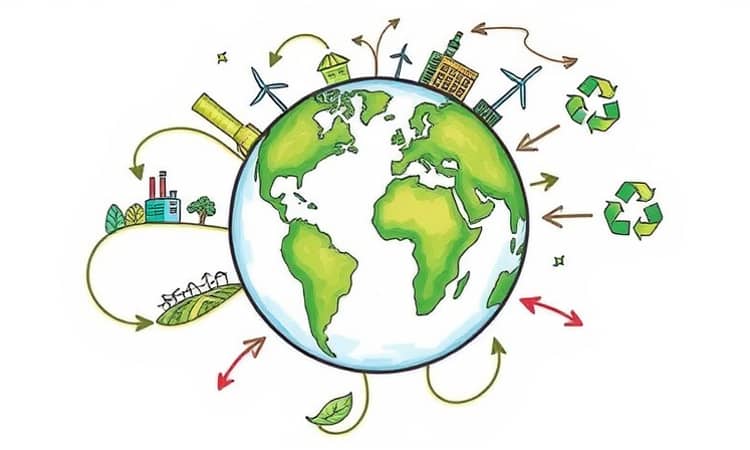
As the global community grapples with resource scarcity and climate change, the circular economy emerges as a beacon of hope. By reimagining traditional production and consumption patterns, this model offers a pathway toward sustainable growth and environmental renewal.
Definitions and Core Principles
The circular economy represents a restorative or regenerative system that seeks to replace the outdated linear model of "take, make, dispose." Its ambition is to eliminate waste and pollution, keep materials in use, and regenerate natural systems and biodiversity.
Key principles established by leading organizations include:
- Eliminate waste and pollution at source
- Circulate products and materials at their highest value
- Regenerate natural systems through sustainable design
Enhancing resource efficiency throughout lifecycles—from extraction to end-of-life management—is central to this transformation.
Strategies for Circularity: The 10 R-Model
A widely adopted framework organizes circular strategies into three loops: short, medium, and long. These 10 R-strategies guide businesses and policymakers in reshaping value chains.
- Short Loops: Refuse, Rethink, Reduce
- Medium Loops: Reuse, Repair, Refurbish, Remanufacture, Repurpose
- Long Loops: Recycle, Recover
For instance, remanufacturing can yield remarkable savings: up to 80% energy, 88% water, 92% chemicals, and 70% waste reduction compared to new production.
Environmental and Social Benefits
Implementing circular models can deliver profound environmental gains and social value. Studies show that product reuse alone could cut 1.1 billion tonnes of CO₂ annually (-12%), while full materials recirculation might slash 1.7 billion tonnes (-18%).
- Reduces biodiversity loss by slowing resource extraction
- Generates up to 700,000 new jobs in the EU by 2030
- Enhances resource security and mitigates price volatility
Since over 80% of a product’s footprint is decided in its design phase, embedding circularity from the outset is crucial to achieving near-zero waste targets across industries.
Sectoral Innovations and Business Model Transformations
Across diverse sectors, enterprises are pioneering circular practices that turn challenges into opportunities.
Food & Beverage: Transforming waste into bioenergy, leveraging predictive inventory systems, and upcycling byproducts to create new products.
Agriculture: Adopting regenerative farming, composting residues, integrating livestock and cropping cycles, and deploying precision irrigation techniques.
Energy: Extending lifespan of wind turbine components, repurposing electric vehicle batteries for grid storage, and implementing modular maintenance systems.
Construction: Embracing modular design, reusing building materials, and applying industrialized demolition methods to recover high-value resources.
Manufacturing: Shifting to rent-and-return models, offering product-as-a-service, and embedding modular design and repairable components to extend product lifespans.
Investment Rationale and Opportunities
Circular strategies are not only environmentally sound but also financially compelling. Companies adopting these models report lower operating costs, reduced emissions, and enhanced brand reputation.
Key drivers for investors include:
• Better long-term returns through circular business model innovations that unlock new revenue streams.
• Policy incentives under frameworks such as the EU Circular Economy Action Plan, offering grants, tax breaks, and technical support.
• Enhanced competitiveness as resource scarcity elevates the value of recycled and refurbished materials.
Challenges to Adoption
Despite clear benefits, several barriers slow widespread uptake:
- Insufficient recycling capacity for complex materials, notably multi-layer plastics and electronic waste.
- Lack of universal performance metrics, hindering consistent reporting and benchmarking.
- Low consumer awareness, requiring education to foster behavioral change and demand for circular products.
- Fragmented supply chains that complicate circular integration and traceability efforts.
Policy Framework and Global Movement
National and international bodies are increasingly aligning on circular economy goals. The OECD, United Nations, and European Commission provide guidelines, action plans, and technical assistance to accelerate transitions.
Legislation tied to the Paris Agreement and Sustainable Development Goals emphasizes waste reduction, resource efficiency, and critical raw materials security, reinforcing the need for systemic change.
Monitoring Progress and Metrics
Developing robust Key Performance Indicators (KPIs) remains a priority. Emerging focus areas include lifecycle carbon footprint, resource productivity rates, and waste diversion percentages.
Companies are now reporting scope 3 emissions, disclosing upstream and downstream impacts, and setting science-based targets to align with global climate ambitions.
Conclusion
The circular economy offers a compelling vision: a world where waste is designed out, materials remain in use, and natural systems thrive. By embracing strategies from refuse and repair to recycle and recover, stakeholders can drive economic growth while safeguarding the planet.
To embark on this journey, organizations and individuals can:
- Adopt circular design principles in product development
- Engage consumers through education and transparent reporting
- Collaborate across sectors to share best practices and innovations
- Leverage digital technologies for supply chain transparency and resilience
Investing in resource efficiency and renewal is not just an environmental imperative—it is a strategic pathway to a resilient, prosperous future for all.