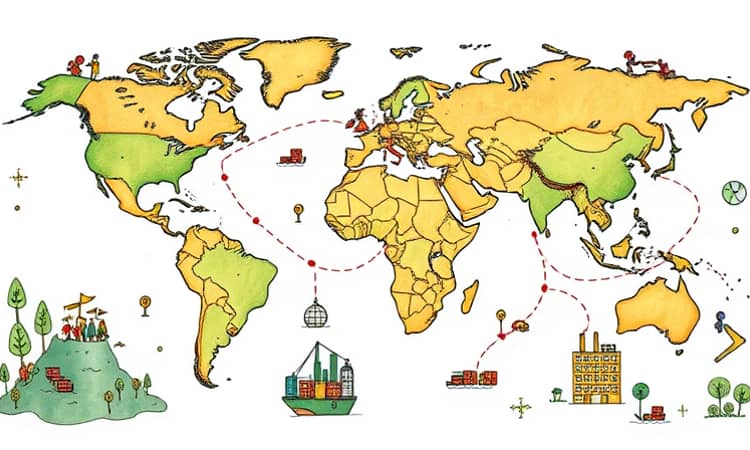
In 2026, the landscape of international commerce is undergoing a profound metamorphosis. Once defined by sprawling supply chains that spanned continents, the industry is now gravitating toward localized networks. Faced with geopolitical volatility, fluctuating tariffs, and mounting ESG pressures, companies are prioritizing agility and resilience. This shift is more than a tactical response; it represents a strategic evolution in which global supply chains are shifting toward regional hubs that foster closer collaboration and faster adaptation.
The Shift from Globalization to Localization
For decades, organizations chased the lowest possible production costs by centralizing manufacturing in distant locations. Today, however, the balance has tipped. Tariff volatility—cited by 72% of trade professionals as a top concern—coupled with trade wars, sanctions, and regulatory complexity, has revealed the vulnerabilities of hyper-globalized models. Companies are now emphasizing resilience and agility over cost, building networks that can pivot at a moment’s notice in response to geopolitical or environmental disruptions.
This new paradigm extends far beyond mere geographic proximity. It demands deeper engagement with suppliers, more robust risk management, and technology-driven visibility. The transition from globalization to localization is not simply a relocation of factories; it is a holistic reimagining of how goods are sourced, produced, and delivered in an unpredictable world.
Key Drivers Powering the Change
- Geopolitical Instability and Tariffs: Hikes in raw-material levies and customs delays force companies to seek closer, more stable partners.
- Regulatory Complexity: New rules like the EU’s Carbon Border Adjustment Mechanism require embedded carbon accounting for imports.
- Disruptions and Risk Mitigation: From export controls to climate threats, organizations must preemptively diversify to avoid costly bottlenecks.
- ESG and Ethical Sourcing: Consumers and regulators demand transparency, pushing companies toward diversified, compliant networks.
These drivers have combined to create a perfect storm. Trade pros are doubling down on supply chain management—68% now rank it as their top priority, up from 35% last year. In response, 65% are adjusting sourcing patterns, while over half are nearshoring or reshoring critical components.
Sourcing Shifts and Emerging Destinations
Organizations are trading single-source dependencies for a “China Plus One” approach that explores multiple regions simultaneously. This risk-based sourcing model balances capacity, proximity, and infrastructure.
This table underscores the trade-offs each region presents. While Vietnam and India offer robust capacities, Mexico’s nearshoring benefits are tempered by volatility. African markets promise long-term growth but require significant infrastructure investment.
Building Agility and Resilience in Practice
- Segmenting supply chains into shiftable and cemented components
- Cultivating deep supplier partnerships and capacity building
- Renegotiating contracts to include flexibility clauses
- Establishing regional distribution hubs for e-commerce
- Embedding real-time risk monitoring and response protocols
These strategies enable companies to respond swiftly when tariffs spike or geopolitical flashpoints emerge. Retailers, for example, are redefining their footprints: 87% plan nearshoring pilots in Mexico and Central America, while 90% demand end-to-end visibility to maintain trust.
Harnessing Technology and Data for Visibility
- Data analytics platforms for predictive risk modeling
- ERP automation to reduce manual compliance burdens
- SCM systems that integrate multi-node fulfillment
- practical AI and machine learning for signal-to-noise filtering
Technology serves as the backbone of the localization era. Forty percent of organizations are piloting AI or blockchain solutions to streamline supplier intelligence, while over half are enhancing their SCM and visibility toolsets. These investments bridge the gaps left by legacy IT systems and enable rapid, data-driven decision-making.
Navigating the Road Ahead
As we move deeper into 2026, the supply chain will no longer be a back-office function but a strategic differentiator. Companies that succeed will integrate geopolitics, sourcing, risk management, and technology into a unified approach. This demands a shift in organizational culture, championed by cross-functional teams and empowered procurement leaders.
By prioritizing organizational collaboration and innovation, businesses can transform supply chains into engines of growth rather than sources of vulnerability. The age of localization is not just a response to turmoil—it is an invitation to build more sustainable, agile, and resilient networks. Embrace the change, invest in partnerships, and harness the power of data to thrive in this new era.