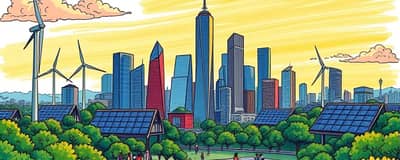
The regenerative economy is more than a buzzword—it’s a call to action. By moving beyond extractive models, investors can help restore ecosystems, uplift communities, and secure long-term prosperity for all.
Understanding the Regenerative Economy
Traditional economic systems often follow a linear “take-make-waste” pattern that depletes resources and undermines social well-being. In contrast, a regenerative economy seeks to emulate natural cycles, where waste from one process becomes an input for another.
Central to this approach is restoring and enhancing natural ecosystems and cultivating holistic wealth beyond financial profit. By valuing Earth’s resources as capital assets, we recognize that a healthy planet is the foundation of resilient communities and stable markets.
Why Invest in Regeneration?
Investing in regeneration delivers benefits that extend far beyond immediate returns:
- Long-Term Economic Resilience: Regenerative projects build soil health and biodiversity, reducing vulnerability to shocks.
- Shared Community Prosperity: Equitable models ensure marginalized groups gain fair access to benefits and decision-making.
- Net-Positive Environmental Impact: Circular designs minimize waste and restore ecosystem services such as clean water and pollination.
These advantages translate into reduced risks, stable yields, and stronger stakeholder relationships—key ingredients for sustainable portfolios.
Investment Opportunities in a Regenerative Economy
Forward-thinking investors can explore a variety of avenues to support regeneration:
- Impact and ESG Funds: Pooled capital targeting companies with regenerative supply chains and transparent social governance.
- Regenerative Agriculture: Direct financing for farms using cover cropping, rotational grazing, and organic soil amendments.
- Blended Finance Structures: Public-private partnerships that de-risk innovative natural capital projects.
By channeling funds into these vehicles, capital becomes a catalyst for positive change rather than a driver of resource depletion.
Core Principles at a Glance
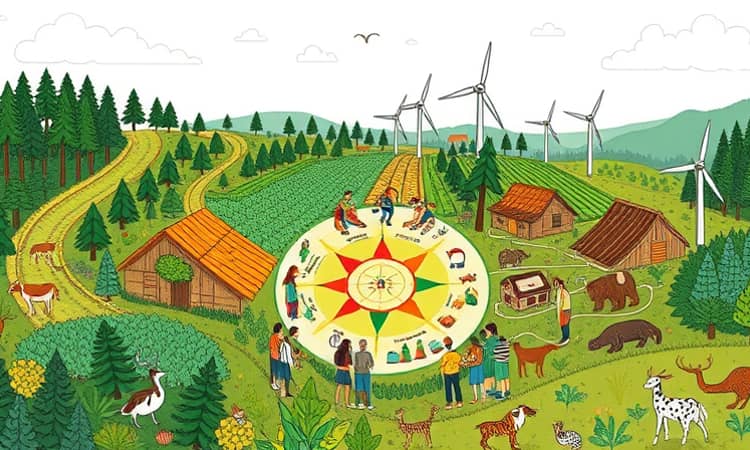
Despite varied terminology across sources, regenerative economics rests on four interdependent components: circulation, organizational structure, values and relationships, and collective learning. Together, they form the backbone of resilient systems.
Real-World Case Studies
Across sectors, pioneers demonstrate how regenerative principles translate into tangible returns:
- Regenerative Farms: Cover cropping and composting increase yields while rebuilding soil organic matter.
- Sustainable Fashion: Biodegradable fibers and repair programs extend garment life and reduce landfill waste.
- Green Chemistry Ventures: Non-toxic materials and circular product designs minimize lifecycle pollution.
Each example underscores the power of investment to foster industry-wide transformation, proving that sustainability can be a driver of innovation and profit.
Challenges and Equity Considerations
No transition comes without hurdles. Challenges include green gentrification, elite capture of benefits, and the complexity of measuring true environmental impact.
To address these risks, stakeholders must adopt participatory governance structures and provide safety nets for vulnerable communities. Transparent metrics and community-led oversight help ensure that regeneration does not widen existing inequalities.
Looking Ahead: The Future of Regenerative Investment
The next decade promises rapid evolution in regenerative finance. Emerging frameworks like Regenerative Finance Platforms and Net-Positive Business Models will drive capital toward projects that deliver ecological uplift alongside attractive returns.
By harnessing flow network theory and adaptive ecosystems thinking, investors can support a mosaic of locally tailored solutions that scale through collaboration rather than competition.
Taking Action: Your Role in Regenerative Investing
Every investor—from individuals to institutions—can contribute to systemic change. Start by:
- Screening portfolios for extractive risks and circularity opportunities.
- Engaging with community-led initiatives to understand local needs.
- Advocating for policy incentives that reward regenerative practices.
By aligning capital with regenerative outcomes, you become part of a movement that values people, planet, and profit as inseparable elements of a thriving global economy.
Resourceful returns await those who choose to invest in regeneration today. The journey may demand patience and collaboration, but the rewards—a resilient planet, equitable societies, and sustainable growth—are within reach.