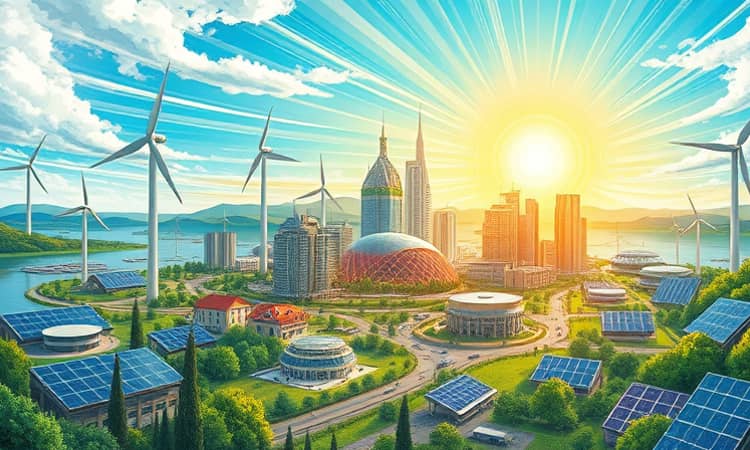
Imagine a world where energy is abundant, clean, and accessible to everyone. This vision is rapidly becoming reality through the relentless advancement of renewable technologies. The global surge in clean energy investment is a testament to human ingenuity.
In 2025, clean energy attracted nearly $2.2 trillion, doubling the amount directed toward fossil fuels. This monumental shift is not just about financial metrics; it is about securing a healthier planet for generations to come. Securing a livable planet for future generations has become a driving force behind this transformation.
Solar and wind power have reached unprecedented levels, with installations surpassing 800 gigawatts. Energy storage solutions are breaking cost barriers, enabling reliable grid integration and making sustainability both ethical and economically savvy.
The Global Investment Landscape
Global energy investment soared past $3.3 trillion in 2025, with two-thirds dedicated to clean technologies. This trend highlights a fundamental change in how the world powers its growth and development.
Renewable energy project investment hit a record $386 billion in the first half of 2025, up 10% from the previous year. These figures underscore the rapid maturation and scalability of renewable sources.
- Clean energy investment reached $2.2 trillion, outpacing fossil fuels significantly.
- Solar and wind installations exceeded 800 GW, tripling yearly deployments since 2021.
- Energy storage is poised to exceed 100 GW in annual installations by 2026.
The economic viability of renewables is reshaping global markets, offering investors robust returns while fostering environmental stewardship. Renewable energy projects are now cheaper than fossil fuels in over 90% of cases, making them a smart financial choice.
Regional Leaders and Emerging Markets
China leads the charge in renewable energy, having met its 2030 wind and solar targets six years early. Its clean energy investment exceeded $625 billion in 2024, showcasing relentless progress and commitment.
- China installed 390 GW of solar PV, accounting for 56% of global new capacity.
- The United States faces challenges, with policy reversals reducing projected renewable capacity by 30%.
- India saw record energy investment of $150 billion, with $101 billion dedicated to clean energy.
Emerging markets in Southeast Asia and Latin America are gaining traction, contributing to a diversified global energy mix. Asia is set to dominate renewable investment in 2026, driving the majority of new global capacity additions and setting the pace for innovation.
Cost Competitiveness and Market Dynamics
More than 90% of new renewable projects are cheaper than fossil alternatives, with fixed-mount solar often outcompeting natural gas without subsidies. This cost advantage is accelerating adoption worldwide.
- Battery storage costs have dropped more than three times in three years, enhancing grid stability.
- Utility-scale solar investment fell 19% in early 2025, but small-scale solar surged due to quick deployment.
- Offshore wind attracted $39 billion, exceeding 2024's total and showing resilience.
Investor concerns over revenue in markets with curtailment issues have led to declines in some regions. However, the strong economics of renewables insulate the sector from volatility, providing a stable foundation for long-term growth.
Demand Drivers: AI and Electrification
Hyperscalers and data centers are fueling unprecedented demand for low-carbon power. In the United States, 90% of hyperscalers' carbon-free energy contracts rely on renewables, highlighting a synergy between technology and sustainability.
- Global data center power demand is expected to grow 14% annually through 2030, driven by AI expansion.
- Electric vehicle adoption accelerates power demand, supporting grid integration and reducing emissions.
AI expansion not only consumes energy but also promotes the deployment of wind, solar, and storage solutions. Electrification will halve emissions from manufacturing, driving further reductions and creating new investment avenues in clean infrastructure.
Policy Environment and Future Outlook
In the United States, policy headwinds have slowed progress, with states like Ohio sunsetting renewable standards after 2026. Yet, 28 states with portfolio standards drove 37% of additions in 2024, demonstrating regional resilience.
- Government auctions and corporate demand support utility-scale solar in key markets like Europe and India.
- Improving policy frameworks in emerging regions foster onshore wind expansion and investment.
Technology maturity means wind and solar are in the system integration phase, nearing widespread adoption. Renewables have overtaken coal in the global electricity mix, a historic milestone that signals a decisive shift toward cleaner energy sources.
Looking ahead, installations may be flat in 2026 but grow modestly to 2030, with 35% of the pipeline under construction suggesting imminent acceleration. Executives are focusing on safe-harbor projects to capture tax credits while embedding flexibility through digital tools.
The decarbonization outlook is promising, with the power sector expected to cut emissions by almost 90% by 2060. Countries like Denmark generate 70% of their electricity from solar and wind, proving that system integration is not only possible but highly effective.
Investing in renewable energy is more than a financial decision; it is a commitment to a sustainable legacy. As we navigate challenges like policy uncertainties and supply chain pressures, the path forward is illuminated by innovation, collective action, and the unwavering promise of a greener tomorrow. Solar and wind growth outpaces electricity demand, reinforcing the momentum toward a carbon-free future. By embracing this transition, investors can contribute to a world where economic prosperity and environmental health go hand in hand.