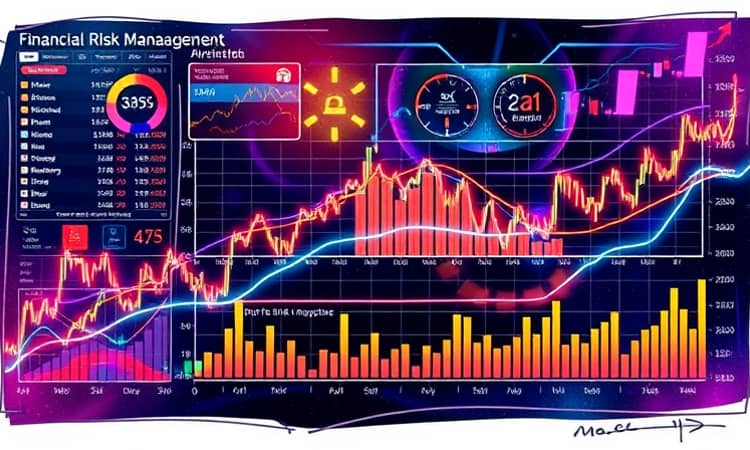
In today's fast-paced financial world, real-time risk management is a necessity for survival and success.
This approach transforms how organizations handle uncertainty, moving from reactive to proactive strategies.
Continuous monitoring and immediate response are key to staying ahead of market fluctuations.
Unlike traditional methods, it involves identifying and mitigating risks as they emerge.
This ensures businesses can thrive in an interconnected and dynamic environment.
Core Definition and Importance
Real-time risk management is a proactive, continuous process that goes beyond periodic reviews.
It focuses on minimizing exposure to unforeseen events in volatile markets.
Traditional approaches often rely on batch processing, leading to delays.
In contrast, real-time systems enable swift adaptation to changing conditions.
This shift is critical for maintaining competitiveness and avoiding costly pitfalls.
- It involves ongoing assessment and escalation of risks and opportunities.
- Organizations must anticipate threats before they impact operations.
- This method supports agile decision-making in high-pressure scenarios.
Key Challenges and Drivers for Real-Time Systems
Several factors compel the adoption of real-time risk management capabilities.
High volume and velocity of data from financial markets overwhelm outdated systems.
Delays in processing can lead to missed opportunities or increased losses.
Complexity of financial instruments demands sophisticated analytical models for quick assessment.
- Market volatility requires almost instantaneous adjustments to risk profiles.
- Regulatory compliance needs agile systems to avoid breaches and fines.
- Cybersecurity threats necessitate real-time monitoring for prompt response.
- Global 24/7 operations demand reliable, always-on processing systems.
These drivers highlight the urgency for modernized risk frameworks.
Integrated Risk Management (IRM) Framework
IRM represents a unified, organization-wide approach to risk management.
It translates enterprise insights into actionable, day-to-day processes for all teams.
This enables swift and effective responses when risks materialize.
This comparison shows how IRM enhances organizational agility and coordination.
Key components of IRM include centralization, automation, and advanced analytics.
- Centralization and aggregation provide a holistic view of risk data.
- Automation reduces manual workload and minimizes human errors.
- Real-time monitoring allows prompt identification of threats.
- Data analytics offer insights for proactive decision-making.
Benefits of Real-Time Risk Management Systems
Implementing these systems yields significant advantages for organizations.
Increased organizational agility connects risk data with core processes.
This enables faster responses to changes in risk or regulations.
Clear risk visibility helps leaders make informed decisions based on risk appetite.
- Proactive approach mitigates risks before they become issues.
- Real-time decision making reduces vulnerability windows.
- Adaptive response adjusts strategies to evolving threats.
- Time & cost efficiency frees teams for high-level tasks.
- Continuous monitoring with real-time alerts prevents escalation.
- Improved data accuracy enhances risk assessments.
- Simplified compliance avoids fines and reputational harm.
- Enhanced stakeholder trust builds confidence in operations.
These benefits collectively strengthen resilience and operational excellence.
Technical Implementation: Real-Time Portfolio Risk Assessment
A practical example involves event-driven architecture for portfolio risk.
This system reacts to market data updates and recalculates risk promptly.
Key components ensure seamless integration and performance.
- PortfolioRiskCalculator encapsulates risk calculation logic.
- PortfolioData structures portfolio information.
- MarketData handles market-related inputs.
- MarketDataListener triggers calculations on data changes.
Such setups support accurate and timely risk evaluations.
Risk Management Framework (RMF) Best Practices
The RMF provides a robust protective barrier against potential threats.
It encompasses six core steps for effective risk management.
- Categorization aligns objectives with organizational strategy.
- Selection develops mitigation strategies for identified risks.
- Implementation integrates risk management into operations.
- Assessment audits framework effectiveness regularly.
- Authorization establishes clear roles and decision-making authority.
- Continuous Monitoring involves real-time evaluations and feedback loops.
Continuous monitoring and control are foundational to this process.
They allow for the identification of new risks and reassessment of known ones.
Tools and techniques enhance monitoring capabilities.
- Regular risk review meetings foster collaboration.
- Risk tracking software provides real-time insights.
- Key risk indicators (KRIs) measure risk exposure.
- Project dashboards display risk metrics for quick analysis.
Critical Best Practices for Implementation
Successful deployment requires adherence to key practices for sustainability.
Regular review and update ensure the framework evolves with new risks.
This continuous process prevents stagnation and maintains effectiveness.
Stakeholder communication builds transparency and trust across the organization.
- Cross-functional collaboration gathers diverse insights for holistic management.
- Documentation and communication clarify risk processes to all involved.
- Incident response plan addresses security breaches promptly.
- Key performance indicators (KPIs) track framework success.
- Redundancy and backup systems ensure business continuity.
- Crisis communication plan manages emergencies effectively.
These practices support a resilient and adaptive risk management culture.
By embracing real-time strategies, organizations can navigate volatility with confidence.
This proactive stance not only mitigates risks but also uncovers opportunities.
In an era of rapid change, instantaneous risk management is the key to sustainable growth.