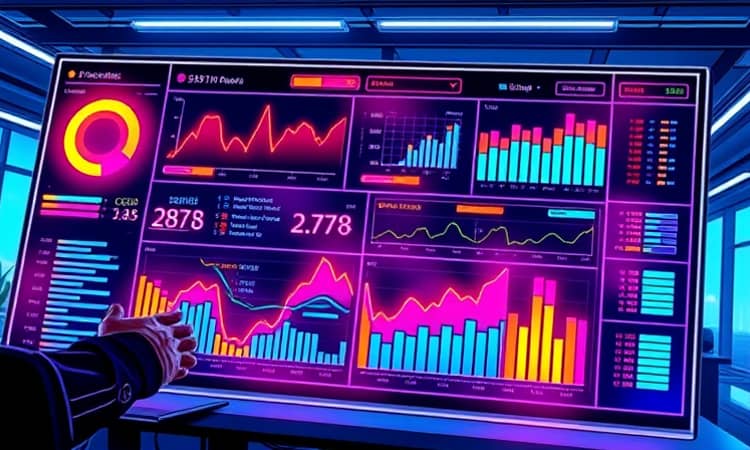
In an era where financial landscapes shift in the blink of an eye, waiting for outdated reports is a recipe for stagnation. Real-time analytics delivers up-to-the-minute insights that empower leaders to navigate volatility with confidence and precision.
This transformative technology processes data as it flows, enabling decisions based on current reality rather than historical snapshots.
By embracing real-time capabilities, organizations unlock a new level of agility that drives sustainable growth and resilience.
The Power of Instant Financial Insights
Real-time analytics refers to the continuous ingestion and processing of data streams to provide immediate, actionable insights. In finance, this means replacing static reports with live dashboards and dynamic reporting that update in seconds.
It contrasts sharply with traditional batch analytics, which relies on periodic data analysis, often causing critical delays.
This shift is not just a technological upgrade; it's a strategic imperative for staying competitive in fast-paced markets.
Why Real-Time Analytics Matters for Financial Agility
Access to real-time data accelerates decision-making, allowing firms to respond to opportunities and threats without lag. Eliminating the wait for month-end reports means issues like cash shortfalls or overspending are caught as they occur.
This immediacy fosters a culture of proactive management, where leaders can adjust strategies on the fly.
Moreover, automation in real-time systems drastically reduces human error, enhancing the reliability of financial models.
- Speed: Detect and address financial anomalies in real-time to prevent escalation.
- Accuracy: Automated data capture minimizes reconciliation errors and improves trust in numbers.
- Compliance: Continuous audit trails simplify regulatory adherence and reduce compliance risks.
These benefits translate into tangible operational efficiencies, freeing teams to focus on strategic analysis.
Quantified Impact: The Numbers Speak
The business impact of real-time analytics is backed by compelling statistics that highlight its transformative potential. Companies report a 79% improvement in outcomes with some achieving 15% revenue growth in a single year.
Studies link real-time capabilities to significant boosts in productivity and profitability.
- Productivity: A 20% increase in efficiency from automated processes.
- Profit Margins: Up to 5% improvement through optimized decision-making.
- Risk Management: 52% better anticipation of financial risks with real-time monitoring.
For instance, real-time tracking of receivables can reduce days sales outstanding by 20-30%, directly enhancing liquidity.
These metrics underscore why the global analytics market is projected to reach $650 billion by 2026.
Transforming Core Financial Functions
Real-time analytics reshapes every aspect of finance, from planning to risk management, by enabling continuous optimization. Financial Planning and Analysis (FP&A) benefits immensely through dynamic forecasting and real-time variance analysis.
Teams can model scenarios with current data, adapting quickly to external shocks like market shifts.
- FP&A: Live spend tracking allows immediate resource allocation and budget adjustments.
- Treasury: Continuous cash position insights support intraday liquidity management and better borrowing decisions.
- Risk Management: Real-time anomaly detection helps prevent fraud and monitor credit exposures effectively.
This transformation empowers organizations to build trust in their financial data and respond swiftly to performance issues.
Broader Business Advantages Linked to Finance
Beyond core functions, real-time analytics drives broader business benefits that enhance overall competitiveness. Tracking customer behavior in real-time enables sales and marketing teams to tweak strategies based on live metrics.
This agility improves customer experiences and boosts revenue through personalized offerings.
- Efficiency: Continuous KPI monitoring identifies process bottlenecks early, enhancing operational flow.
- Collaboration: Shared real-time data fosters cross-functional teamwork, with leading companies nearly eight times more likely to excel.
- Innovation: Fast iteration on strategies, such as pricing or promotions, based on current performance data.
These advantages create a ripple effect, driving sustainable growth and market leadership.
Real-Time vs Batch Analytics: A Strategic Comparison
Understanding the differences between real-time and batch analytics is crucial for making informed technology investments. Real-time systems offer speed and immediacy that batch methods cannot match, enabling proactive risk management.
The table below highlights key contrasts to guide decision-makers.
This comparison shows why real-time analytics is becoming the standard for forward-thinking organizations.
Embracing the Future of Financial Decision-Making
Adopting real-time analytics is not merely a trend but a necessity for thriving in today's economy. It empowers leaders with instant insights that drive smarter, data-driven strategies across all levels of the organization.
By leveraging this technology, companies can achieve unparalleled agility, accuracy, and competitive edge.
- Start with integrating real-time dashboards into existing financial systems.
- Train teams to interpret live data and make swift, informed decisions.
- Continuously update analytics tools to keep pace with technological advancements.
This journey towards real-time intelligence promises to redefine how businesses operate, turning data into a powerful catalyst for success.
As financial landscapes evolve, those who harness instant insights will lead the charge towards a more resilient and prosperous future.