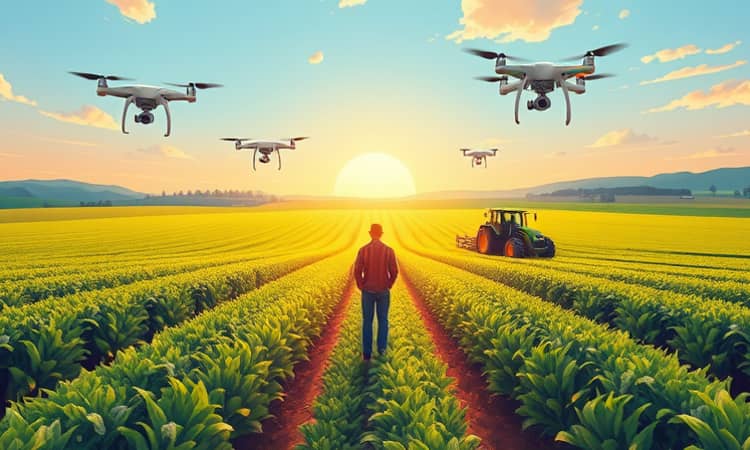
As the world population surges toward 10 billion by 2050, traditional farming alone cannot keep pace. Optimizing fertilizer and pesticide use and harnessing smart tools have become essential to sustain our food supply, protect the environment, and empower farming communities.
The Global Imperative: Feeding Billions
Today, roughly 8.3 billion people call Earth home, with projections tipping past 9.6 billion by mid-century. Rapid growth in Asia and Africa intensifies pressure on farmland, water reserves, and ecosystems, demanding innovative solutions.
Without intervention, expanding agricultural land threatens forests and biodiversity. Bridging the yield gap on existing fields is not merely an option—it is a moral and ecological necessity.
- Population peaks in 2080s at over 10 billion
- Urbanization accelerates food consumption patterns
- Climate volatility heightens production risks
Key Population Projections at a Glance
Understanding the scale of the challenge motivates action through technology and policy.
By interpreting these trends, stakeholders can plan investments, policies, and technologies that ensure productive, sustainable agriculture.
Harnessing Technology for Sustainable Yields
Precision agriculture unites an advanced toolkit: GPS/GNSS for field mapping, IoT sensors for soil moisture and nutrient levels, drones for aerial imaging, and AI/ML for predictive analytics. Empowering farmers with precision tools transforms data into actionable insights.
Diverse technologies integrate into a seamless ecosystem, enabling real-time decision making support and achieving unprecedented resource efficiency. Tractors steer themselves, irrigation adjusts automatically, and applications of water or fertilizer occur exactly where needed.
Driving Forces and Emerging Challenges
Several factors propel the adoption of precision agriculture. Nourishing a growing global population is the primary catalyst, but climate concerns, shrinking arable land, and regulatory demands also play pivotal roles.
Governments worldwide are stepping up: in 2024, India announced a $650 million program for IoT, AI, and drones in organic farming, aiming to raise productivity and reduce environmental impact. Nevertheless, challenges persist. Integrating new systems with legacy equipment, high upfront costs, and the need for technical skills can deter smallholders and large operators alike.
Real-World Success Stories and Case Studies
From the rice fields of Southeast Asia to the corn belts of North America, farmers are pioneering data-driven methods. In one Indian state, deploying drones for crop health scans cut pesticide use by 30% while boosting yield by 15% within a single season.
A cooperative in the United States used satellite and sensor data to refine irrigation schedules, cutting chemical usage dramatically and saving 20% on energy costs. Meanwhile, startups offering Agri-TaaS platforms enable smaller farms to tap enterprise-level analytics without owning the infrastructure.
The Path Forward: Strategies for Adoption
Transitioning to precision farming demands a clear roadmap. Farmers and agribusinesses can follow stepwise approaches to minimize risk and maximize gains.
- Conduct pilot projects on representative plots
- Partner with technology providers and research institutions
- Invest in training for agronomists and field staff
- Secure government grants or low-interest financing
- Scale gradually, evaluating results and refining protocols
Building a culture of continuous improvement unlocks sustained productivity gains and environmental benefits.
Environmental and Economic Benefits
Precision farming reduces resource waste, lowers carbon footprints, and preserves ecosystems. Sensor-driven irrigation can deliver up to 40% water savings, while targeted fertilization minimizes nutrient runoff into waterways.
Economically, farmers enjoy higher margins through reduced input costs, improved yields, and premium markets for sustainably produced goods. Optimizing every drop of water and inputs not only boosts profits but also fosters community resilience and food security.
Future Outlook: Nourishing Tomorrow
Market analyses forecast the precision agriculture sector growing from $10.5 billion today to over $30 billion by the early 2030s. AI-driven platforms, robotics, and vertical farming will expand the boundaries of what’s possible, democratizing access to advanced tools.
Yet technology is only part of the solution. Collaboration among farmers, researchers, policymakers, and investors is essential to scale innovations responsibly. By embracing data-driven farming transformation movement, we can create a legacy of sustainable abundance.
As stewards of the land and architects of our collective future, we must champion precision agriculture. Through vision, cooperation, and action, we have the power to feed a growing world while preserving the planet for generations to come.