As we enter 2026, the world of digital art is redefining creativity and commerce. From NFTs to immersive installations, the landscape is expanding at breakneck speed. Artists and collectors alike are navigating an ecosystem where technology and imagination converge, unveiling unprecedented opportunities.
In this article, we explore the driving forces behind this revolution, offering insights and practical guidance for creators, investors, and enthusiasts eager to tap into the digital art market’s full potential.
Soaring Market Growth
The digital art market’s valuation has soared in recent years. In 2023, it stood at USD 12.04 billion, and forecasts project a rise to USD 39.40 billion by 2032, reflecting a CAGR of 14.08% between 2024 and 2032.
Another perspective anticipates growth from USD 7.24 billion in 2025 to USD 30.69 billion by 2035, a robust CAGR of 15.53%. Meanwhile, design tools and software are set to expand from USD 15.6 billion in 2024 to USD 76.9 billion by 2034 at a CAGR of 17.3%.
These figures underscore a landscape where artists, developers, and platforms are aligned toward relentless innovation and market expansion.
Adoption by Collectors
Collector behavior has evolved decisively in favor of digital assets. Today, 63% of global art collectors own digital art, and 40% made purchases within the past year. Among Gen Z and millennials, over 40% have acquired digital works, with 68% planning acquisitions in the next 12 months.
Art Basel’s 2025 survey placed digital art third in total spending, with 51% of high-net-worth individuals buying at least one piece in the past two years. This shift highlights how digital creations have moved from curiosity to core portfolio holdings.
Innovative Formats and Mediums
Digital art now spans a myriad of formats—2D, 3D, AR, VR, video, interactive installations, and more. Photography, as a digital-native medium, is set to grow at a CAGR of 9.61% between 2026 and 2035, driven by affordability and instant feedback.
Augmented reality commands over 35% of market share in 2025, while VR is forecast to grow at 16.38% by 2035, reflecting demand for immersive experiences. Video art and modern digital painting, bolstered by rapid software improvements, exhibit a strong CAGR of 17.98%.
NFTs, once speculative, now serve as standard verification mechanisms. Galleries and auction houses integrate them seamlessly; for instance, Beeple’s installation at Art Basel Miami Beach sold out in just five hours.
Distribution Channels and Practices
E-commerce leads distribution with a 40% market share, growing at a CAGR of 16.47%. Artists leverage online platforms to reach collectors directly, bypassing traditional intermediaries.
Other channels include exhibitions, galleries, personal websites, and social media. Platforms like Instagram and TikTok amplify visibility, enabling emerging talents to build followings and monetize their work swiftly.
- International marketplaces offering global reach
- Hybrid gallery models blending physical and virtual shows
- Direct-to-collector sales via personal websites and platforms
Emerging Trends for 2026
Several practices are shaping the next phase of digital art:
- Micro-animations—subtle loops in still images that captivate viewers
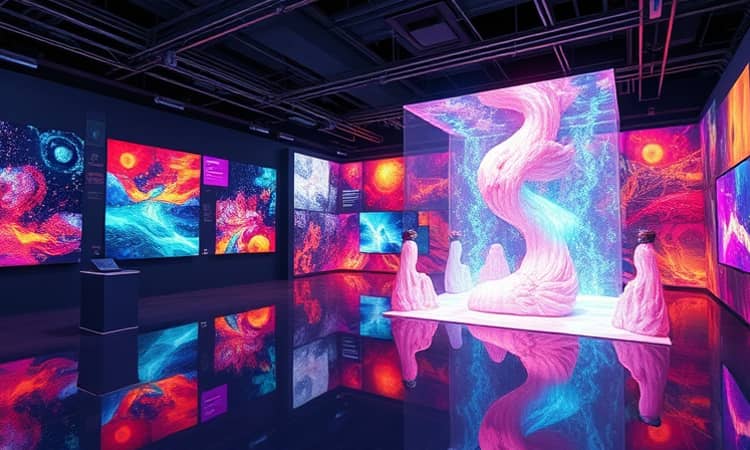
- Immersive exhibitions featuring projection, sound, and interactive elements
- AI-powered tools like Firefly Boards for image upscaling and automated composition
Subscription fatigue is prompting creators to explore alternative revenue models—limited edition drops, patron-supported projects, and pay-per-view immersive events are gaining traction.
Key Players and Industry Infrastructure
Major software and platform providers drive innovation. Companies such as Adobe, Blender Foundation, Autodesk, Epic Games, and Wacom shape tools artists rely on. Collaboration between technology firms and creative communities accelerates the adoption of new techniques.
Galleries are responding with hybrid models—57% report expanding their online presence, hosting virtual exhibitions alongside physical shows. Cross-gallery partnerships and shared digital spaces help reduce costs and broaden audience engagement.
Practical Steps for Artists and Collectors
For creators seeking to thrive, understanding the market’s dynamics and embracing emerging formats is crucial. Consider these action points:
- Invest time in learning AR and VR platforms to differentiate your portfolio.
- Experiment with micro-animations to add depth to your 2D pieces.
- Engage with niche communities on social media to build authentic connections.
Collectors should:
- Research artist credentials and provenance, verifying NFT-backed works.
- Diversify acquisitions across formats—photography, video art, immersive installations.
- Attend hybrid exhibitions to experience both physical and digital presentations.
Conclusion
The digital art ecosystem in 2026 is more vibrant and accessible than ever. With substantial market growth, broad collector adoption, and evolving formats, opportunities abound for those willing to innovate. By leveraging cutting-edge tools, engaging diverse channels, and following emerging practices, artists and collectors can unlock the full potential of this transformative medium.
Embrace the pixelated potential before you—your next masterpiece or prized acquisition could be just a digital canvas away.