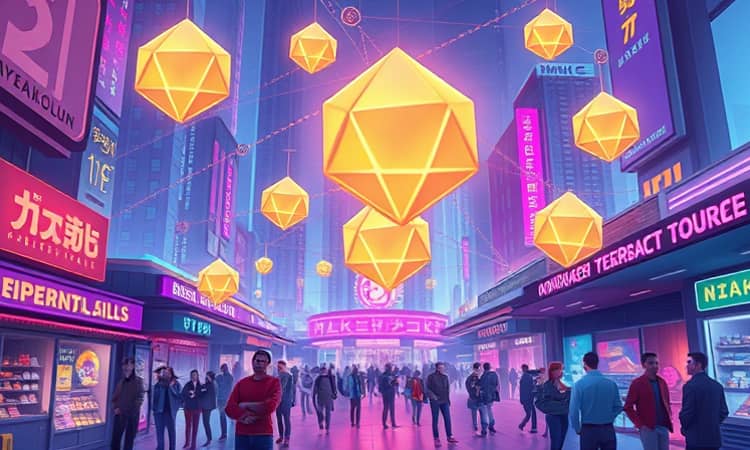
As the digital landscape matures, NFTs have evolved from speculative curiosities into cornerstone assets for creativity and commerce. The turn of 2026 has ushered in a renewed sense of optimism, with market indicators pointing to a surge in both volume and value. This renaissance is not merely a repetition of past hype cycles but represents a fundamental shift toward utility-driven applications that promise lasting impact. From gaming avatars to tokenized real world assets, NFTs are catalyzing a new era of ownership and innovation.
The Resurgent NFT Market in 2026
After a cooling period in 2025, when total volume dipped to $5.5 billion and market value fell to $2.4 billion, the industry is staging a powerful comeback. Early 2026 saw the overall market cap grow by over $220 million in the first week alone. Hundreds of projects recorded price rebounds, with some registering triple and even quad-digit gains. Forecasts now estimate a global NFT market size of up to $60.82 billion by the end of this year, with alternative projections reaching $86.23 billion depending on scope and definition.
Investors and creators alike are drawn by the promise of sustainable growth rather than short lived speculation. The emphasis has shifted toward long term utility that embeds NFTs in real world use cases. As market definitions broaden to include services, platforms, and hybrid assets, stakeholders are reassessing opportunities in art, gaming, identity, and beyond.
- Projected market value: $60.82 billion by 2026 (CAGR 41.2%)
- NFT market cap milestone: $5.6 billion in 2026
- Total sales volume: $2.8 billion in H1 2026
- Alternative forecast: $86.23 billion by end of year
Blockchain Innovation Driving Growth
Ethereum continues to dominate, accounting for 62% of all NFT contracts and transactions. Yet multi-chain ecosystems are emerging to handle demand and reduce costs. Layer 2 solutions like Base and Immutable X boast over $15 billion in TVL and record daily transactions above two million, offering multi-chain innovation drives scalability without compromising security. Meanwhile, Bitcoin’s BRC-20 standard has propelled inscription-based NFTs into the spotlight, overtaking Ethereum in sales volume and spawning communities around projects like Ordinal Punks and Bitcoin Frogs.
Beyond these powerhouses, emerging platforms like Arbitrum and Optimism are scaling adoption through proof-of-stake consensus and cross-chain bridges. Developers are prioritizing throughput and sustainability, meeting growing demand for eco-friendly minting and trading solutions.
Utility Shifts: Beyond Speculation
The NFT space is rapidly embracing tangible use cases that extend far beyond collectible art. Gaming drives roughly 38% of transaction volume, as developers integrate play-to-earn ecosystems fueling growth and true asset ownership into immersive worlds. Meanwhile, phygital offerings—where real world goods link to digital tokens—have seen 60% growth, bringing luxury brands and specialty retailers into the fold.
- Gaming and metaverse experiences: 33%+ of user activity
- AI-powered dynamic NFTs: 30% of new projects
- Phygital assets bridging physical and digital: 60% transaction growth
- Carbon credit NFTs: $300 million in sustainable transactions
- Event ticketing and identity solutions increasing adoption
Major brands such as Gucci, Coca-Cola, and Nike are leveraging NFTs for marketing, loyalty rewards, and limited edition releases. Starbucks and Nike’s Polygon-based initiatives demonstrate how high-profile collaborations can drive mainstream awareness and participation.
Investing in Top Projects: Strategies for Success
Identifying blue-chip NFTs and promising new entrants requires rigorous analysis. Floor price trends, on-chain metrics like TVL, and developer activity are essential indicators. High-value historical sales—such as The Merge at $91.8 million and CryptoPunks #5822 at $23.7 million—underscore the potential upside of established collections. Simultaneously, emergent categories like Bitcoin BRC-20 ordinals and AI-driven works hint at the next wave of winners.
Successful investors balance their portfolio across proven assets and calculated risks. Allocating capital to projects with strong communities, transparent roadmaps, and strategic brand partnerships mitigates volatility. Monitoring weekly activity can reveal early momentum: in January 2026 only six projects surpassed $1 million in volume, while a select fourteen achieved hundreds of thousands, highlighting opportunities in underexposed collections.
Overcoming Challenges and Seizing Opportunities
The road to profitability is not without obstacles. Rising network fees, regulatory uncertainty, and the lingering effects of the 2025 downturn pose headwinds for newcomers and small creators. Yet clarity around compliance, improved onboarding experiences, and upcoming TradFi–DeFi bridges present compelling avenues for growth.
By diversifying use cases—ranging from governance and voting access to tokenized real estate and royalties—projects can unlock fresh revenue streams. Institutions are increasingly exploring NFT engagements, with NFTaaS platforms anticipated to grow from $1.5 billion in 2023 to $34.7 billion by 2033, signaling robust demand for turnkey solutions.
Future Outlook: Navigating the NFT Horizon
Looking ahead, AI-curated collections and metaverse integrations will reshape the landscape. As virtual worlds expand, NFTs will function as passports to experiences, digital fashion and identity tokens will become standard, and utility tokens will underpin new economic models. The nascent DePIN sector may unlock further value through tokenized infrastructure, while carbon credit NFTs will drive intersectional sustainability efforts.
For creators and investors alike, the path to profit lies in embracing innovation with a long-term mindset. By aligning with projects that prioritize real world impact and seamless user experiences, participants can not only ride the wave of growth but help steer the evolution of a more inclusive, sustainable digital economy.