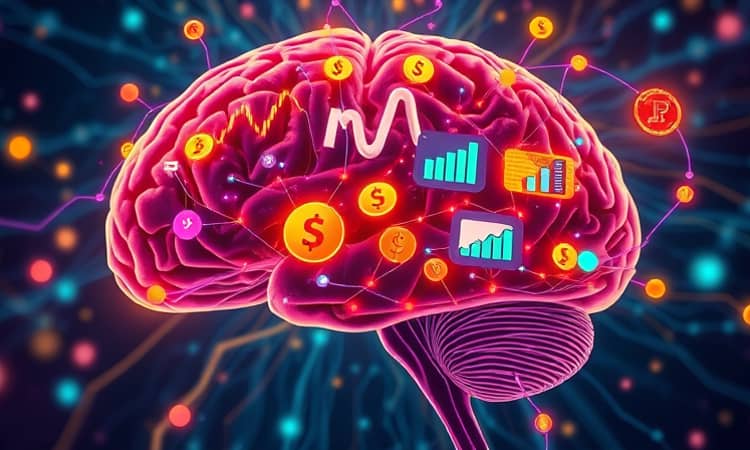
Neurofinance bridges the worlds of neuroscience, psychology, and finance to explain why we sometimes make irrational and emotion-driven choices with our money. Rather than assuming that all decisions stem from calm, logical analysis, this field uncovers the hidden neural circuits that guide spending, saving, investing, and risk-taking.
By peering into the brain’s inner workings, researchers reveal how ancient survival mechanisms, modern market complexity, and unconscious impulses converge to shape every financial move.
The Emergence of Neurofinance
Although behavioral finance exposed psychological biases in finance, it did not pinpoint their biological roots. In the early 2000s, scientists borrowed tools like fMRI and EEG to map the brain regions active during monetary decisions. This marriage of disciplines challenged the Efficient Market Hypothesis and reframed our understanding of market anomalies.
Neurofinance builds on Prospect Theory and Dual-Process Theory, illustrating that rapid, emotional judgements often override slow, rational deliberation.
Key Brain Regions and Neural Mechanisms
Neuroimaging studies reveal specific areas of the brain lighting up during financial tasks, each with a distinct role.
Dopaminergic pathways modulate the thrill of gains and dread of losses. Automatic neural circuits often act before conscious awareness, explaining why 90% of decisions occur below our radar.
Core Concepts and Behavioral Biases
Neurofinance uncovers the neural basis of key biases and decision patterns that traditional models overlook.
- Loss Aversion: Heightened amygdala activation signals that losses hurt more than gains feel satisfying.
- Impulse Buying: Immediate rewards trigger striatal surges, undermining rational cost-benefit analysis.
- Unconscious Influences: Visual cues, color, and layout alter choices through rapid, automatic processes.
- Emotional Engagement: Paradoxically, stronger gut feelings often yield more rational investments when harnessed properly.
Innovative Methods and Tools
To capture decision dynamics, researchers employ an array of technologies that track brain and bodily responses in real time.
- fMRI for pinpointing active brain regions during financial tasks with high spatial accuracy.
- EEG to monitor quick shifts in neural electrical activity and emotional arousal.
- Eye-Tracking and Skin Conductance reveal visual attention and physiological arousal tied to risk perception.
- Genomic and Neurotransmitter Analysis uncover individual predispositions toward risk and reward sensitivity.
Combined, these tools not only forecast choices before they happen but also illuminate the split-second tug-of-war between emotion and reason.
Transforming the Financial Landscape
Insights from neurofinance are reshaping how individuals, professionals, and institutions approach money management.
- Investor Education: Training programs now include exercises to strengthen prefrontal control and mitigate overconfidence.
- Algorithmic Trading: Firms experiment with neural data as inputs for predictive models and real-time market sentiment analysis.
- Policy Design: Regulators consider human biases to craft interventions that promote market stability in crises.
- Sustainable Investing: Understanding immediate gratification versus long-term gains helps nudge eco-friendly financial behaviors.
- Financial Therapy: A budding profession merges neural insights with counseling to combat compulsive spending and addictive trading.
Emerging Brain-Computer Interfaces promise personalized nudges that align spending and saving habits with each person’s neural blueprint.
Conclusion: Harnessing Brain Science for Smarter Choices
Neurofinance illuminates the silent forces steering our financial lives, offering a roadmap to more informed, balanced decisions. By recognizing how unconscious and automatic processes skew our reasoning, we can cultivate strategies to channel our instincts constructively.
As research advances, this interdisciplinary lens will refine everything from individual budgets to global market regulations, empowering us all to make decisions that honor both our emotions and our long-term goals.