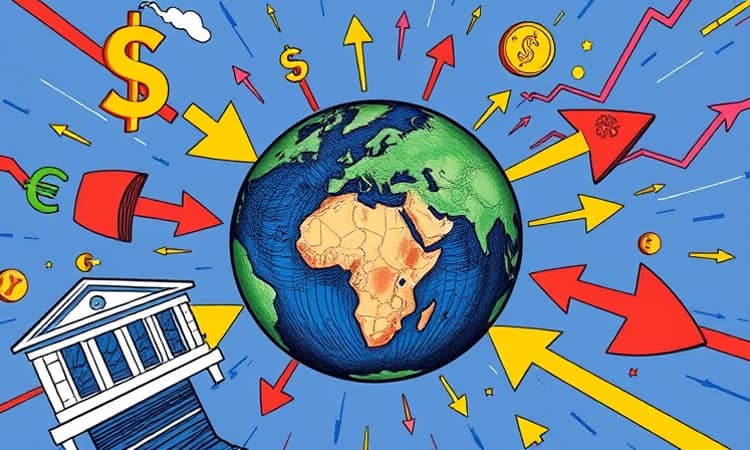
As the era of ultra- loose policy fades, central banks worldwide are orchestrating a cautious pivot from expansion to restraint. Monetary tightening—through interest rate hikes and balance-sheet reductions—has become the defining force shaping economies from New York to Tokyo. This deep dive unpacks the mechanics behind these shifts, traces their historical roots, and explores how you can navigate uncertainty with adaptive strategies in an increasingly interconnected world.
Understanding Monetary Tightening
Monetary tightening refers to central banks raising benchmark interest rates or reducing the size of their balance sheets, also known as quantitative tightening (QT). The primary goal is combating inflation and stabilizing growth by making borrowing more expensive and draining excess liquidity from financial markets.
These tools work through various channels. Higher interest rates increase borrowing costs for businesses and households, while QT withdraws reserves from the banking system, tightening credit conditions. The combined effect can slow overheating economies but also risks stalling investment and consumer spending.
Historical Context of Recent Tightening Cycles
Since 2021, major central banks have embarked on their most aggressive tightening cycles in decades. Understanding the key phases helps frame today’s global dynamics:
- Peak tightening phases: The US Federal Reserve raised rates sharply post-pandemic, the European Central Bank (ECB) lifted its deposit rate from 4.5% in September 2023, and the Bank of England (BOE) reached 5.25% in late 2023.
- Shift to easing: By late 2025, the Fed ended its second QT phase and resumed asset purchases, the ECB cut its deposit rate to 2% in June 2025, and the BOE began rate reductions, bringing policy rates down by 100 basis points.
- Global divergence: While the Federal Reserve and ECB backed off, the Bank of Japan stood out as the only major central bank still tightening into 2026, raising its policy rate to 1%.
Mechanisms of Global Transmission
Tightening in one major economy rarely stays local. Through several interlinked channels, policy moves ripple across borders.
- Deep interconnections through trade and finance: Higher US rates strengthen the dollar, inflating the debt-servicing costs of emerging markets with dollar-denominated liabilities.
- Currency and capital flows: Investors chase higher yields, triggering portfolio shifts that can destabilize smaller economies and spur sudden exchange-rate swings.
- Trade and supply shocks: Tariffs and protectionist measures can compound the impact of tighter financial conditions, exacerbating global inflationary pressures.
Regional Impacts and 2026 Projections
Lagged effects from recent policy moves will play out unevenly across regions, influenced by domestic conditions and external linkages. Below is a snapshot of key economies in 2026:
Risks and Future Scenarios
Several pathways could unfold as tightening lags work through global economies:
- Inflationary growth remains intact: Fiscal easing and supply shocks combine with loose financial conditions to sustain nominal expansion.
- Recession emerges (limited risk): A sharp slowdown in labor markets or an AI-driven correction sends equities tumbling and yields lower.
- Stagflationary pressures build (tail risk): Growth stalls while inflation proves stickier than expected, eroding real incomes.
Strategies for Stakeholders
In the face of evolving policy regimes and cross-border spillovers, stakeholders can take practical steps to thrive:
1. Investors should diversify across asset classes and geographies, building resilient portfolios in volatile times. Consider shorter-duration bonds in markets where central banks are likely to ease, while keeping exposure to inflation-linked securities.
2. Corporate treasurers and CFOs must manage interest-rate and currency risks proactively. Hedging strategies and stress-testing models can help cushion against sudden yield spikes or exchange-rate swings.
3. Policymakers should coordinate fiscal and monetary tools, ensuring that fiscal expansions complement central bank objectives without reigniting inflation. Transparent communication and data‐driven frameworks bolster market confidence.
4. Businesses can seize opportunities by investing in productivity-enhancing technologies. Embracing innovation amid challenging environments not only mitigates cost pressures but also positions firms for long-term competitiveness.
Conclusion
Monetary tightening has undeniably reshaped the global economic order, sending ripples through trade, capital flows, and financial markets. While these shifts introduce headwinds, they also open avenues for innovation, risk management, and strategic repositioning.
By understanding the historical context, transmission mechanisms, and regional nuances, stakeholders can craft adaptive strategies that turn uncertainty into opportunity. Whether you are an investor, corporate leader, or policy advisor, the key lies in navigating uncertainty with adaptive strategies and staying attuned to evolving policy landscapes. In doing so, you can not only weather the tightening cycle but also emerge stronger when the next phase of economic expansion arrives.