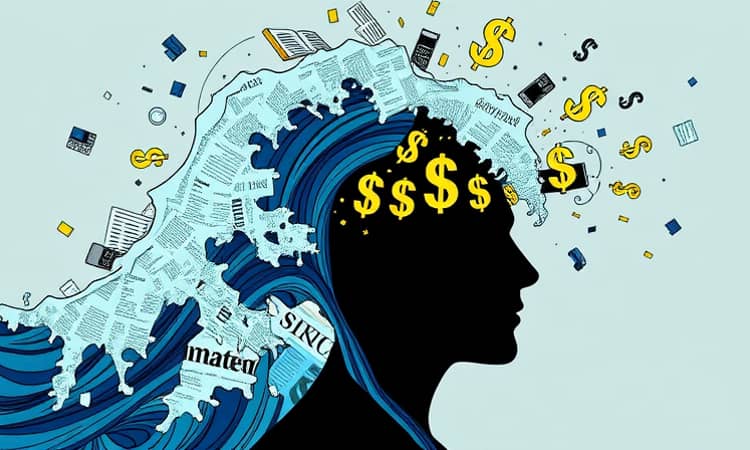
Every day, traders, analysts and policy makers sift through mountains of data seeking an edge. Yet beyond numbers and charts lies something equally powerful: the narratives that frame how we interpret events, linking past events to future expectations. These shared stories can propel assets higher, spark volatility spikes or trigger sector rotations, often with surprising speed and scale.
The Power of Market Narratives
A market narrative is more than a catchy headline. It is a viral storyline shaping investor psychology, a causal explanation that tells participants why markets moved yesterday and how they might move tomorrow. When a narrative captures collective attention it becomes the lens through which new information is filtered, shaping demand across asset classes and altering the flow of capital.
These narratives often originate from influential voices—leading economists, central bankers, or prominent media outlets—and can crystallize overnight around unexpected events like policy announcements or geopolitical shocks. When a narrative gains traction, it can become a self-fulfilling prophecy, attracting momentum traders, drawing in retail flows and even influencing corporate decisions, perpetuating its own validity.
Robert Shiller’s research on “narrative economics” reveals how contagious stories—like the belief that housing prices never fall—spread through the public consciousness like an epidemic. These stories can ignite booms or fuel busts, driving cycles that cannot be explained by fundamentals alone. In practice, they challenge the Efficient Market Hypothesis by highlighting gaps between price movements and new data releases.
How Narratives Drive Price Movements
The “Narrative Wave” model proposed by Beutel Goodman illustrates the tug-of-war between fundamental value and emotional storytelling. While true information anchors the fundamental value, powerful stories push prices above or below that anchor, sometimes dramatically. As narratives intensify, confirmation bias and herding behaviors kick in, creating feedback loops that amplify the initial price moves.
Behavioral channels through which narratives exert influence include:
- Confirmation bias: Investors zero in on data confirming the prevailing story while dismissing contradictory signals.
- Hindsight bias and narrative fallacy: After events unfold, people craft tidy explanations that feel logical, reinforcing overconfidence in simple causal links.
- Animal spirits of fear and greed: Emotions drive buying or selling, and narratives package those feelings into coherent themes that spread rapidly.
Measuring Narratives Through Media and Data
Traditional news outlets and social media are the highways along which narratives travel. When press coverage invokes historical analogies—whether to 1929, 1987 or 2008—it primes investors to expect similar outcomes. Studies show that increased mention of crash-related narratives foreshadows spikes in implied volatility, as measured by the VIX.
Advances in text analysis and alternative data have enabled quantitative firms to track narrative intensity in real time. EDHEC researchers construct indices that gauge the strength of themes like “Market Crash” or “Pandemic Risk,” demonstrating that these indices predict future returns beyond conventional factors. Similarly, Amundi’s narrative metrics drawn from GDELT data improve forecasts for weekly S&P 500 moves, proving that adding narrative sentiment enhances model accuracy.
Recent innovations leverage large language models (LLMs) to sift through millions of articles and social media posts, extracting narrative indicators at unprecedented scale. Research indicates that sectors with more positive narrative tone tend to outperform over three to six month horizons. By tracking narrative flow instead of just price momentum, investors gain a forward-looking gauge of sentiment that can improve yield and return forecasts beyond traditional econometric approaches.
Real-World Narratives Shaping Markets
Recent years have delivered vivid examples of narratives moving markets powerfully. Among the most influential:
- Soft landing vs. no landing: The debate over whether monetary tightening would simply cool growth or halt it altogether drove large swings in bond yields and equity valuations throughout 2023.
- Higher-for-longer interest rates: The conviction that policy rates would stay elevated reshaped the fixed income landscape, sending yields on 10-year Treasuries above 5% and forcing investors to reconsider duration risks.
- Immaculate disinflation: The belief that inflation could fall without a major slowdown propelled a late-2023 rally in risk assets, despite minimal changes in core macro indicators.
- Recession is imminent: Early fears of an upcoming downturn led to defensive positioning, only to give way when economic data surprised to the upside.
Beyond economic themes, societal and geopolitical narratives also wield influence. Topics like climate policy, technological breakthroughs or geopolitical tensions can drive sector-specific rallies or sell-offs. For instance, narratives around “energy transition” have propelled renewable energy stocks, while concerns over “supply chain disruption” have caused spikes in commodity prices and affected industrial sectors.
A striking case study is the 2023 “round trip” in 10-year U.S. Treasury yields. Although the yield started and ended the year at virtually the same level, it experienced swings of over a full percentage point as narratives rose and fell:
Practical Takeaways for Investors
Understanding and monitoring market narratives can offer a strategic edge. Consider these approaches:
- Track narrative indices alongside traditional metrics to identify when stories diverge from fundamentals.
- Develop rule-based strategies that respond to narrative shifts, such as hedging exposure when panic-driven narratives intensify.
- Incorporate sentiment analysis tools or subscribe to thematic narrative research for real-time insights.
- Maintain a disciplined view on valuation. When narratives push prices too far, contrarian opportunities may emerge.
- Stay aware of your own biases. Regularly challenge prevailing stories by seeking disconfirming evidence.
While narratives can be a source of volatility, they also present opportunities for innovation in product development. Financial institutions can create thematic ETFs or structured products that allow clients to express bullish or bearish views on specific narratives. By packaging narrative exposure in transparent, liquid vehicles, investors gain targeted access to high-conviction themes.
Ultimately, narratives provide a window into the crowd’s collective mindset. By quantifying these stories and weaving them into investment frameworks, market participants can navigate volatility more effectively, harnessing the power of shared beliefs and expectations rather than succumbing to them.
Embarking on the journey of narrative analysis transforms the way you see markets. No longer just a backdrop to price charts, stories become vital indicators of where the next wave of opportunity or risk may lie. Cultivate curiosity, harness narrative intelligence, and let the power of collective storytelling guide your investments toward clarity and growth.