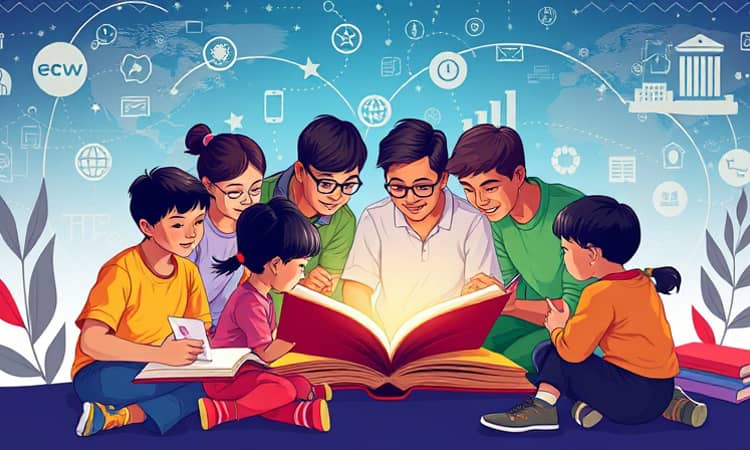
The global economy is at a crossroads. As nations strive for sustainable growth, the imperative to invest in people through education and workforce development has never been clearer.
Why Human Capital Matters
Education is widely recognized as education as a powerful driver of development. According to the World Bank, each additional year of schooling increases earnings by about 9% on average globally.
Beyond income, schooling fuels higher productivity, sparks innovation, leads to better health outcomes, and fosters social cohesion. In this way, human capital is truly infrastructure for the knowledge economy, enabling societies to tackle complex challenges and achieve multiple Sustainable Development Goals.
Global Education Market Size
The magnitude of the education sector is staggering. Projections estimate the global education market reaching US $10 trillion by 2030, encompassing early childhood, K–12, higher education, and adult learning.
- Early childhood education: foundational skills at the highest return rate
- Workforce education: adult learning, corporate training, and reskilling
- Educational technology: AI-driven tools moving from theory to practice
Despite this growth, private investment remains cautious, and core systems often remain under-modernized, particularly in low-income regions.
Education Finance and Investment Gaps
Even as global spending rises, per-child allocations have stagnated and inequities persist. UNESCO estimates a looming persistent global funding gap of nearly US $100 billion annually to reach SDG4 targets by 2030.
Households now fund about one-quarter of all education expenses, shifting costs to families and risking deepened inequality. Meanwhile, education aid is forecast to fall by 25% by 2027, intensifying finance shortages.
This table illustrates how small states often allocate a high share of their GDP to education, while many large economies under-invest relative to their capacities.
Learning Outcomes and Inequality
Rising expenditure has not always translated into improved learning. The concept of learning poverty among children—the share of 10-year-olds unable to read a simple text—remains alarmingly high in many regions.
Inefficient resource allocation and barriers to access perpetuate disparities. Without targeted reforms to ensure quality and equity, millions of learners risk falling further behind.
The Changing Global Labour Market
The World Economic Forum’s Future of Jobs Report 2025 highlights five major transformation drivers: automation and AI, the green transition, geoeconomic fragmentation, economic uncertainty, and demographic shifts.
- Technological change: AI and digitalization reshaping roles
- Green transition: new skills for sustainable industries
- Economic uncertainty: demand for adaptable talent
- Demographic change: ageing populations and youth bulges
- Geoeconomic fragmentation: regional supply chain realignments
From 2025–2030, shifts will generate new jobs equivalent to 14% of today’s workforce and displace 8%, yielding a net employment growth of 7%—about 78 million new roles. This dynamic underscores the urgent need for reskilling and upskilling at scale.
Youth and Informality Challenges
Global unemployment dipped to 5.0% in 2024, yet informality persists; 58% of workers lack social protection. Youth face steeper odds, with unemployment at 12.9% and 259 million NEET—“not in employment, education, or training.”
Child labour also remains a crisis, affecting 138 million children, including 54 million in hazardous work. Ending child labour within five years would require progress to accelerate elevenfold—a daunting but vital goal to reclaim wasted human potential worldwide.
Pathways to Stronger Human Capital
Comprehensive strategies are needed to bridge gaps and unlock human potential. Key actions include:
- Investing heavily in early childhood and foundational learning
- Raising public financing to meet benchmarks and reduce household burdens
- Embedding lifelong learning systems for continuous skill renewal
- Leveraging AI and digital tools to personalize education at scale
- Formulating inclusive policies that integrate under-represented groups fully into the workforce
Aligning these pathways requires collaboration among governments, private investors, civil society, and educators to ensure that no one is left behind.
Conclusion
Investing in education and workforce development is not a cost but a catalyst for growth, health, and social harmony. By confronting finance gaps, enhancing learning quality, and building adaptable skill ecosystems, the world can harness the full promise of human capital and secure a more prosperous and equitable future for all.