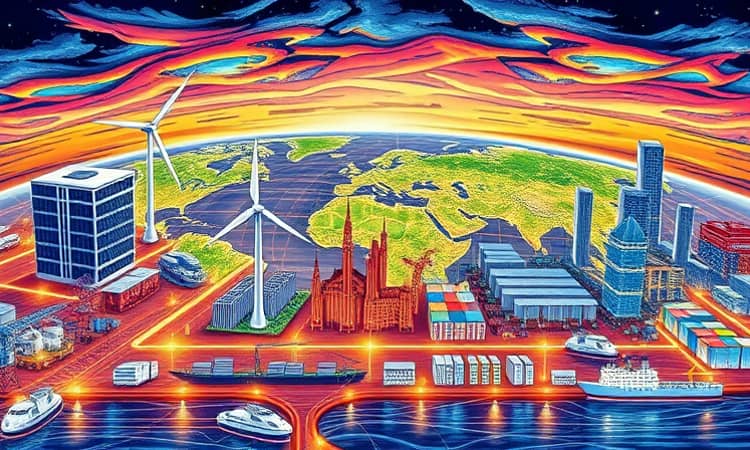
Global infrastructure is entering a transformative chapter. A convergence of megatrends is driving a renaissance in connectivity and resilience, propelling unprecedented investments and innovation worldwide.
A New Era of Digitalization and AI Infrastructure Boom
The surge of artificial intelligence and digital services demands massive build-outs of data centers, fiber networks, power transmission lines, and advanced cooling systems. In 2025, data centers represented over 20% of global greenfield project values with more than $270 billion announced.
Power consumption for data centers outside China and crypto will soar from 86 GW to 198 GW by 2030, driven by generative AI accounting for over 70% of the rise. Leading markets like the U.S., France, and Korea anchor this boom, while emerging economies such as Brazil and India become new hotspots.
- Semiconductor fabs saw a 35% increase in project value in 2025.
- Major fiber optic and 5G backbone projects scaled rapidly.
- Cooling infrastructure innovations, including water-based systems, expanded capacity.
Decarbonization and the Energy Transition
Investments in renewables, battery storage, grid modernization, and carbon capture technologies are accelerating. Global battery storage capacity nearly doubled in 2024, reflecting a rapid decarbonization and energy transition.
Energy generation infrastructure remains a powerful economic engine: a 1% sustained increase in capacity can boost long-run GDP growth by 0.09 percentage points, while a 5% rise yields 0.45 points, according to a 92-country study.
Although some U.S. incentives faced rollbacks, global momentum remains strong. Utilities are expanding networks to meet electrification needs and rising data center demand, underscoring the link between power and digital resilience.
Deglobalization, Reshoring, and Supply Chain Realignment
Trade disruptions and geopolitical shifts drive companies to prioritize domestic manufacturing and secure supply chains. New industrial corridors, logistics hubs, and port expansions are reshaping global trade routes.
With the Global Supply Chain Stress Index nearing 2022 peaks, greenfield projects in tariff-exposed sectors dropped 25% in 2025. Governments and firms are investing in strategic reshoring and nearshoring initiatives to reduce vulnerability.
Urbanization and Emerging Market Gaps
Rapid urban growth in developing countries demands transport networks, water and sanitation systems, healthcare facilities, and affordable housing. Over the past three decades, many emerging markets have doubled their infrastructure stock.
India’s digital infrastructure now covers 625,000 villages as of December 2024, exemplifying large-scale projects supported by development banks. Closing these gaps will require trillions in capital but promises accelerated urban infrastructure development and improved living standards.
- Transport: metro lines, highways, and intercity rail corridors.
- Water: desalination plants, pipelines, and smart distribution.
- Housing: modular construction and sustainable building retrofits.
Policy, Fiscal Support, and Public-Private Partnerships
Governments worldwide are streamlining permitting, establishing stimulus packages, and launching co-investment funds to catalyze projects. Europe alone needs €12 trillion by 2040, with €3.6 trillion earmarked for building upgrades.
Public spending is vital as geopolitical tensions intensify. Incentives for green projects, fast-track approvals for digital infrastructure, and targeted grants illustrate coordinated policy and fiscal support to sustain momentum.
Building Resilience and Climate Adaptation
Extreme weather events and rising sea levels compel investments in grid hardening, flood defenses, and resilient transport corridors. Coastal cities are reinforcing levees, while inland networks adopt smart monitoring systems.
High-quality upgrades in developed economies emphasize robust resilience and climate adaptation, reducing downtime, safeguarding populations, and preserving critical economic functions under stress.
Investment Landscape, Risks, and the Path Forward
The decade ahead presents over $7 trillion in AI infrastructure opportunities. Sustained infrastructure stock increases of 5% can deliver 0.45 percentage points of long-term GDP growth, a compelling economic multiplier.
However, international infrastructure FDI fell 10% in 2025, highlighting dependence on domestic capital. Sector allocation currently favors utilities (50%), transport (30%), and other projects (20%). Divergent regional strategies are emerging, with heavy investors expanding capacity while others stagnate.
Investors face risks from regulatory shifts, geopolitical uncertainty, and delivery inefficiencies. Yet resilient financing models and diversified portfolios can mitigate exposure while unlocking multitrillion-dollar investment opportunities.
Looking Ahead: Opportunities on the Horizon
As 2026 unfolds, easing inflation and stabilized supply chains promise continued growth. Domestic investors, public-private partnerships, and bold policy reforms will determine the pace and inclusivity of this infrastructure renaissance.
By aligning digital, decarbonization, deglobalization, and urbanization strategies, stakeholders can forge a future of long-term sustainable economic growth, resilient communities, and interconnected global prosperity.