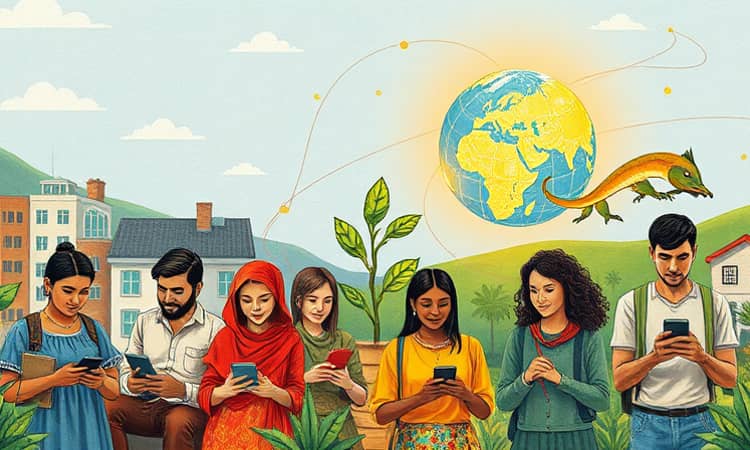
Inclusive finance has emerged as one of the most powerful tools for transforming lives and strengthening communities across every continent. By ensuring that all individuals have access to and can effectively use financial services, we lay the foundation for economic growth, resilience, and social equity. From remote villages powered by mobile money to urban centers thriving on digital payments, inclusive finance paints a vivid narrative of progress and possibility.
The Evolution of Inclusive Finance
The story of inclusive finance began with small loans to women’s groups in developing regions, blossomed into a global movement encompassing NGOs, fintech innovators, development banks, impact investors, and policymakers. Over the past decade, account ownership rates climbed from 51% in 2011 to nearly 80% by 2025, demonstrating a remarkable momentum. This surge was driven by the mobile money providers in Africa, innovative digital platforms in Asia, and targeted policies in Latin America.
Central to this revolution is the Global Findex Database, a demand-side survey across 148 economies that tracks how people save, borrow, make payments, and manage financial risks. Since its launch in 2011, it has provided granular insights disaggregated by gender, age, education, income, and geography, guiding stakeholders in tailoring solutions to the most vulnerable.
Key Milestones and Global Statistics
Today, approximately 79-80% of adults worldwide hold an account at a financial institution or with a mobile money provider, up from just over half a decade ago. In low- and middle-income countries, the figure reaches 75%, driven by concerted efforts to extend services to the underserved.
Yet 1.3-1.4 billion adults remain unbanked, with women in developing economies disproportionately excluded. Of these, 740 million are women, underscoring persistent gender gaps despite historic gains.
Regional trends reveal diverse trajectories:
- East Asia–Pacific surged to near-universal access by 2020, propelled by rapid digital adoption in China.
- Sub-Saharan Africa achieved significant growth through mobile accounts, despite infrastructure challenges.
- Middle East–North Africa and Eastern Europe–Central Asia lag behind, starting from low bases and facing conflict or policy headwinds.
Funding Shifts and Ecosystem Resilience
As we moved into 2025 and 2026, longstanding funding models faced disruption. Major bilateral donors scaled back commitments, and landmark initiatives like USAID’s inclusive finance programs wound down. The Gates Foundation signaled a pivot away from its Inclusive Financial Systems team by 2030, ushering in a shifting from donor-driven to investor-embedded models era.
In response, financial inclusion stakeholders are forging new paths. Impact investors are integrating advisory services with capital deployment. Organizations such as Accion and FSD Africa combine research, capacity-building, and funding to nurture sustainable ventures. Emerging university research centers and mission-driven startups are further diversifying the landscape. Moreover, accelerated digital payments and resilience focus have unlocked lower-cost experimentation, powered by artificial intelligence and data analytics.
Intersections with Broader Agendas
Inclusive finance does not operate in isolation. It intersects with climate resilience, digital economy expansion, and global development goals. Low-income populations face acute climate risks, yet many remain excluded from formal financial services. Inclusive finance offers pathways to inclusive finance bridges adaptation finance gap by enabling insurance products, microloans for climate-resilient agriculture, and savings schemes that buffer shocks.
Meanwhile, the digital transformation of the global economy depends on affordable connectivity and robust financial infrastructure. Initiatives supported by the G7 aim to bring 400 million Africans into the digital sphere, harnessing mobile transfers, microloans, and digital marketplaces to reduce poverty and spur entrepreneurship.
Studies by the IMF and World Bank link financial inclusion to broader economic participation, financial health, and sustainable growth. As global growth stabilizes at around 2.6% in 2026, inclusive finance remains a catalyst for equitable recovery.
Emerging Trends and Future Directions
As the sector matures, focus is shifting from mere access to meaningful outcomes—financial health, resilience, and wellbeing. Policymakers and practitioners emphasize the design of products that meet real needs and protect consumers. Open banking regimes in Asia and Latin America are accelerating innovation, enabling instant payments and personalized services even amid macroeconomic headwinds.
Artificial intelligence is poised to revolutionize service delivery for vulnerable consumers and small firms, offering personalized financial advice at scale. Evidence-driven implementation is becoming the norm, ensuring that pilot successes translate into large-scale impact.
- Private-sector commitments are rising—Santander has empowered 11.8 million individuals since 2019, targeting 15 million by 2025 through lending and education programs.
- Governments are strengthening consumer protection frameworks to mitigate risks associated with digital finance.
- Public–private partnerships are funding infrastructure upgrades to close the digital divide and expand mobile access.
Charting a Path to Universal Inclusion
Achieving universal financial inclusion by 2030 will require sustained collaboration across sectors. Key priorities include:
- Investing in affordable connectivity and digital literacy, especially in rural areas.
- Developing climate-inclusive financial products that enhance resilience for frontline communities.
- Fostering legal and regulatory environments that support open banking, data privacy, and consumer protection.
- Promoting gender equity through targeted initiatives for women entrepreneurs and savers.
By leveraging mature infrastructure, innovative technology, and evolving funding models, the inclusive finance ecosystem can enter a phase of unprecedented resilience and impact. The journey from microcredit pioneers to a sophisticated digital landscape demonstrates that when we commit to equity and opportunity, every corner of the globe can share in the prosperity of a connected financial world.