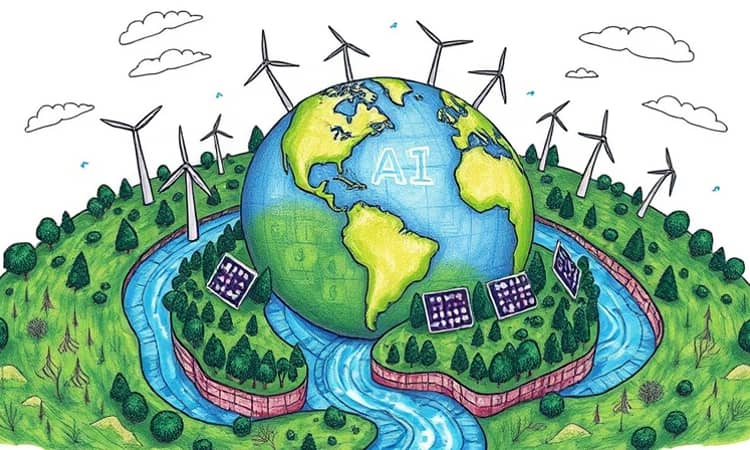
Welcome to the next wave of sustainable investing, where financial opportunity meets global responsibility.
This shift is driven by a fundamental move from mitigation to adaptation, reshaping markets and mindsets.
Investors are now responding to observable climate impacts and societal needs with innovation.
The Surging Scale and Growth of Sustainable Markets
Sustainable investing has grown beyond a niche into a mainstream force.
In the U.S., assets under management total approximately $6.6 trillion in sustainable investments.
Globally, markets are expanding with double-digit annual growth rates around 20 percent between 2026 and 2030.
Investor demand is soaring, with 86% of asset owners expecting to increase allocations to sustainability strategies soon.
- Among global institutional investors, 73% report growth in assets aligned with sustainable criteria.
- ESG integration is now used by 96% of investors in Canada, covering 87% of assets under management.
This trend highlights a deep commitment to embedding sustainability across portfolios.
Priority Investment Themes Defining the Future
Four key themes are set to dominate sustainable investing in 2026 and beyond.
Each offers unique opportunities for growth and impact.
Climate Adaptation and Resilience
The focus is shifting from preventing climate change to adapting to its effects.
This shift is urgent as physical climate risks become more apparent in daily operations.
Market opportunities are vast, with adaptation and resilience investments potentially reaching $9 trillion by 2050.
Revenue from climate adaptation solutions is projected to quadruple from $1 trillion in 2025 to $4 trillion by 2050.
Key focus areas include water scarcity management and resilient infrastructure.
- Water scarcity and management solutions are critical for future stability.
- Grid hardening via utilities ensures energy reliability during disasters.
- Disaster response infrastructure and rebuilding materials are essential investments.
- Generators and pumps for emergency response support community resilience.
This theme is now a primary strategy for long-term sustainability.
Energy Transition and Infrastructure
Clean energy investment is set to surpass $2 trillion in 2026, signaling strong growth.
Solar and wind generation will grow more than 17% in 2026, outpacing fossil fuels.
However, 2026 may see the first year-over-year decline in global solar additions.
This slowdown prompts industry consolidation and a focus on system integration.
- Energy efficiency and renewable energy are top priorities for institutional investors.
- Nuclear power is gaining acceptance for energy security and sustainability.
- Grid infrastructure and storage solutions are becoming increasingly important.
Bottlenecks are shifting from capacity to integration, requiring innovative approaches.
Natural Capital and Biodiversity
Investing in nature is crucial for planetary health and financial returns.
Natural-capital investment must roughly triple by 2030 to meet global needs.
Market instruments like green bonds and debt-for-nature swaps are scaling private capital.
- Biodiversity is gaining traction as an investable theme with new metrics.
- Deforestation and water management are aligned with decarbonization efforts.
- Blended finance models, such as the Tropical Forest Forever Facility, aim to raise $4 billion annually.
This integration of nature into portfolios is essential for comprehensive sustainability.
AI's Dual Role in Sustainable Investing
Artificial intelligence is transforming ESG analysis while introducing new risks.
AI improves data-driven insights but creates accelerating ESG risks related to ethics.
Data centers, major buyers of clean power, are driving demand for renewables.
- AI regulatory fault lines in 2026 will force capital toward socially useful use cases.
- Labour concerns center on AI's impact on employment and human rights.
Investors must navigate this dual impact to harness AI's potential responsibly.
Top ESG Issues for 2026
Environmental, social, and governance factors are evolving rapidly.
Biodiversity is a key environmental issue requiring immediate attention.
On the social side, AI's impact on employment is a major concern.
Governance issues include shareholder rights and regulatory engagement.
These areas demand proactive strategies from investors.
Geographic and Geopolitical Dimensions
Asia will be at the epicentre of climate and sustainability efforts in 2026.
China's emission-cutting pledge and India's role as a 'swing factor' are critical.
Energy security and defence are being re-examined through an ESG lens.
The debate centers on when exclusion gives way to responsibility in financing.
- Industrial policy is driving "Electrostate vs Petrostate" dynamics globally.
- Geopolitical shifts are splitting markets into diverging trajectories.
Investors must adapt to these regional nuances for success.
Market Evolution and Structural Changes
Sustainable investing is being recalibrated in response to changing conditions.
ESG is no longer a niche but embedded across mainstream investment processes.
The responsible-investment market saw €108bn net inflows in Europe in early 2025.
Fixed income led inflows, accounting for 63% of responsible investment assets.
- Asset owners' stewardship expectations are intensifying, prompting mandate reallocations.
- Green, social, and sustainability-linked bond markets are bolstered by innovation.
This evolution reflects a mature and integrated approach to sustainability.
Financing and Policy Support Mechanisms
Carbon pricing is expanding, with 28% of emissions covered, supporting decarbonization.
Governments are directing more capital toward adaptation priorities.
COP30 commitments aim to triple adaptation finance to $120 billion annually by 2035.
Blended finance models combine public and private capital for scalable solutions.
- Carbon credits from green projects can help developing economies raise financing.
- Favorable catalysts include green tax incentives and improved data transparency.
These mechanisms reduce investment risks and unlock new opportunities.
Conclusion: Embracing the Next Wave
The next wave of sustainable investing is here, defined by innovation and adaptation.
It moves from climate-only focus to integrating natural capital and technology.
Investors who identify scalable solutions in adaptation, resilience, and natural capital will thrive.
This journey requires courage, insight, and a commitment to positive impact.
Together, we can build a sustainable future through smart, impactful investments.