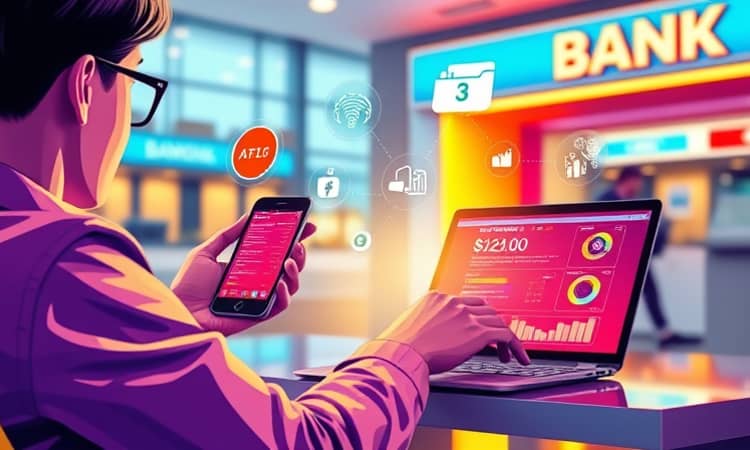
In an era of rapid technological change and heightened customer expectations, banks must evolve beyond standard offerings to deliver truly individualized experiences. Hyper-personalization involves treating every customer uniquely, using data insights to anticipate needs and offer relevant financial products in real time. This article explores the technology, applications, benefits, and implementation strategies that empower banks to become trusted partners in their customers’ financial journeys.
The Evolution of Banking Personalization
Traditional personalization in banking often meant inserting a customer’s name into an email or offering a generic discount. While these efforts improved engagement marginally, customers now expect more meaningful interactions. Hyper-personalization leverages detailed behavioral and contextual data to deliver tailored financial recommendations and services at precisely the right moment. It transforms the customer relationship from transactional to transformational, fostering deeper loyalty.
By moving from broad segments to micro-segments, banks can design offers that address individual goals—whether saving for a home, planning for retirement, or managing daily expenses. This shift elevates the bank’s role to a trusted financial partner anticipating needs, rather than merely a provider of financial products.
Core Technologies Driving Hyper-Personalization
At the heart of hyper-personalization lies the convergence of multiple advanced technologies. Banks deploy powerful engines that process vast volumes of data from numerous touchpoints—mobile apps, branches, ATMs, and online portals—to gain real-time customer insights and predictions.
- Advanced data analytics and big data platforms
- Artificial intelligence and machine learning models
- Natural language processing for chatbots and virtual assistants
- Generative AI for dynamic content creation
- Unified customer data platforms with a 360-degree customer profile view
These technologies enable banks to analyze transaction history, demographic information, lifestyle choices, and external signals—such as social media activity—to build granular profiles. Predictive models forecast upcoming life events, empowering banks to recommend relevant products proactively.
Key Use Cases Transforming Customer Experiences
Hyper-personalization unlocks a variety of applications that enhance value for both customers and banks. Below are six transformative use cases:
1. Customized Product Recommendations: By analyzing spending patterns and financial goals, banks suggest credit cards, loans, or investment products most relevant to each individual. A frequent traveler might see exclusive foreign exchange deals or travel insurance offers at the right time.
2. Dynamic Pricing and Offers: Real-time assessment of credit risk, transaction history, and loyalty can yield personalized interest rates or reward programs. Customers receive timely promotions aligned with their current behavior, such as cashback offers in a category where spending has recently increased.
3. Personalized Financial Advice and Robo-Advisors: AI-driven robo-advisors provide tailored budgeting tips, investment plans, and goal tracking. Chatbots equipped with generative AI can converse naturally, answer complex queries, and guide customers through financial tasks seamlessly.
4. Personalized Finance Management: Consolidated dashboards display spending insights and actionable recommendations. Customers receive alerts when they exceed budgets or when opportunities to save emerge, making financial management intuitive and proactive.
5. Tailored Customer Support Interactions: GenAI chatbots and empowered agents access complete customer histories to resolve issues efficiently. Personalized scripts and contextual data reduce resolution time and improve satisfaction.
6. Personalized User Experiences: Adaptive interfaces highlight features each user values most. Mobile apps and self-service kiosks adjust menus, language preferences, and shortcut options based on past interactions, creating personalized, seamless, and engaging experiences.
Real-World Success Stories
Leading financial institutions around the globe have already reaped the rewards of hyper-personalization. For instance, Ma French Bank used Personetics’ engine to launch targeted marketing campaigns, achieving a 68% increase in customer engagement year-on-year. Wells Fargo’s LifeSync feature allows users to set and monitor financial goals within its mobile app, delivering timely nudges and insights.
Bank of America’s Erica chatbot leverages generative AI to provide instant account updates, weekly spending summaries, and personalized advice rooted in transaction history. NatWest’s Cora+ GenAI assistant handles complex support queries, while HBL’s integration of personalization technology has reduced wait times, improved service consistency, and generated comprehensive journey analytics.
Benefits and Business Impact
Banks that embrace hyper-personalization experience significant gains in both customer metrics and revenue growth. Key benefits include:
- Higher conversion rates through relevant, timely offers
- Improved customer retention driven by proactive engagement
- Increased loyalty as clients feel individually valued
- Better service quality with faster, more accurate support
- Simplified experiences that demystify complex financial products
Implementation Considerations
Successfully deploying hyper-personalization requires a robust data infrastructure. Banks must consolidate data streams—transactional, behavioral, demographic, and observational—into unified platforms. Building a predictive analytics and real-time data environment ensures that insights are current and actionable.
An omnichannel strategy is crucial. Whether through mobile apps, branches, ATMs, or chatbots, customers should encounter consistent, contextual experiences. Furthermore, micro-segmentation powered by AI allows highly targeted messaging, triggered by specific behaviors or life events.
Looking Ahead: The Future of Personalized Banking
As regulations evolve and data ethics gain prominence, banks must balance personalization with privacy. Emerging technologies—such as wearable integrations, IoT data streams, and next-generation generative AI—promise even more precise insight into customer needs. By championing data security and transparency, financial institutions can maintain trust while delivering ever-greater value.
Ultimately, hyper-personalization empowers banks to stand out in a crowded market. Those that invest in advanced data analytics and AI-driven systems today will define the banking relationship of tomorrow—offering products and services that feel handcrafted for every individual.