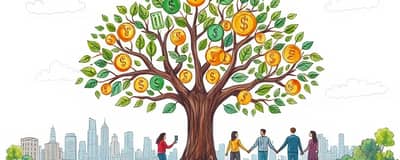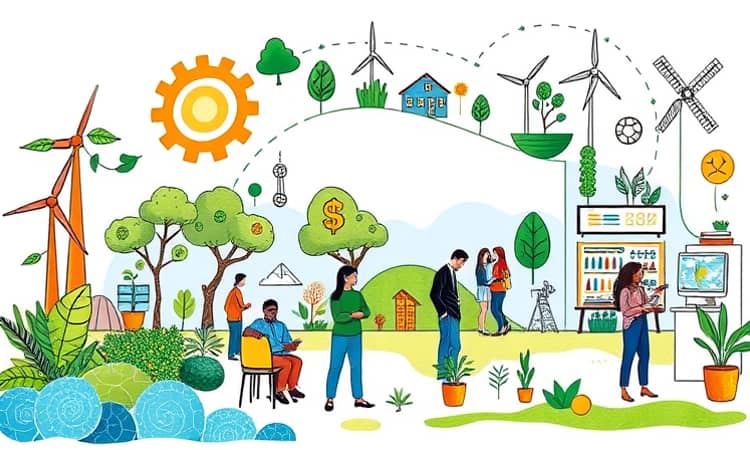
The global business landscape is at a crossroads, where environmental stewardship and economic growth must converge.
Green growth offers a transformative path to sustainable prosperity by decoupling development from ecological damage.
This paradigm shift is driven by multiple powerful catalysts that businesses can leverage for success.
Understanding Green Growth: A New Paradigm
Green growth is not just an environmental initiative; it is a comprehensive economic strategy.
It emphasizes efficient resource use, low-carbon technologies, and social equity to ensure long-term viability.
Key concepts include the green economy, which integrates sustainability into all sectors.
- The circular economy focuses on eliminating waste through reuse and recycling.
- The bioeconomy utilizes biological resources sustainably for innovation.
- This approach moves beyond traditional models that often neglect environmental costs.
By adopting these principles, companies can enhance their resilience and competitiveness.
Green growth transforms challenges into opportunities for innovation and growth.
The Compelling Business Case for Sustainability
Empirical data underscores the financial benefits of embracing sustainability.
A remarkable 88% of CEOs recognize a stronger business case for green practices today.
- Decarbonization efforts yield measurable returns: 82% of companies report economic gains averaging $221 million.
- Sustainable products experience growth rates twice as high as conventional ones.
- Customer loyalty surges, with 77% of firms noting improved retention from sustainability initiatives.
- Employee engagement increases, as 56% are more likely to stay with environmentally responsible employers.
Furthermore, triple outperformers in revenue and ESG achieve over 10% annual growth.
This demonstrates that sustainability is a key driver of market leadership.
Consumers are willing to pay more, with 72% opting for sustainable products.
Businesses that ignore these trends risk falling behind in a competitive marketplace.
Policy and Regulatory Catalysts Driving Change
Governments are accelerating green growth through collaborative policies.
Catalytic collaboration between public and private sectors optimizes industrial strategies.
- Carbon pricing and subsidies incentivize low-carbon innovations and investments.
- Public-private partnerships fund critical infrastructure like EV charging and renewable energy grids.
- Sustainability reporting is now standard, with 99% of S&P 500 companies disclosing ESG data.
Regulations are pushing for transparency, with 79% of companies reporting on full-scope emissions.
This regulatory environment reduces uncertainty and encourages long-term planning.
Companies are setting ambitious targets, with 77% aiming for net zero by 2050.
Policy trends, such as nature-based solutions, are shaping future business practices.
Market and Consumer Catalysts: The Demand Side
Consumer preferences are shifting towards eco-friendly products and services.
Green consumerism aligns purchases with environmental values, influencing brand choices.
- 76% of consumers would abandon brands that neglect sustainability.
- 41% demand transparency in corporate environmental actions.
- Employees also exert pressure, with 45% wanting companies to reveal their sustainability efforts.
This creates a powerful market incentive for businesses to adopt green practices.
Failing to meet these expectations can lead to reputational damage and loss of market share.
Brands with sustainable products see higher repeat purchase rates, boosting revenue.
The rise of green consumerism is redefining market dynamics globally.
Technology and Innovation Catalysts Enabling Solutions
Technological advancements are crucial for achieving sustainability goals.
Green innovation catalysts accelerate the adoption of environmentally beneficial technologies.
- Clean energy solutions like solar and wind power are reducing carbon footprints.
- AI and data analytics optimize energy use, logistics, and emissions tracking.
- Circular technologies enable material recovery and waste minimization through innovative designs.
Digital tools are particularly transformative, helping businesses operate more efficiently.
Ensuring that AI itself is sustainable is a growing focus for future innovations.
Sectors can map emissions hot spots to prioritize high-margin, scalable solutions.
Technology empowers companies to turn environmental challenges into competitive advantages.
Finance as a Catalyst: Fueling Green Investments
Green finance channels capital towards projects that support environmental sustainability.
It acts as a catalyst by lowering the cost of capital for green initiatives.
Trends indicate that 71% of leaders believe sustainability will be integral to investment decisions.
This shift is unlocking billions in funding for sustainable projects globally.
Banks are integrating climate data into financial statements, enhancing risk assessment.
Green finance is becoming a cornerstone of modern business strategy.
Organizational and Cultural Catalysts Within Companies
Internal transformations are essential to harness external catalysts.
Businesses must embed sustainability into their core strategies and daily operations.
- Set ambitious targets for reducing emissions, energy use, and waste.
- Foster a culture where employees are empowered to champion green initiatives.
- Align incentives and performance metrics with sustainability outcomes to drive behavior change.
When sustainability becomes ingrained in the organizational DNA, companies can innovate more effectively.
This internal commitment is a critical catalyst for long-term success and resilience.
Leaders who prioritize sustainability see improved brand standing and employee morale.
Cultivating a green mindset unlocks creativity and drives business transformation.
Conclusion: Seizing the Opportunity for a Sustainable Future
The convergence of these catalysts presents a unique opportunity for businesses.
By leveraging policy support, technological innovations, financial mechanisms, and cultural shifts, companies can fuel sustainable growth and societal well-being.
The time to act is now; embrace these drivers to build a prosperous future that honors both people and planet.
Green growth is not just a trend but a fundamental shift towards enduring success.