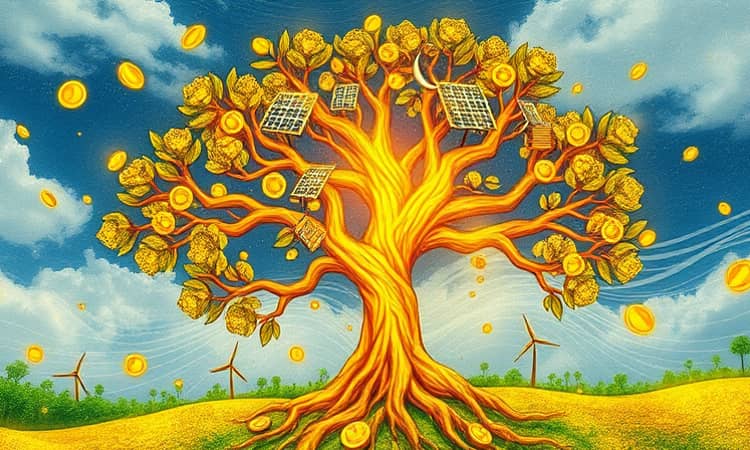
As 2026 marks a pivotal moment in the global sustainability agenda, businesses and investors alike are recognizing that green initiatives offer more than just environmental benefits—they represent high-value sustainable investments with quantifiable returns. With regulatory frameworks like the Corporate Sustainability Reporting Directive (CSRD) sharpening their teeth and consumer preferences shifting toward eco-centric brands, the hunt for “green gold” is on. This article explores the most lucrative market opportunities, revealing how corporates, entrepreneurs, and financiers can tap into the profitability of sustainability.
Pivoting to Green Gold in 2026
2026 heralds a turning point. While CSRD reporting remains uneven across regions, the rising tide of greenhushing and cautious sustainability claims means that companies are seeking verified credentials to stand out. Verification services are booming, helping first-wave CSRD filers demonstrate authenticity and avoid greenwashing allegations.
Meanwhile, the demand for real-time product-level sustainability data is reshaping how supply chains operate. As investors and procurement teams require more granular insights, early adopters of robust data platforms gain a clear competitive edge over those relying on broad estimates.
AI and Green Tech: Shaping Tomorrow’s Markets
Artificial intelligence is unlocking unprecedented possibilities in sustainability reporting and operations. Today, 25% of firms use AI to draft their sustainability reports, and another 39% plan adoption within two years. Yet, with great power comes risk: governance gaps threaten to trigger high-profile missteps.
- 25% current AI adoption in report drafting
- 39% likely adopters by 2028
- Real-time data accuracy vs. error risks
- Governance structures lagging technological advances
For companies that refine their AI governance, the payoff is enormous: faster insights, predictive carbon modeling, and streamlined verification across operations. The winners will be those who balance innovation with robust oversight.
Renewables, Minerals, and the Clean Power Surge
The clean energy sector continues to outpace fossil fuels. In 2026, solar and wind generation are projected to grow by over 17%, while new fossil capacity advances by less than 1%. However, China’s solar slowdown signals a shift toward consolidation, hybrid Power Purchase Agreements (PPAs), and integrated battery storage solutions.
Data centers—among the largest corporate clean-power buyers—could consume up to 2,200 TWh of electricity by 2030, rivaling the entire national demand of India today. At the same time, critical minerals such as copper, lithium, and rare earth elements are in soaring demand to support electrification, AI-driven data centers, and green hydrogen production.
Product-Level Data as a Competitive Edge
By 2026, 35% of FTSE 250 companies will publish assured opinions on their product sustainability claims. This surge in assured product data and verification is driven by evolving Scope 3 requirements under the Science Based Targets initiative (SBTi), which now mandates detailed activity-based data instead of coarse estimates.
- Supply chain tracking tools becoming indispensable
- Scope 3 data granularity linking sustainability to financial performance
- Retail giants like Walmart and Amazon demanding proof or risking contracts
Early investors in tracking and verification platforms not only mitigate contract risks but also unlock new revenue streams by offering data-as-a-service to partners.
B2B Circular Economy and Corporate Transitions
The B2B chemicals sector leads the circular transition. Companies such as Evonik aim for €1 billion in annual sales from circular products by 2030, while Dow secures 65,000 metric tons of recycled feedstock each year. Across industries, 90% of firms report that circularity will significantly impact their business models.
- Evonik’s circular products revenue target: €1 billion by 2030
- Dow’s recycled feedstock procurement: 65,000 tons annually
- 90% of chemicals firms embracing circular strategies
Consumer demand reinforces this shift: 72% of global buyers are willing to pay more for sustainable products, driven especially by Gen Z and Millennials who seek authentic brand alignment with biodiversity, reduced plastic use, and nature-positive initiatives.
Mobilizing Finance for the Green Transition
Despite cuts in public finance, clean energy and green bond investments set new records in 2025. Yet, annual climate finance for developing countries still falls short by $1.3 trillion externally and $1.9 trillion domestically—requiring private flows to expand by 16× and 9×, respectively, from 2022 levels.
Opportunities abound in blended finance standardization, nature-aligned investments spanning biodiversity credits, and adaptation finance via resilience bonds. Multilateral Development Banks (MDBs) are scaling guarantees to de-risk private capital, while carbon pricing coverage has expanded to 28% of global emissions, laying groundwork for market-based incentives.
Risks, Barriers, and Strategic Insights
Yet, the road to green gold is not without obstacles. The energy demands of AI-driven data centers strain power grids and water resources, raising concerns that emissions from computing growth could outpace gains from renewables.
Geopolitical shifts also pose risks: declining public aid is pushing more reliance on private and multilateral institution flows. Meanwhile, the rebound of fossil fuels in some regions and scaling hurdles for green hydrogen and sustainable aviation fuels remain critical challenges.
Strategically, companies that integrate harmonized metrics and shared digital tools across Scope 3 collaborations, invest in verification software, and co-finance decarbonization initiatives with suppliers will seize the greatest share of green gold in the coming decade.
In sum, the confluence of regulatory mandates, technological breakthroughs, and shifting consumer values has unlocked a trove of sustainable market opportunities. Organizations that act now—prioritizing verified data, circular business models, and innovative financing—will not only drive positive environmental impact but also harvest the high returns latent in the world’s green gold.