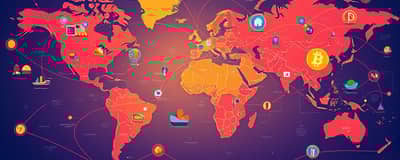
As the 21st century unfolds, the economic epicenter is shifting. Established powers face rising challengers, new technologies redefine value, and resilient strategies will determine who thrives.
In this in-depth exploration, we uncover eight transformative forces and offer actionable guidance to navigate them with confidence.
The Great Economic Transition
Over the past decade, aggregate business activity has begun moving from the traditional G7 block (United States, Germany, United Kingdom, Japan, France, Italy, Canada) to the dynamic E7 cohort (China, India, Brazil, Russia, Indonesia, Mexico, Turkey). This historic power transition demands that leaders reassess assumptions about growth, risk, and partnership.
Emerging markets now contribute a majority share of global GDP growth. To benefit, corporations and policymakers must embrace a multipolar strategy that balances established strengths with new opportunities.
1. Recognizing China’s Industrial Ascent
China’s five-year planning cycles have fueled rapid gains in shipbuilding, batteries, solar panels, and electric vehicles. State support phases in subsidies, then tapers as industries mature— a strategic government model that has accelerated national champions.
By 2026, China aims to challenge leaders in space exploration, advanced semiconductors, and biotechnology. While success is not guaranteed, the momentum underscores the need for competitors to innovate continuously.
Practical takeaways:
- Monitor policy shifts and adjust investment timing.
- Form targeted alliances to access cutting-edge technologies.
- Diversify supply chains to mitigate concentration risk.
2. Navigating Expanding Trade Conflicts
Perceptions of unfair competition and the breakdown of traditional regional growth patterns have sparked a broader trade war. Nations deploy tariffs, nationalizations, and export controls to shield key industries.
Triggers for this trend include:
- Government subsidies distorting market prices
- Disruption of the “Flying Geese” model in Asia
- Security-driven reshoring of critical manufacturing
Businesses must plan for a landscape where economic barriers are tools of power projection. Scenario planning and agile procurement will be vital to maintain resilience.
3. Securing Supply Chain Resilience
Pure cost-efficiency models are giving way to structures built on resilient supply chains and risk mitigation. Companies now factor in tariff volatility, geopolitical tensions, and resource scarcity.
Key vulnerabilities:
- Rare earth elements: 60% of global production concentrated in one country
- Leading-edge semiconductors: 90% made in Taiwan
- Energy security: rising demand for liquefied natural gas (LNG)
Action steps:
- Map end-to-end value streams to identify single-source dependencies
- Invest in dual- or multi-sourcing strategies within allied regions
- Allocate capital for near-shoring options where feasible
4. Embracing the Digital Wallet Revolution
By mid-2026, nearly three-quarters of G20 economies will operate tokenized cross-border payment systems. These networks convert fiat currency into digital tokens for seamless transfers, bypassing cumbersome correspondent banking.
China, India, Brazil, and Russia are rapidly deploying rails that could erode the dollar’s dominance, creating a mosaic of competing payment corridors. Businesses engaged in international trade should begin integrating multi-rail payment solutions and updating treasury systems accordingly.
5. Managing Fiscal Pressures and Stimulus Dynamics
Record debt levels in advanced economies coincide with ambitious stimulus plans. The United States considers direct stimulus checks funded by tariff revenue. Germany plans to boost defense budgets. China pursues fresh industrial subsidies while deferring local debt challenges.
In this environment, finance leaders must:
- Stress-test balance sheets against interest rate spikes
- Explore alternative funding sources beyond sovereign debt
- Engage in policy dialogues to shape responsible fiscal frameworks
6. Capitalizing on the AI Investment Surge
The global AI boom transcends borders. Chinese and American firms alike are pledging hundreds of billions in R&D. Alibaba’s $52 billion commitment and OpenAI’s $500 billion plan illustrate the scale.
AI data centers already consume 3% of U.S. power and could spike to 8% by 2030, driving urgent demand for renewable energy and storage solutions. Organizations should:
- Assess AI’s potential to optimize operations and generate new revenue streams
- Collaborate with energy providers to secure sustainable power contracts
- Prioritize ethical AI governance to maintain trust and avoid regulatory backlash
7. Accelerating the Energy Transition
A concerted shift to low-carbon generation, electrified transportation, and robust grid infrastructure is essential. Renewables offer the most immediate relief for growing power demands, especially in AI and data center growth corridors.
Investors and policymakers should align on integrated projects that balance generation, storage, and distribution to ensure affordable, reliable clean energy.
8. Building Human Capital and the Trust Economy
Labor shortages and talent migration are reframing human mobility as a strategic asset. Concurrently, trust is emerging as a quantifiable economic resource.
Leaders can capitalize by:
- Developing proprietary talent pipelines through community partnerships
- Investing in housing and support services for migrant workers
- Implementing metrics to measure and reward organizational trust
Charting a Resilient Path Forward
The convergence of these megatrends creates a complex landscape where adaptation is paramount. Markets that once equated short-term gains with long-term security may face sudden disruptions.
To thrive, decision-makers should embrace a dynamic strategy that balances innovation, risk management, and ethical leadership.
Key next steps:
- Integrate scenario planning into every strategic review cycle
- Foster cross-functional teams to break silos and accelerate decision-making
- Embed sustainability and trust metrics in core performance indicators
By understanding these powerful forces and implementing pragmatic, forward-looking strategies, organizations can transform uncertainty into competitive advantage.