In an era of rapid change, the global economic landscape presents both challenges and immense opportunities for growth.
By forecasting future trends, we can unlock strategic foresight to navigate uncertainties and build a more prosperous world.
This article delves into key projections, offering a practical guide to inspire action and informed decision-making.
From growth rates to structural shifts, we explore what lies ahead, empowering you to adapt and thrive.
Core Global Growth Outlook: A Subdued Yet Steady Path
The baseline for global economic growth in the coming years points to a modest expansion below historical averages.
According to the UN's World Economic Situation and Prospects 2026, global GDP growth is projected at 2.7% in 2026, down from 2.8% in 2025.
This reflects a trend of steady but subdued performance, lagging behind the pre-pandemic average of 3.2%.
Goldman Sachs offers a slightly more optimistic view, forecasting 2.8% growth in 2026, which they describe as "sturdy."
The IMF projects a gradual slowdown from 3.3% in 2024 to 3.1% in 2026, highlighting persistent weaknesses.
Key insights from these forecasts include:
- Global growth is expected to remain in the low-3% range, indicating resilience without robust acceleration.
- Disagreements among institutions underscore the high uncertainty in economic modeling.
- Factors like inflation and geopolitical risks continue to dampen momentum, making accurate forecasting crucial.
This outlook suggests that while a recession is unlikely, businesses and policymakers must prepare for a slower pace of expansion.
Regional Perspectives: Divergent Paths Across Economies
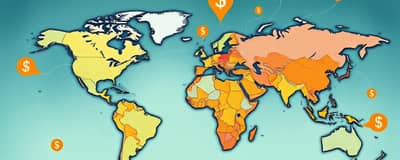
Growth projections vary significantly by region, driven by local policies, demographics, and external pressures.
In the United States, forecasts range from 1.9% to 2.6% growth in 2026, with tax cuts and monetary easing providing support.
Goldman Sachs highlights that tax refunds could boost disposable income by 0.4% annually, fueling consumer spending.
However, a cooling labor market and immigration slowdown pose challenges, requiring adaptive strategies.
For Europe, growth is expected to be modest, with the EU projected at 1.3% in 2026.
Structural issues like demographics and high energy costs weigh heavily on recovery efforts.
Geopolitical risks, such as trade tensions, further complicate the outlook, making resilience a key theme.
In China and Asia, rebalancing from export-led to domestic demand is a central narrative.
China's growth is forecast around 4.8% to 5.0% in 2026, driven by strong exports but hampered by a property downturn.
India leads South Asia with 6.6% growth, showcasing resilient consumption and public investment.
Emerging economies in Africa and Latin America face mixed prospects, with growth rates around 4.0% and 2.3% respectively.
High debt and climate risks are significant constraints, yet opportunities like nearshoring offer hope.
To summarize regional trends:
- The US benefits from policy-driven growth but faces labor market softness.
- Europe struggles with structural drags and external competition.
- Asia shows divergence, with high-growth India and moderating China.
- Developing regions grapple with vulnerabilities but have untapped potential.
Inflation and Monetary Policy: Taming Price Pressures
Inflation trends are a critical component of the economic outlook, influencing interest rates and consumer behavior.
Globally, inflation is expected to decline, with core rates in developed markets moving toward central bank targets.
In the US, PCE inflation is projected at 2.7% in 2026, moderately above the 2% target, reflecting ongoing affordability challenges.
Wage growth has slowed to sustainable levels, around 4% in the US and 3% in the UK, aligning with inflation goals.
Monetary policy is poised for easing, with the Federal Reserve likely to cut rates by about 50 basis points to 3.0–3.25% in 2026.
This shift could stimulate investment and spending, but it depends on inflation remaining under control.
Key factors to watch include:
- Tariff effects on inflation, which may fade by late 2026 due to base effects.
- Central bank responses to evolving economic conditions, requiring agile decision-making.
- The balance between supporting growth and preventing price spikes, a delicate policy tightrope.
Understanding these dynamics helps individuals and businesses plan for interest rate changes and cost management.
Structural Themes: AI, Demographics, and Climate Change
Beyond cyclical trends, structural forces are reshaping the global economy in profound ways.
Artificial intelligence is driving innovation, with investments in high-value sectors like semiconductors boosting growth in parts of Asia.
This technological shift offers opportunities for efficiency gains but also disrupts traditional industries, requiring adaptation.
Demographic changes, such as aging populations in Europe and Japan, constrain labor force growth and economic dynamism.
In contrast, younger populations in Africa and South Asia provide a demographic dividend, if harnessed effectively.
Climate change poses both risks and opportunities, with green investments becoming a key growth driver.
However, climate-related shocks, like extreme weather, threaten stability in vulnerable regions, necessitating resilient infrastructure.
To leverage these themes, consider:
- Embracing AI for productivity enhancements and new business models.
- Addressing demographic challenges through education and immigration policies.
- Investing in sustainable practices to mitigate climate risks and tap into green markets.
Risk Scenarios: Navigating Uncertainty
The economic outlook is fraught with risks that could alter projections significantly.
Geopolitical tensions, such as conflicts in Ukraine and the Middle East, disrupt trade and energy supplies.
Trade policies, including US tariffs, create uncertainty, particularly for export-dependent economies in Europe and Asia.
Financial vulnerabilities, like high debt in emerging markets, amplify economic shocks, requiring careful monitoring.
Climate risks exacerbate these challenges, with events like droughts affecting agricultural output and inflation.
To manage these risks, proactive strategies are essential, such as diversification and contingency planning.
Key risk factors include:
- Escalation of geopolitical conflicts impacting global supply chains.
- Sudden shifts in monetary policy leading to market volatility.
- Climate disasters triggering economic downturns in vulnerable areas.
Practical Implications: How to Adapt and Thrive
Forecasting trends is not just about prediction; it's about taking actionable steps to secure a better future.
For businesses, this means investing in innovation, such as AI and sustainability, to stay competitive.
Diversifying supply chains can mitigate risks from trade tensions and geopolitical instability.
For individuals, understanding inflation and interest rates helps in financial planning and investment decisions.
Staying informed about regional growth patterns enables smarter career and relocation choices.
Governments can use these insights to design policies that foster inclusive growth and resilience.
Consider these actionable tips:
- Monitor economic indicators regularly to anticipate changes.
- Build emergency funds to cushion against unexpected downturns.
- Engage in continuous learning to adapt to technological shifts.
- Advocate for sustainable practices in your community and workplace.
The following table summarizes key growth projections for 2026, based on data from major institutions:
This table highlights the divergent trajectories across regions, emphasizing the need for tailored strategies.
Conclusion: Embracing the Future with Confidence
The global economic outlook, while complex, offers a roadmap for navigating the years ahead with insight and purpose.
By understanding growth trends, inflation dynamics, and structural shifts, we can make informed choices that enhance resilience.
Embrace forecasting as a tool for empowerment, not just prediction, to build a more sustainable and prosperous world.
Let this knowledge inspire you to take proactive steps, whether in business, finance, or policy, shaping a brighter economic future for all.