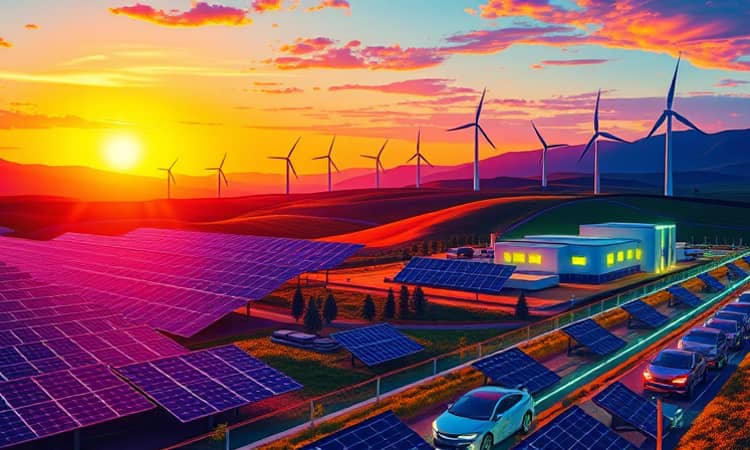
As the world navigates the complex journey from fossil dependency toward a clean, sustainable future, investors, policymakers, and innovators stand at a pivotal crossroads. The decisions made today will shape global prosperity, environmental health, and energy security for decades. This article explores three core pillars: how the energy system is evolving, which future fuels and technologies will lead the way, and where capital is flowing—and where critical gaps remain. Our goal is to enlighten, inspire, and equip readers with actionable insights to engage meaningfully in the energy transition.
From remote villages gaining access to reliable electricity to sprawling megacities redefining urban mobility, the energy landscape is being rewritten by rapid technological advances and shifting investment patterns. Understanding the trajectory of change and the forces driving it helps stakeholders anticipate risks, seize opportunities, and contribute to a more resilient, equitable future.
Where the Energy System is Heading
Global energy demand is on an upward trajectory, driven by population growth, economic development, and electrification of transport, heat, and industry. According to DNV, the primary energy mix is forecast to shift from roughly 80% fossil/20% non-fossil today to about 50/50 by 2050. Solar and wind are poised to rise from around 3% of primary energy today to over one-third by 2060, ultimately dominating the mix in the decades that follow. Meanwhile, electricity demand is expected to more than double by 2060, underscoring the scale of change required.
- Oil demand may peak around 2032 at ~104 million barrels per day, then decline to ~88 mb/d by 2050.
- Coal demand is projected to fall dramatically in power generation as cheaper renewables and gas take over.
- Natural gas stands as the only fossil fuel growing long-term, with demand rising ~25% from 2024 to 2050.
- Emissions need to fall by over 90% by 2050 in ambitious climate scenarios, relying on renewables, efficiency, CCS, and CO₂ removals.
These shifts are not inevitable; they depend on policy choices, technological breakthroughs, and capital allocation. Rapid declines in renewable costs, supportive regulations, and corporate net-zero commitments are accelerating the pace of change. However, significant challenges remain in scaling up flexible grids, energy storage, and integrated systems to maintain reliability.
Key Future Fuels and Technologies that Matter
A diverse suite of clean energy technologies will underpin the transition. While solar and wind form the backbone of power generation, other fuels and systems play crucial roles in decarbonizing hard-to-abate sectors and balancing supply and demand.
- Green hydrogen produced via electrolysis offers a zero-carbon feedstock for industry and heavy transport, with potential to replace natural gas in high-temperature processes.
- Carbon capture, utilization, and storage (CCUS) enables the removal of CO₂ emissions from industrial sources and power plants, with direct air capture (DAC) emerging as a scalable solution for negative emissions.
- Advanced biofuels, derived from waste biomass and algae, provide drop-in replacements for aviation and shipping fuels, bridging emission gaps where electrification remains challenging.
- Small modular reactors (SMRs) and next-generation nuclear designs promise reliable, low-carbon baseload power with reduced capital costs and construction times.
Each technology faces unique hurdles—cost reductions, regulatory frameworks, supply chain development, and public acceptance. But together, they form an interconnected ecosystem where progress in one area amplifies benefits in others. For example, abundant renewable power reduces the cost of electrolysis, making green hydrogen more competitive. And widespread energy storage deployment smooths variability in wind and solar output, enhancing grid stability.
Investors should consider diversified portfolios across these emerging fuels and technologies, balancing near-term returns from mature renewables with longer-horizon opportunities in hydrogen, CCUS, and advanced nuclear. Collaborating with research institutions, startups, and government programs can accelerate innovation and de-risk early-stage ventures.
Capital Flows: Tracking Where the Money is Going
In 2025, global energy investment totaled around USD 3.3 trillion, with clean energy accounting for approximately USD 2.2 trillion—roughly two-thirds of the total. Clean power generation, grid infrastructure, storage, low-emissions fuels, and electrification projects now attract roughly twice as much capital as oil, gas, and coal combined. Notably, solar has become the largest investment category, with spending on utility-scale and rooftop installations projected at about USD 450 billion.
Record renewable investments and shifting geographies reflect evolving investor sentiment:
- Global renewable energy investments reached USD 386 billion in 1H 2025, up 10% year-on-year.
- Solar dominated with USD 252 billion, while wind attracted USD 126 billion, driven by offshore projects.
- Small-scale solar financing surged, even as utility-scale solar and onshore wind financing declined in certain regions.
- The EU saw a 63% rise in renewables investment in 1H 2025, while US investment fell 36%, signaling capital reallocation.
Despite this record flow, investment is still far below needed for a 1.5°C-aligned pathway. Critical gaps persist in grid modernization, flexibility infrastructure, emerging economies, and hard-to-abate sectors like steel, cement, aviation, and shipping. Public finance, multilateral development banks, and blended finance solutions will be crucial to bridge these shortfalls.
In the US, Q2 2025 saw USD 68 billion in clean energy and transport investment. Half went to retail solutions—EVs, heat pumps, rooftop solar—while the rest supported clean power and industrial decarbonization. Over USD 351 billion has been committed to new clean energy manufacturing and facilities under the Inflation Reduction Act, yet policy headwinds and project delays underscore the need for stable, long-term incentives.
For investors seeking to maximize impact, focusing on regions and sectors with acute underinvestment can yield both societal benefits and attractive returns. Engaging in public-private partnerships, green bonds, and sustainability-linked financing can unlock additional capital and drive systemic change.
Practical Steps to Drive Change and Capture Value
Whether you represent a financial institution, a corporate entity, or an entrepreneurial venture, clear strategies can amplify your role in the energy transition:
- Align portfolios with science-based targets and integrate transition risk into due diligence and asset allocation.
- Partner with technology innovators and research consortia to pilot breakthrough solutions and scale proven concepts.
- Advocate for supportive policies—carbon pricing, grid access reforms, and infrastructure spending—to unlock market signals and reduce regulatory uncertainty.
- Invest in workforce development and reskilling programs to ensure communities benefit from new energy jobs and avoid stranded labor forces.
By combining financial capital with technical expertise, stakeholder engagement, and policy advocacy, investors can catalyze the systemic changes needed to achieve net-zero targets. The transition presents not only a profound moral imperative but also one of the largest investment opportunities in history.
As we look ahead, the energy transition will be defined by collaboration across borders, sectors, and disciplines. The fuels and technologies of tomorrow demand integrated approaches that span finance, engineering, and social innovation. Stakeholders who embrace this holistic view will not only generate returns but also leave a lasting legacy: a cleaner planet, resilient economies, and a more equitable energy system for generations to come.