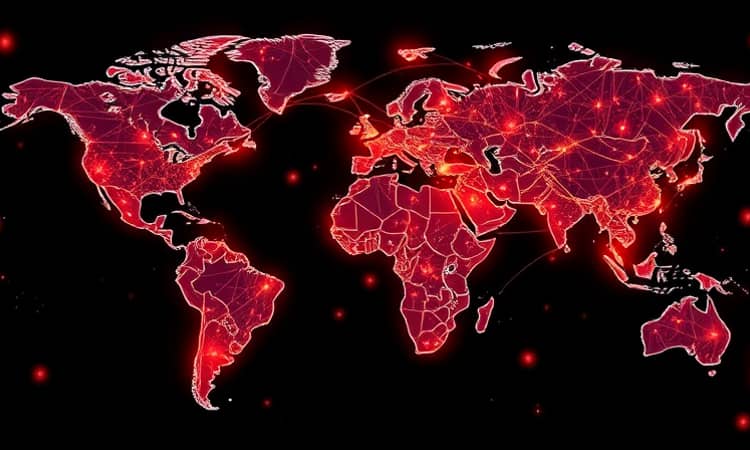
The interplay between regional upheavals and global markets has never been more pronounced. From tariff impositions to geopolitical flashpoints, local events act as catalysts that reshape the contours of international trade and investment. In a world where supply chains traverse continents and capital flows cross time zones, these disruptions no longer remain isolated. Instead, they unlock pathways previously unseen, offering investors a unique vantage point to capture value emerging from fragmented traditional growth paths.
As we navigate 2026, understanding how policy shifts, inflation differentials, and technological advances intersect will be crucial. By viewing every localized shock through a broad economic lens, market participants can unearth opportunities in AI-driven industries, emerging economies, and reconfigured trade networks. This article examines the forces at play, dissects divergent forecasts, and outlines strategies to harness the momentum of a multipolar investment world.
Local Disruptions Set the Stage
Trade wars, fiscal policy adjustments, and tariff escalations have punctuated the global narrative over the past two years. While such actions can sow uncertainty, they also compel businesses to re-evaluate supplier relationships and consider supplier diversification and nearshoring strategies. Companies are no longer tied to single-source manufacturing hubs; instead, they build resilience by pursuing alternative routes and fostering regional partnerships.
Geopolitical tensions—from contested maritime zones to technology export restrictions—are prompting nations to bolster domestic capacity. These moves, though protective in intent, inadvertently spark cross-border investments and innovation in sectors like semiconductors, renewable energy, and automation.
Recent events such as the conflict in Ukraine and U.S.-China technology export curbs illustrate how isolated policy choices echo globally. European firms face supply bottlenecks in energy and semiconductors, while Asian manufacturers ramp up capacity to fill gaps. In the Americas, nearshoring incentives drive significant investment in Mexico and Central America, demonstrating how companies can adapt swiftly to localized shocks and seize growth amid uncertainty.
Global Growth: Diverging Forecasts and Regional Trends
Analysts remain optimistic yet cautious. Goldman Sachs projects a global expansion of 2.8%, outpacing consensus expectations, driven by a robust U.S. economy at 2.6%. In contrast, UNCTAD anticipates a more subdued 2.6%, reflecting persistent drag from manufacturing headwinds in Europe. The IMF’s upbeat forecast of 3.3% underscores the resilience provided by tech investment and supportive fiscal measures, with global growth holding steady at 3.2% in 2027.
Regional divergences offer both risk and reward. A resilient U.S. benefits from lower tariffs and tax cuts, while Europe leans on infrastructure projects to revive growth. Meanwhile, Asia’s emerging markets leverage a weak dollar and burgeoning tech exports to stay competitive.
Mercer highlights that Japan’s above-trend performance, fueled by wage growth and automation, and China’s stable rebound emphasize how domestic policy can counterbalance external demand shortfalls. Investors thus gain a toolkit to rotate capital into regions best positioned to outpace slowing global trends.
Inflation and Monetary Policy: Regional Splits
Inflation trajectories have stabilized near central bank targets, yet the story varies by region. The U.S. Federal Reserve is poised to ease rates toward 3%, cautiously monitoring price dynamics amid persistent service-sector pressures. The Fed’s median inflation forecast of 2.1% for 2026 underscores its commitment to anchoring expectations.
In Europe, the ECB maintains policy rates around 2%, wary of potential re-acceleration in energy-driven costs. The Bank of England pursues aggressive easing, while Japan oscillates between tightening and stimulus. Emerging markets face the dual challenge of containing inflation and spurring growth, leading to divergent real yield profiles across Asia and Latin America.
These varied stances foster technology-driven shifts across global markets as capital chases the optimal balance of yield and growth. Understanding each central bank’s reaction function can inform hedging strategies and duration positioning in fixed income portfolios.
Trade Reconfiguration: From Tariffs to New Value Chains
Global trade volume set records in 2025, exceeding $35 trillion with 7% growth. However, rising tariffs—particularly on semiconductors and minerals—have introduced friction. Retail prices on imported goods rose by roughly 5.4%, prompting consumers and retailers to adjust spending patterns.
- Non-tariff barriers such as carbon border taxes from the EU are expanding.
- Supply chains are shifting toward regional hubs in East and Southeast Asia.
- South-South trade between African and Latin American markets is gaining momentum.
- 113 countries have pledged a 12% emissions cut by 2035, fueling sustainable clean-energy market expansion.
Corporations are responding by increasing nearshoring incentives, diversifying suppliers across multiple continents, and investing in resilience frameworks. This strategic re-alignment not only mitigates policy risk but also generates long-term cost advantages.
Market Opportunities in a Fragmented Landscape
Amid this reconfiguration, AI emerges as a unifying thread. From hyperscale data centers to industrial robotics, investors witness multipolar investment landscape unfolding as capital flows into next-generation infrastructure. These shifts support ancillary sectors such as electric utilities, specialty materials, and logistics automation.
- Equities: U.S. earnings growth of 13–15%, led by the Magnificent Seven’s $520B capex surge.
- Fixed Income: High-yield bonds and inflation-protected securities in select emerging markets.
- Private Markets: Rising deal flow in AI infrastructure and clean energy ventures.
- Thematic plays: AI diffusion, green technologies, and demographic shifts.
- Digital Infrastructure: Data centers, fiber networks, and industrial automation.
Emerging markets outside China are particularly compelling, with forecast growth around 4.2% and supportive policies on liquidity. Japan’s small caps also offer value, buoyed by corporate governance reforms and automation trends. Investors can combine thematic exposure with regional rotations to capture dynamic AI-driven sector growth across both developed and emerging landscapes.
Navigating Risks and Shaping the Future
Investors must remain vigilant. Potential headwinds include an overheated AI bubble, renewed trade escalation, or unexpected inflation spikes. Geopolitical flashpoints—from Eastern Europe to the Indo-Pacific—could disrupt critical supply chains, underscoring the need for scenario planning and stress testing.
Mitigation strategies involve diversified asset allocation, tactical tilts toward higher-quality credits, and the incorporation of environmental, social, and governance (ESG) criteria to anticipate regulatory shifts. By embracing fragmentation and focusing on structural themes—digital transformation, energy transition, and shifting demographics—market participants can transform local upheavals into global opportunities.
The path forward demands agility, a long-term perspective, and disciplined allocation strategies that balance risk with innovation. This is the moment to step beyond traditional paradigms and harness the power of dynamic AI-driven sector growth for sustained outperformance.